
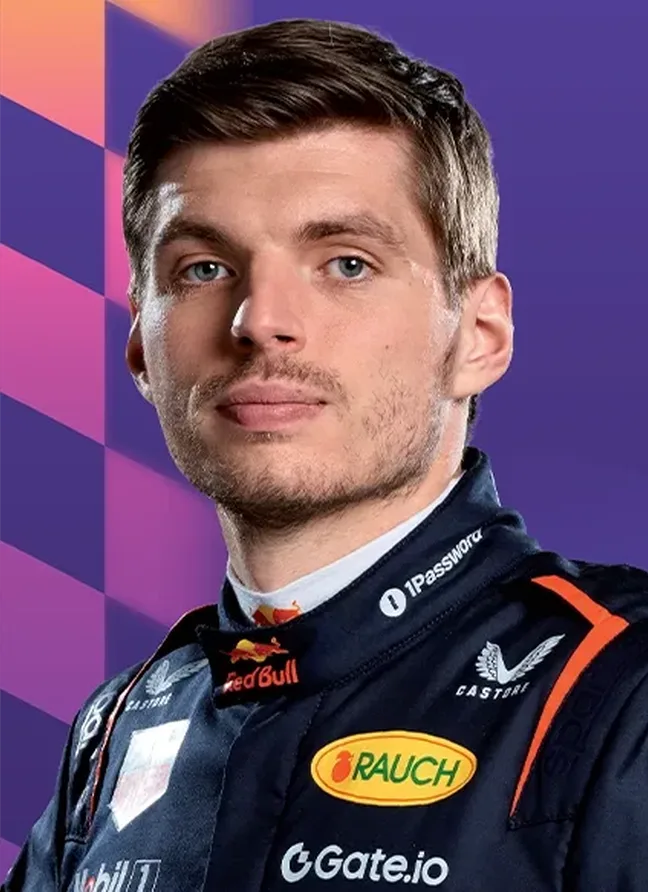
Statistic | Value |
World Championships | 4 |
Grand Prix Entered | 229 |
Career Wins | 68 (Highest Race Finish x68) |
Career Points | 3344.5 |
Podiums | 123 |
Pole Positions | 47 |
DNFs | 33 |
Max Verstappen stands as the undisputed standard-bearer of contemporary Formula 1, a four-time World Champion whose trajectory has redefined statistical dominance within the modern era of the sport. His career is characterized by an unprecedented acceleration through the motorsport hierarchy, coupled with a fiercely uncompromising approach to competition. Verstappen’s arrival in Formula 1 was structurally disruptive, setting new benchmarks for youthful precocity and immediate success.
Establishing his global significance, Verstappen became the Netherlands’ first world champion, securing his inaugural title at the age of just 24. The gravity of his achievements is quantifiable through staggering metrics: by the close of his fourth title campaign (2024), he amassed 4 World Championships, 68 Career Wins, 47 Pole Positions, and 123 Podiums. These numbers place him among the sport’s elite, despite his comparatively young age and the relative brevity of his high-performance tenure.
Verstappen’s career began with an immediate impact, arriving in the sport as the youngest-ever competitor at 17 years old. This initial, rapid success was immediately followed by becoming F1’s youngest race winner—a landmark achievement secured on his debut for Red Bull in Barcelona in 2016. The public narrative surrounding Verstappen is frequently defined by a compelling duality: the hyper-aggressive, uncompromising competitor on the racetrack is balanced by an often-reserved and introverted personality away from the cameras. This contrast sets the stage for a comprehensive analysis of a driver whose sheer competitiveness drives both his success and the evolution of his public image.
Verstappen’s unique readiness and immediate transition to the pinnacle of motorsport triggered significant consequences beyond the scope of mere competition. His debut at 17, far younger than the traditional F1 developmental pathway would suggest, demonstrated such maturity and speed that it effectively compelled the FIA to implement a new minimum age requirement for F1 participation. This post-facto legislative action confirms that his arrival was not simply notable but fundamentally challenged the existing framework of driver preparation and licensing, underscoring his generational talent and readiness for the challenge.
Racing Pedigree: The DNA of a Champion
Max Verstappen’s immersion in motorsport began at birth, defined by his unique racing lineage. He is the son of Jos Verstappen, the first Dutch driver to finish on an F1 podium, and Sophie Kumpen, a highly accomplished professional kart racer. This parental influence provided not only a favorable genetic disposition but also an unparalleled training environment focused entirely on the pursuit of racing excellence from his earliest years.
This deep-seated commitment manifested early: Verstappen began karting at the age of four, competing in the Mini Junior championship in his home province of Limburg, Belgium. While his mother is Belgian and he was born and grew up in Belgium, his racing identity is firmly rooted in the Netherlands. Influenced by his father’s career, he prefers to claim Dutch as his primary nationality and competes under a Dutch racing license.
The Accelerated Junior Trajectory
Verstappen’s junior career was characterized by a rapid, often skipped, progression through the ranks. After dominating the domestic scene, he moved to international karting, notably competing in 2010 and finishing second in the KF3 World Cup behind Alexander Albon, who would later become his Red Bull teammate.

His leap to single-seaters in 2013 was swift. His first experience was with the Dutch team Manor MP Motorsport. A year later, he made his racing debut at the Florida Winter Series, winning his first event at just his second race weekend at the Palm Beach International Raceway. This led directly to the highly competitive FIA European Formula 3 Championship in 2014 for Van Amersfoort Racing, where he finished his maiden season in an exceptional third place overall, an achievement that made his immediate F1 promotion viable.
The Red Bull/Mercedes Decision and the Foundation of Loyalty
The 2014 F3 success led to a pivotal decision point: offers came from both Mercedes and Red Bull. Verstappen ultimately joined the Red Bull Junior Team in August 2014, making the audacious choice to turn down Mercedes, which, at that time, was the most dominant force in the hybrid engine era.
This strategic choice demonstrated a crucial element of Verstappen’s mentality: prioritizing the immediate path to an F1 seat (via Toro Rosso, Red Bull’s sister team) over the guaranteed performance of a superior engine supplier. This selection was a high-risk strategic prioritization of career trajectory over performance security. This decision established the foundation for his deep-seated loyalty and commitment to the Red Bull organization, a commitment that would ultimately anchor his entire career.

This initial confidence in the Red Bull ecosystem culminated in a landmark contract extension. Verstappen committed his future to the team through the end of 2028.6 Such a long-term deal is a real statement of intent, assuring Red Bull that they have secured the best driver on the grid for their long-term planning, particularly as the team prepares for the new engine regulations scheduled for 2026. This loyalty, first demonstrated by choosing Red Bull over Mercedes a decade earlier, now serves as the central structural pillar of the team’s strategy.
Finally, while Verstappen now races with the number 1 reserved for the reigning champion, for his first seven F1 seasons, he utilized the number 33. He initially wanted the number three, but as Daniel Ricciardo was already using it, he chose 33 to “add double the luck”. He also stated that he thinks the shape of the number three “looks cool,” and he had raced with the number 33 during his boyhood karting days, solidifying its personal significance.
The Phenomenon: Youngest Records and the Aggressive Philosophy
F1 Debut and Toro Rosso Apprenticeship (2015)
Verstappen made his official Formula 1 debut at the age of 17, immediately claiming the record as the youngest F1 competitor in history. His unprecedented entry was validated quickly when he became the youngest points scorer in F1 history during his debut season.1 This apprenticeship season at Scuderia Toro Rosso was characterized by exceptional speed mixed with the high-risk errors typical of a rapidly developing talent.

The Aggression Curve: Early Controversies and Critical Feedback
The early years of Verstappen’s career established a reputation for aggressive, boundary-pushing driving that sometimes crossed the line into controversy. In his debut 2015 season, a crash with Romain Grosjean at the Monaco Grand Prix saw him handed a five-place grid penalty. This incident was severe enough that Williams driver Felipe Massa publicly branded Verstappen’s driving as “dangerous”.
This uncompromising nature continued to surface. The 2018 F1 season was marked by frequent incidents in the opening six races, including high-profile run-ins with champions Lewis Hamilton and Sebastian Vettel. The most intense incident that year involved his own teammate, Daniel Ricciardo, in Azerbaijan. After some “aggressive defending” by the Dutchman, Ricciardo ran into the back of Verstappen’s car, resulting in both drivers retiring from the race and illustrating the intensity of his internal competition. Later that year in Brazil, Verstappen was involved in a collision with Force India’s Esteban Ocon, who was attempting to unlap himself. This highly emotional incident cost Verstappen a potential second consecutive win.
This early aggression served as a necessary, though costly, apprenticeship. It crystallized his foundational track philosophy, summarized effectively by experts who suggested that racing fairly “is not in his repertoire, it is not in his philosophy. His philosophy is you are not coming past”. This non-negotiable approach, even when controversial, defined the raw speed and zero-compromise attitude that would later mature into the surgical precision required for championship success. The evolution of his driving saw him minimize the reckless, DNF-inducing errors of his early career, transforming his aggression into calculated, intimidating maneuvers crucial for high-stakes, season-defining battles.
The Barcelona Landmark and Instant Impact (2016)
The mid-season promotion to Red Bull Racing in 2016 was a seismic event that immediately justified the team’s faith. On his debut for the senior Red Bull squad in Barcelona, Verstappen became F1’s youngest race winner—at the age of 18 years and 228 days—with an “opportunistic but controlled drive”. This instantaneous success cemented his position as a generational talent and confirmed Red Bull’s strategy of aggressive driver development.

The Technical Edge: Driving Style and Car Control Analysis
The Newey-Verstappen Symbiosis and Oversteer Mastery
Verstappen’s technical superiority is intrinsically linked to the engineering philosophy of Red Bull Racing, spearheaded by Chief Technical Officer Adrian Newey. Red Bull typically favors a highly aerodynamic car that possesses a high degree of rotation and often operates close to the limit of stability. This high-oversteer characteristic, while maximizing absolute cornering performance, can make the car difficult for most drivers to control reliably.
Verstappen possesses a unique skill set that allows him to thrive in setups that others might find “tricky” and suffer from “unpredictable handling”. His mastery of high oversteer is a core component of his competitive advantage and frequently explains the performance gap to his teammates. He is able to catch and control slides with minimal time loss, pushing the car to its performance threshold consistently.
Precision and Throttle Control
A crucial component of this mastery stems from his dedication to sim racing, which is widely recognized as having contributed to the “precise throttle control” needed to manage the unstable rear axle of the Red Bull F1 car. This ability allows him to modulate power delivery with exceptional finesse, translating virtual mastery into real-world control under the most intense racing conditions.
Furthermore, technical collaboration with the team ensures the car is continually optimized to his exacting standards. Analysis of qualifying performance, for example, has shown that the team made subtle mechanical changes, such as slightly raising the car on the rear axle, to avoid bottoming without losing excessive downforce. These adjustments, tailored to maximize grip and handling based on Verstappen’s feedback, consistently yield “extremely positive” performance outcomes.
Verstappen’s exceptional capacity to exploit a high-oversteer setup means Red Bull is able to design the car to its absolute peak performance potential, regardless of the inherent difficulty. This technical symbiosis between driver and design team effectively turns a potential car weakness (instability near the limit) into a sustained, structural competitive advantage. By configuring the car to a level that only he can fully exploit, Verstappen effectively creates a technical barrier for his teammates, helping to secure his dominance within the organization.
Qualifying Pace and Tire Management
Verstappen’s technical finesse extends beyond raw car control into subtle, tactical aspects of race craft, particularly tire management during high-pressure qualifying sessions. Beyond simply having outright pace, he demonstrates exceptional foresight in managing the thermal life of the Pirelli tires over a single hot lap. Technical analysis has shown his ability to tactically “cool the tyres in the middle sector” of a qualifying lap. This calculated preservation ensures that the tires retain optimal grip for the final, critical sector, often allowing him to overcome deficits compared to rivals in that crucial phase and secure vital pole positions.
The Era of Dominance: Analyzing the Four-Time Title Campaign (2021–2024)
Verstappen’s transition from record-breaking prodigy to multiple World Champion has been a linear progression of accelerating success, each title adding a new dimension of dominance to his career.
2021: The Legendary Showdown and First Crown
The 2021 season was a defining chapter in modern F1 history, culminating in Verstappen’s inaugural F1 drivers’ crown after a “now legendary, final-round showdown with Lewis Hamilton”. This highly contested title established Verstappen as a true championship contender capable of performing under extreme psychological pressure and secured the Netherlands’ first F1 drivers’ crown.

2022: Powerhouse Defense and Record Accumulation
Following his inaugural title, Verstappen signaled his status by confidently trading his personal number 33 for the champion’s number 1. He followed up the previous year’s success with a “powerhouse title defence”. Statistically, the 2022 campaign established a new standard for seasonal performance. He secured 15 victories out of a 22-race calendar, a record-breaking tally that surpassed the previous benchmark of 13 wins in a single season, jointly held by legends Michael Schumacher and Sebastian Vettel.
2023: Statistical Anomaly and Historic Efficiency
The 2023 season cemented Verstappen’s statistical isolation from his peers and past champions. He secured an “epic third successive championship triumph” that featured a completely unprecedented 19 wins from 23 Grands Prix. This level of competitive supremacy yielded an astonishing 86.4% win rate over the season. This year, he did not merely break the record book; he fundamentally rewrote it, demonstrating a level of performance perfection previously unachieved in the sport.
The rapid progression of dominance—from securing his first title (2021), to becoming a record breaker (2022), and then transitioning into a hyper-dominator (2023)—demonstrates an accelerating rate of success. This suggests that Verstappen is not satisfied with meeting existing historical standards but is actively pushing the physical and statistical limits of the sport further than previously conceived. The 86.4% win rate of the 2023 season quantifies a numerical singularity in terms of competitive efficiency.
2024: Navigating Challenges to Secure Fourth Title
Verstappen held on to secure his fourth championship despite challenges, including Red Bull “falling off the pace towards the end of the campaign”. This season demonstrated his adaptability and resilience, confirming that his success is not merely reliant on outright car dominance but on the ability to maintain a margin of excellence when competitors converge and external pressures mount.
Statistical Supremacy and Historical Benchmarks
The Single-Season Win Record: Quantifying Unprecedented Efficiency
The progression of Verstappen’s single-season win record in 2022 and 2023 is perhaps the most compelling quantitative measure of his dominance, first raising the historical bar and then immediately shattering it.
F1 Record for Most Wins in a Single Season
Position | Driver | Wins | Season | Total Races | Win Rate (%) |
1 | Max Verstappen | 19 | 2023 | 22 | 86.4% |
2 | Max Verstappen | 15 | 2022 | 22 | 68.2% |
3 (Tied) | Michael Schumacher | 13 | 2004 | 18 | 72.2% |
3 (Tied) | Sebastian Vettel | 13 | 2013 | 19 | 68.4% |
Historical Contextualization
While the Formula 1 calendar has expanded in recent decades, increasing the total opportunities for wins, the percentage efficiency of Verstappen’s 2023 campaign (86.4%) statistically exceeds the peak efficiency of any prior era of dominance, including those of Schumacher and Vettel.
This efficiency demands a complete reappraisal of what constitutes peak performance in F1 history. Verstappen has effectively isolated his dominant era by first raising the bar to 15 wins in 2022 and immediately superseding that figure with 19 wins in 2023. The fact that his 19 victories in 2023 alone exceed the total career wins of 17 drivers in F1 history demonstrates that the combination of machinery, strategic execution, and driver talent has reached a statistical apex previously unmatched, solidifying the 2023 season as a numerical singularity.
Off-Track Persona and Public Legacy
The Duality of Character
Verstappen’s public persona is frequently defined by the dichotomy between his intensely competitive track identity and his reserved off-track character. He is often recognized for his introverted nature and is “not often perceived to be one of them” in the mold of the “cool and unapproachable” F1 celebrity. He is known to find his primary solace in the technical complexities of the virtual realms of racing, dedicating considerable time to sim racing.

Verstappen’s public persona is frequently defined by the dichotomy between his intensely competitive track identity and his reserved off-track character. He is often recognized for his introverted nature and is “not often perceived to be one of them” in the mold of the “cool and unapproachable” F1 celebrity. He is known to find his primary solace in the technical complexities of the virtual realms of racing, dedicating considerable time to sim racing.
Personal Interests and Contractual Commitments
Verstappen is a multilingual sports enthusiast. Outside of the cockpit, his passions include soccer; he is a known supporter of both Spanish giants Fútbol Club Barcelona and the Dutch club Philips Sport Vereniging Eindhoven (PSV). In his personal life, he has been publicly dating Brazilian publicist and model Kelly Piquet since January 2021.
His commitment to his career is solidified by his “bumper new deal” with Red Bull, securing his services through the end of 2028. This long-term alignment confirms his status as the institutional pillar of the team’s future.
Despite this strong institutional bond, Verstappen has demonstrated a non-conformist attitude regarding his personal conduct. An incident occurred where he reportedly breached his contract terms regarding dangerous activities by skiing in “the most wonderful, best deep snow in the world” in Japan shortly after a non-finish (DNF) in Melbourne in 2024. While team consultant Helmut Marko expressed concern, this incident underscored Verstappen’s highly confident and determined attitude, suggesting that he trusts his own judgment even when it contradicts the explicit orders of his team.
The sharp contrast between his intense, boundary-pushing track persona, characterized by his “you are not coming past” philosophy, and his humble, introverted off-track demeanor defines his legacy as a pure racer. His dedication to sim racing, which enhances his technical skills , and his long-term commitment to Red Bull reinforce the notion that his primary motivation is competition and technical perfection, rather than the trappings of celebrity status, resulting in a public identity defined almost exclusively by his prowess and results.
Concluding Assessment: Defining the Verstappen Era
Max Verstappen’s career profile is a study in precocious talent realized through fierce determination and technical mastery. His early entry into Formula 1 broke records, forcing a re-evaluation of driver development pathways. Crucially, his decision to commit to Red Bull early in his career established a technical and strategic partnership that has since driven unprecedented levels of success.
The technical analysis of his driving confirms his unique ability to command highly unstable, fast-but-challenging Red Bull chassis setups, turning a car characteristic that impedes other drivers into a competitive advantage for himself. This technical symbiosis has allowed him to achieve a level of statistical isolation previously unseen in the sport.
Verstappen’s era is defined not just by the accumulation of four world titles, but by the hyper-efficiency of his dominant seasons, culminating in the 86.4% win rate of 2023. This overwhelming statistical output, coupled with his aggressive track philosophy and grounded off-track focus, cements his position within the pantheon of F1 greats. With his contract securing his commitment to Red Bull through 2028, Verstappen remains the central force shaping the future competitive landscape of Formula 1, poised to continue his pursuit of existing career records.


