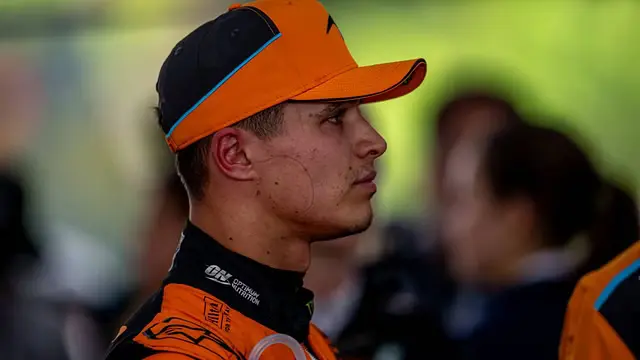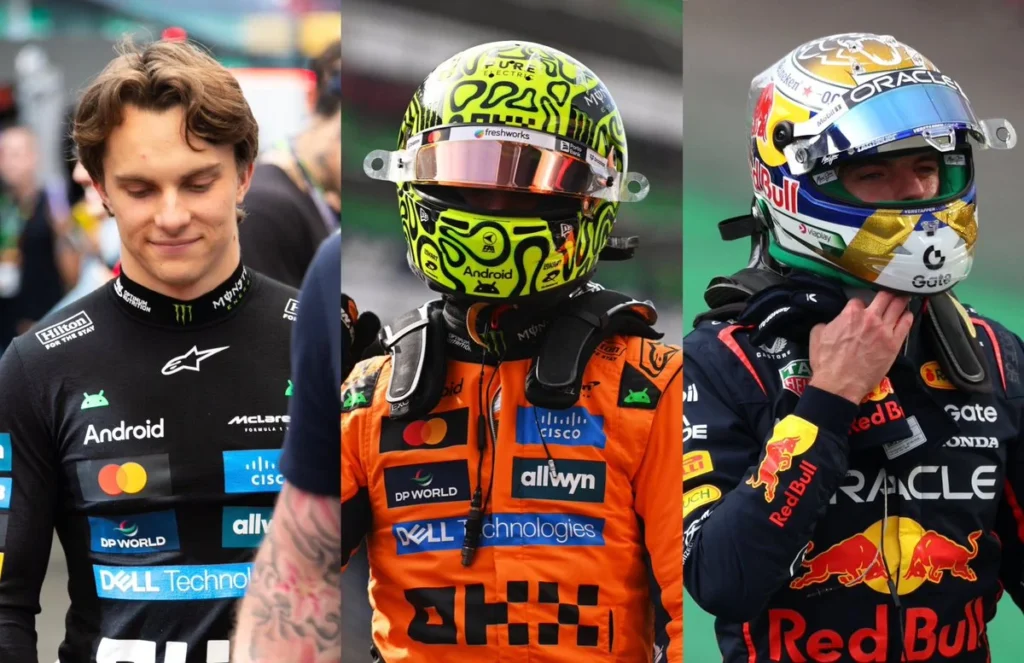
The 2025 Formula 1 season was poised for a coronation in the Arabian desert. After a season of shifting tides, McLaren arrived at the Lusail International Circuit with a hand firmly on the trophy. They possessed the fastest car, the momentum of a dominant development curve, and a driver in Lando Norris who had, albeit with stumbles, reeled in a 104-point deficit to Max Verstappen. The Qatar Grand Prix was meant to be the coup de grâce—a confirmation of a new era in Formula 1.
Instead, Sunday night in Lusail delivered one of the most inexplicable strategic implosions in the modern history of the sport. It was an evening where the relentless pressure of a title fight cracked the operational foundations of a team still relearning the art of winning. Through a combination of hesitation, miscalculation, and perhaps the paralyzing fear of internal conflict, McLaren managed to snatch defeat from the jaws of a certain victory.
The result—a victory for Max Verstappen, a furious second place for Oscar Piastri, and a salvage job for fourth by Lando Norris—has shattered the certainty of the championship. The “procession” to the title is dead. In its place, a chaotic, three-way “knife fight” has emerged heading into the season finale in Abu Dhabi.
This report serves as an exhaustive forensic analysis of the events in Qatar. We will dissect the granular details of the strategic failure, analyze the psychological disintegration of the McLaren pit wall, explore the technical constraints of the Pirelli tyre mandate that forced the error, and map the chaotic permutations that now define the “F1 2025 championship battle.”
The Narrative Arc: From Dominance to Despair
To understand the gravity of Qatar, one must view it not as an isolated incident but as the crescendo of a high-tension narrative. The season has been defined by Red Bull’s early dominance followed by a precipitous decline, and McLaren’s meteoric rise hampered by operational fragility.
- The Hunter: Lando Norris, fighting the “imposter syndrome” and the weight of expectation.
- The Hunted: Max Verstappen, fighting a car (the RB21) that has become difficult, bouncing, and slow, yet driving with the “nothing to lose” attitude of a four-time champion.
- The Wildcard: Oscar Piastri, the “Iceman,” whose loyalty to the team is being tested to its breaking point by strategic decisions that consistently disadvantage him.
The Qatar GP was the pressure test. McLaren failed it.
The Context of Chaos: The Las Vegas Hangover and the Points Gap
The seeds of the Qatar disaster were arguably sown a week earlier on the streets of Las Vegas. The context of the “Las Vegas Hangover” is critical to understanding the risk-averse, yet paradoxically risky, decision-making in Lusail.
The Las Vegas Disqualification Nightmarev
Heading into the final triple-header, McLaren was cruising. However, the Las Vegas Grand Prix delivered a shock to the system. Despite finishing strong on track (Norris 2nd, Piastri 4th), both McLaren drivers were disqualified post-race for excessive wear on the skid blocks.
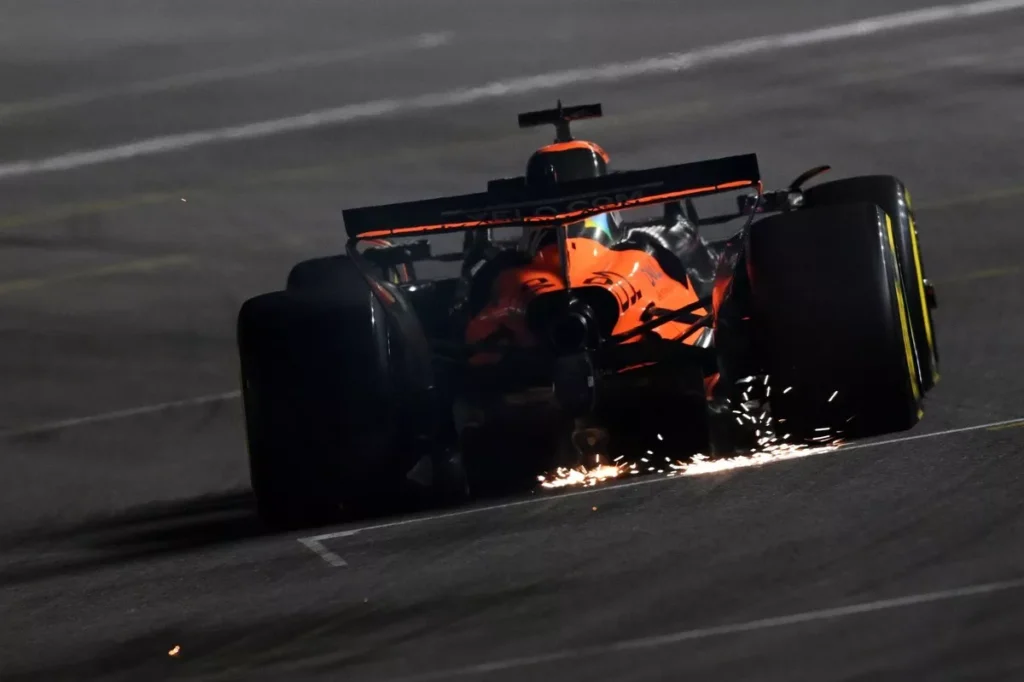
- The Technical Infringement: The skid blocks were worn beyond the 9mm limit. This was a setup error—running the car too low on the bumpy Vegas strip.
- The Championship Impact: The disqualification wiped valuable points off the board and, crucially, allowed Max Verstappen (who won in Vegas) to vault back into serious contention.
- The Psychological Scar: This error likely instilled a deep sense of paranoia within the McLaren engineering team. The fear of “getting it wrong” again was palpable. Did this contribute to their hesitation in Qatar? The evidence suggests a team operating in a state of heightened anxiety, afraid to make bold calls, which ironically led to the boldest (and worst) non-call of the season.
The Standings Entering Qatar
Arriving in Doha, the points situation was tight but manageable for Norris.
- Norris Gap: +24 points ahead of Verstappen.
- Piastri Gap: -24 points behind Norris (tied with Verstappen).
- The Objective: A clean weekend would effectively seal the deal. If Norris outscored Verstappen by 2 points, he would be champion.
Instead of a coronation, the paddock arrived to find a Red Bull team that was “down but not out” and a McLaren team walking on eggshells.
Friday and Saturday: The Illusion of McLaren Supremacy
The on-track action in Qatar initially reinforced the narrative that the title was McLaren’s to lose. The MCL39 was perfectly suited to the high-speed, high-downforce sweeping corners of Lusail.
The Sprint: Piastri’s Masterclass
The Sprint weekend format meant only one practice session (FP1), putting a premium on immediate setup correlation. Oscar Piastri topped FP1, signaling his intent.
In the Sprint race, Piastri was untouchable.
- Pole to Flag: He converted Sprint Pole into a dominant victory.
- Tyre Management: He managed the soft tyres perfectly, keeping George Russell (Mercedes) at bay.
- Norris’s Struggle: Lando Norris finished 3rd, having compromised his Sprint Qualifying with a gravel excursion at the final corner. This was the first “unforced error” of the weekend from the championship leader.
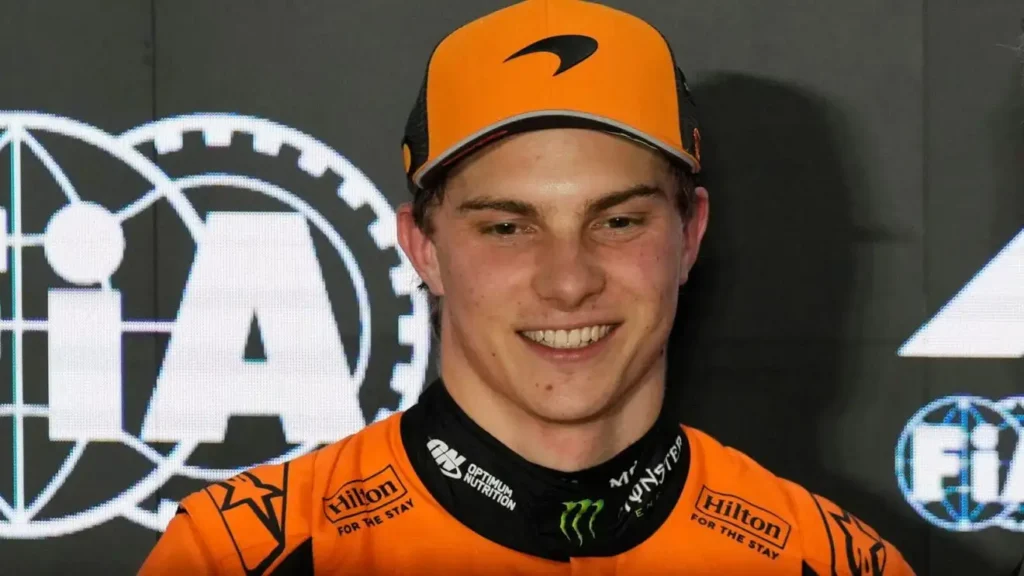
The Sprint result (Piastri 1st, Norris 3rd, Verstappen 4th) narrowed the gap but highlighted a growing issue: Piastri was faster and more composed than his teammate.
Grand Prix Qualifying: The Turn 2 "Choke"
Qualifying for the main Grand Prix was the first major turning point. The session was held under the floodlights, with track temperatures dropping.
- Q3 Final Runs: Lando Norris was on a lap that telemetry suggested was good enough for pole.
- The Mistake: Into Turn 2, Norris carried too much speed. The front end washed out in a snap of understeer. He had to abort the lap to avoid track limits violations.
- The Result: Norris P2. Piastri P1.
- The Team Reaction: Andrea Stella confirmed the lap was “gone” instantly. Norris was heard on the radio asking, “First, second, third, where am I?” The answer—P2—was devastating.
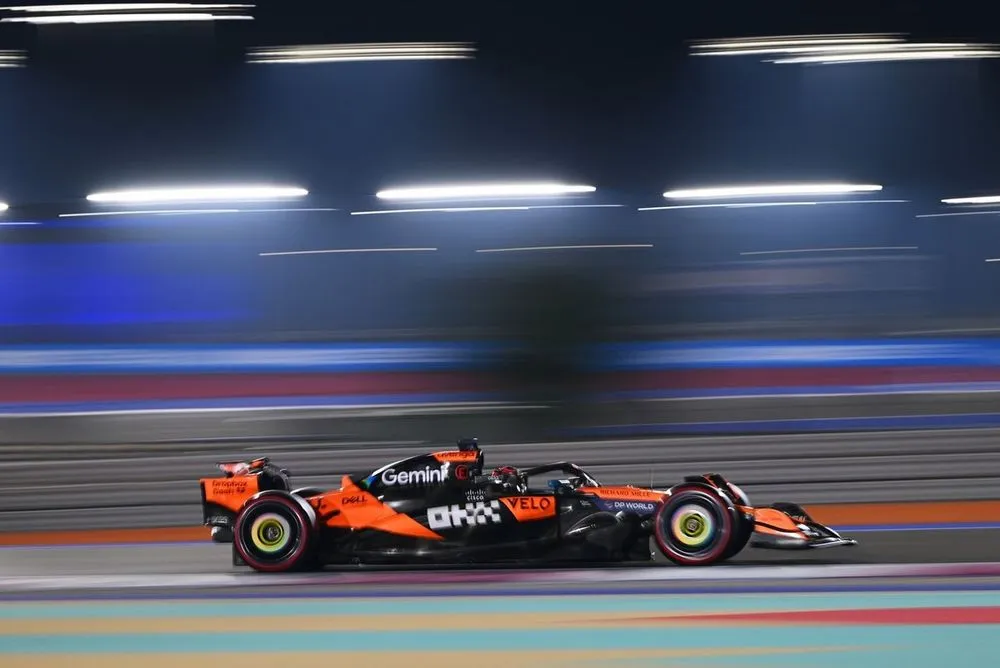
Why P2 Was a Disaster:
At Lusail, the even-numbered grid slots (P2, P4, P6) are on the “dirty” side of the track. The desert sand accumulates off-line, significantly reducing traction for the start.
- Norris (P2): Dirty line.
- Verstappen (P3): Clean line, directly behind Piastri.
This qualifying error by Norris was a microcosm of his season: immense speed, punctuated by micro-errors at critical moments. It handed the strategic advantage to Verstappen before the race even began.
Sunday: The Start and The Ambush
Race day. The atmosphere was electric. The points permutations were complex, but the race equation was simple: Norris needed to stay ahead of Verstappen.
The Physics of the Launch
As the lights went out, the grip differential played out exactly as feared.
- Oscar Piastri (P1): Launched perfectly from the clean side. He retained the lead comfortably into Turn 1.
- Lando Norris (P2): Bogged down on the sandy surface. His reaction time was good, but the tires simply spun.
- Max Verstappen (P3): Executed a “textbook getaway” from the clean side. He hooked up immediately, drawing alongside Norris before the braking zone.
The Overtake at Turn 1
The run to Turn 1 is short at Lusail. Verstappen, holding the inside line and carrying more momentum, braked late.
- The Ambush: Verstappen dived down the inside. Norris, perhaps driving with the championship in mind (a crash would be catastrophic), yielded. He did not fight aggressively.
- The Order Change: By the exit of Turn 1, Verstappen was P2, Norris was P3.
This was “very significant”. It placed a Red Bull wedge between the two McLarens. Piastri was now alone at the front, while Norris was stuck in dirty air behind his title rival.
However, the McLaren pace advantage was real. Within a few laps, Piastri began to stretch his legs, and Norris stayed glued to Verstappen’s gearbox. The race seemed destined to be a long strategic battle where McLaren’s superior tyre wear would eventually prevail.
Then came Lap 7.
The Anatomy of a Collapse: The Lap 7 Strategic Blunder
The decision made on Lap 7 will be studied in F1 strategy seminars for years to come. It was a failure of game theory, a failure of math, and a failure of nerve.

The Trigger: The Safety Car
On Lap 7, chaos erupted in the midfield. Nico Hulkenberg (Kick Sauber) and Pierre Gasly (Alpine) collided at Turn 1. Hulkenberg’s car was stranded in the gravel trap.
- Race Control: Deployed the Safety Car.
- The Implications: The field bunched up. Pit lane speed limits applied.
The Critical Constraint: The 25-Lap Tyre Mandate
This is the most crucial piece of context. Due to concerns about tyre integrity on the jagged “pyramid” kerbs of Lusail, the FIA and Pirelli mandated a maximum stint length of 25 laps per set of tyres.
- The Math: Race distance = 57 laps.
- Minimum Stops: Every driver must make at least two stops (25 + 25 + 7 = 57).
- The Lap 7 Window: Lap 7 was the perfect time to pit. A driver pitting on Lap 7 could run two subsequent stints of 25 laps (Lap 7-32, Lap 32-57) and complete the race efficiently.
- The “Cheap” Stop: Pitting under the Safety Car costs roughly 12-14 seconds of race time. Pitting under Green Flag conditions costs 24-26 seconds. Pitting under the SC is essentially “free time.”
The Decision Matrix
As the Safety Car lights came on, the pit lane erupted.
- Red Bull: Called Verstappen in immediately.
- Mercedes/Ferrari/Williams: Called their drivers in.
- The Entire Field: 18 cars prepared to pit.
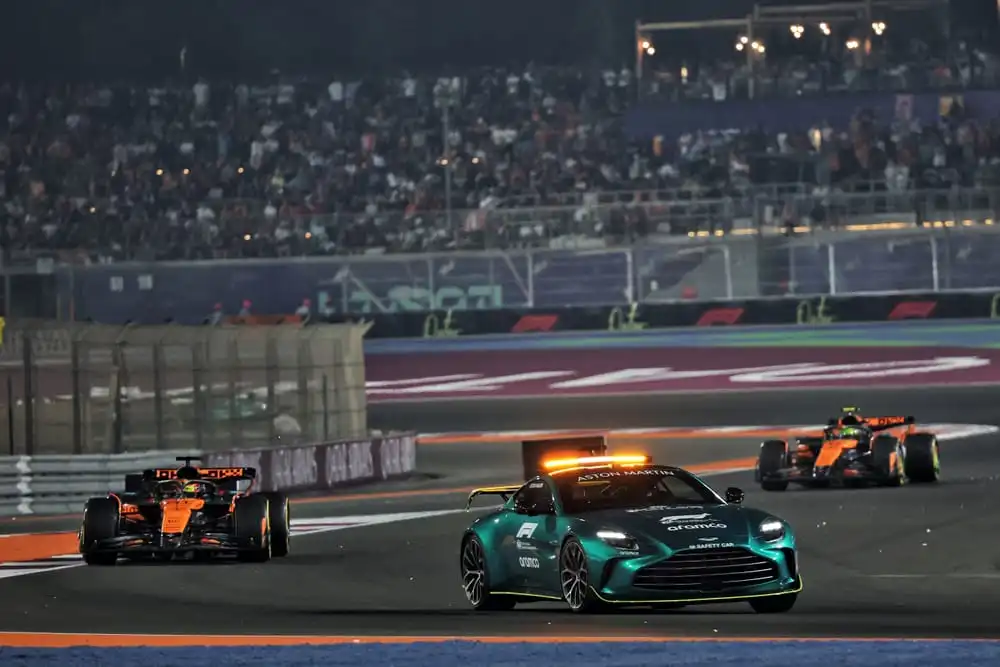
McLaren’s Reaction:
McLaren did… nothing.
The team radio transcripts reveal confusion and hesitation.
- Oscar Piastri: “I asked, ‘what are we doing?’ Because we were getting pretty close to the pit entry… I think when you don’t get a call instantly… there’s probably some discussions going on”.
- Lando Norris: “We should have just followed him [Verstappen] in, no?”.
McLaren left both cars out.
Why Did They Do It? The "Double Stack" Paralysis
Post-race analysis and comments from Team Principal Andrea Stella point to a “perfect storm” of flawed logic.
- The Double Stack Fear: With Piastri P1 and Norris P2 (after Verstappen pitted), bringing both in would require a “double stack” (servicing Piastri, then immediately servicing Norris).
- The Fear: A delay on Piastri’s wheel nut would ruin Norris’s race.
- The Counter-Point: Even a slow double stack costing Norris 3-5 seconds is infinitely better than staying out and losing 20+ seconds under green flag conditions later.

2. The “Expectation” Error: Andrea Stella admitted: “In fairness, we didn’t expect everyone else to pit”.
- This is a shocking admission. With the 25-lap limit, pitting was the only logical mathematical solution. McLaren failed to anticipate that their rivals would do the obvious thing.
3. The “Papaya Rules” Paralysis: McLaren has been plagued all season by a desire to treat both drivers equally.
- To pit Piastri and leave Norris out would sacrifice Norris (bad for the Drivers’ Title).
- To pit Norris and leave Piastri out (to avoid stacking) would sacrifice Piastri (bad for team morale).
- The Compromise: By staying out with both, they treated them equally… by ruining both their races.
The Result: Checkmate
When the race restarted, McLaren was dead in the water.
- Track Position: Piastri P1, Norris P2.
- Tyre State: Old tyres (7 laps used).
- Rivals: Verstappen P3, on brand new Hards, right behind them.
- The Trap: Because of the 25-lap limit, McLaren had to pit soon (by Lap 25). When they did, they would drop into traffic, 20+ seconds behind Verstappen who wouldn’t need to stop again until Lap 32.
They had handed the lead, the win, and the momentum to Max Verstappen for free.
The Radio Meltdown: "Speechless" and "Soft Tyres"
The middle phase of the race was a psychological torture test for the McLaren drivers. The radio communications reveal a breakdown in trust.
Piastri's Fury
Oscar Piastri is known for his calm demeanor. He rarely raises his voice. In Qatar, he broke.
- The Realization: Once the strategy played out and he realized he was racing for a distant second, his radio message was chilling: “I haven’t spoken to anyone but I feel pretty c**p as you can imagine. I don’t know what to say… Speechless”.
- The Anger: “Clearly we didn’t get it right today… It’s pretty painful”.
The Soft Tyre Controversy
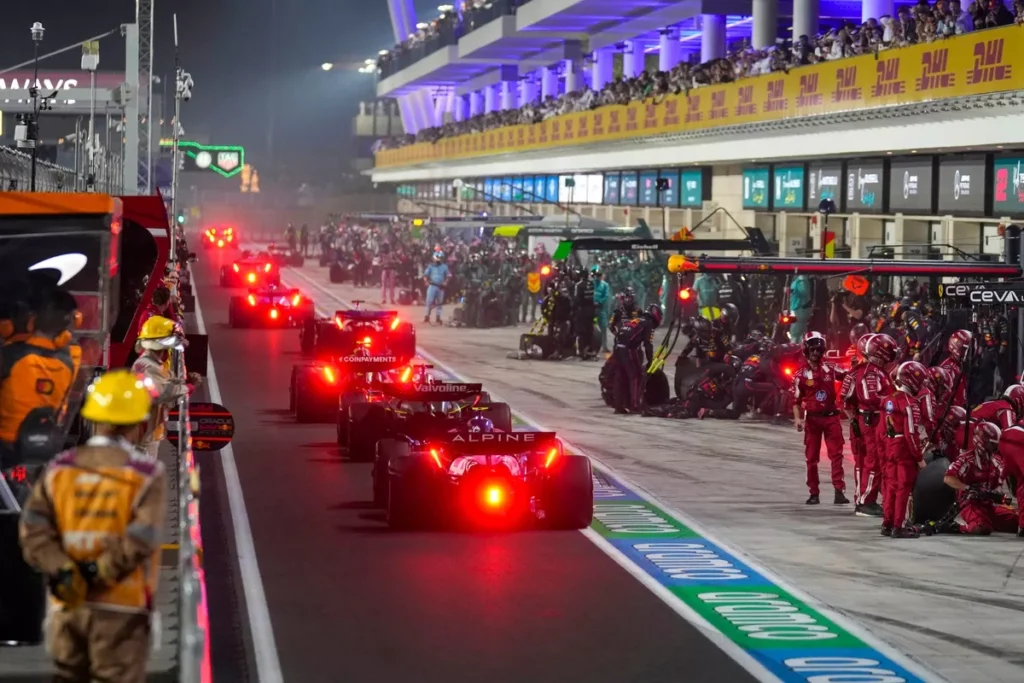
As the race wound down, Piastri tried to salvage the win. He knew catching Verstappen on equal tyres was impossible given the gap.
- The Request: Piastri requested to switch to Soft Tyres for the final stint. He wanted to use the grip advantage to hunt Verstappen down.
- The Logic: “What do you have to lose?” If he stayed on Hards, he finishes 2nd. If he tries Softs, he might win or might finish 2nd.
- The Refusal: McLaren denied the request, fitting Hard Tyres.
- The Implication: This decision suggests a team completely paralyzed by risk aversion. They were terrified of the Softs degrading (despite the 25-lap limit meaning short stints) and chose the “safe” P2 over a potential win. This refusal likely deepened the rift between Piastri and the pit wall.
Norris's Resignation
Lando Norris sounded defeated long before the flag.
- The Quote: “We shouldn’t have done what we did. Simple as that”.
- The Impact: Norris spent the race stuck in traffic after his pit stop, unable to use his car’s pace. He was fighting with Williams and Mercedes instead of Red Bull.
The Resurrection of the Monster: "Call Me Chucky"
While McLaren imploded, Max Verstappen delivered a performance that justifies his status as one of the sport’s all-time greats.
The "Chucky" Metaphor
Earlier in the weekend, Zak Brown (McLaren CEO) had jokingly compared Verstappen to a horror movie villain who “returns from the dead” just when you think you’re safe.
- The Response: After winning the race, Verstappen sat in the press conference, smiled, and said: “You can call me Chucky”.
- The Psychology: This was a masterstroke of psychological warfare. It signaled that he was enjoying the chaos. While Norris was anxious and Piastri was furious, Verstappen was laughing. He had “checked out” of the title fight mentally months ago, and now that he was back in it, he was playing with “house money.”
The Drive
Verstappen’s drive was clinical.
- The Start: Won the race at Turn 1.
- The Strategy: Pitted immediately on Lap 7 (decisive).
- The Pace: On the Hard tyres, he matched the McLarens. The RB21 was not the fastest car, but it was fast enough in his hands.
- The Result: A 7.9-second victory.
This win slashed the gap to Norris to just 12 points.
The Midfield Spoilers: Williams and Mercedes
The championship battle wasn’t just decided by the top three. The “spoilers” in the midfield played a huge role in the points swing.
Carlos Sainz and Williams

The shock of the weekend was Williams. Carlos Sainz delivered a podium (P3) that nobody predicted.
- The “Gambling Pundit” Result: The high-downforce Lusail track should have killed the Williams FW47. Instead, Sainz qualified 7th and raced brilliantly.
- The Impact: By finishing 3rd, Sainz took valuable points away from Norris (who finished 4th). If Sainz hadn’t been there, Norris would be P3, and the gap would be 15 points, not 12.
Kimi Antonelli's Mistake
The Mercedes rookie, Kimi Antonelli, played a dramatic late role.
- The Battle: Antonelli was running 4th, holding off Norris in the closing stages.
- The Error: On the penultimate lap, Antonelli made a mistake, running wide.
- The Pass: This allowed Norris to sneak through into 4th place.
- The Significance: Those extra 2 points for Norris (difference between 4th and 5th) could be the difference between winning and losing the title in Abu Dhabi. It was a lifeline in a weekend of disasters.

The Standings and Permutations: The Showdown in Abu Dhabi
The Qatar GP has created a scenario that F1 executives dream of. A three-way decider in the desert.
The Driver Standings (Post-Qatar)
Pos | Driver | Team | Points | Gap to Leader |
1 | Lando Norris | McLaren | 408 | – |
2 | Max Verstappen | Red Bull | 396 | -12 |
3 | Oscar Piastri | McLaren | 392 | -16 |
The "Winner Takes All" Scenarios
With 26 points available (25 for Win + 1 for Fastest Lap), the math is chaotic.
Scenario A: Lando Norris Wins the Title If…
- He finishes on the podium (1st, 2nd, or 3rd). If he does this, Verstappen cannot catch him mathematically (even if Verstappen wins with Fastest Lap, 396 + 26 = 422. Norris 3rd = 408 + 15 = 423).
- He finishes 4th or 5th and Verstappen does not win.
- He DNFs, but Verstappen finishes off the podium and Piastri doesn’t win.
Scenario B: Max Verstappen Wins the Title If…
- He wins the race (25 pts) AND Norris finishes 4th or lower.
- He finishes 2nd AND Norris finishes 9th or lower (and Piastri doesn’t win).
- The “Chucky” Path: Verstappen needs to win and hope for chaos behind him.
Scenario C: Oscar Piastri Wins the Title If…
- He wins the race (25 pts) AND Norris finishes 6th or lower.
- He finishes 2nd AND Norris finishes 10th or lower AND Verstappen is 3rd or lower.
The "Papaya Rules" Dilemma
The biggest question mark for Abu Dhabi is McLaren’s team orders.
- The Problem: Piastri is still in the hunt (-16 points). He has a mathematical chance.
- The Conflict: If Piastri is leading the race and Norris is 4th, does McLaren ask Piastri to give up the win to block Verstappen? Or do they let Piastri race for his own slim chance?
- The History: McLaren has hesitated to use orders all year. In Qatar, they effectively ruined both races to be “fair.” If they hesitate in Abu Dhabi, they could lose everything.
Conclusion: A Legacy of Fragility?
The 2025 Qatar Grand Prix exposed a fundamental truth about the current state of Formula 1: Speed is nothing without execution.
McLaren has the fastest car. They have two elite drivers. But they lack the “championship DNA” that Red Bull and Max Verstappen possess in spades. The strategic collapse in Lusail—driven by fear of the double stack and a failure to do basic math regarding the 25-lap limit—was a self-inflicted wound that has resurrected a rival who should have been buried months ago.
Lando Norris heads to Abu Dhabi with a 12-point lead, but his confidence is battered. He made a qualifying error in Qatar. He was passive at the start. He was let down by his team.
Max Verstappen heads to Abu Dhabi as “Chucky.” He is loose, he is dangerous, and he believes the pressure is entirely on the papaya cars.
The stage is set for the most dramatic finale since 2021. Will McLaren find their nerve? Or will the “monster” complete the greatest comeback in F1 history?
Final Prediction: Expect absolute chaos. The team that blinks first will lose. And based on Qatar, McLaren is blinking.
The Lap 7 Decision Matrix
Factor | Option A: PIT (Red Bull Strategy) | Option B: STAY OUT (McLaren Strategy) |
Immediate Cost | ~12 seconds (under Safety Car) | 0 seconds (retain track position) |
Future Cost | 0 seconds (on strategy) | ~24 seconds (Green Flag stop required later) |
Tyre Status | Fresh Hards/Mediums | Used Mediums (7 laps old) |
25-Lap Limit | Reset (Can run to Lap 32) | Critical (Must pit by Lap 25) |
Net Result | OPTIMAL | CATASTROPHIC |