
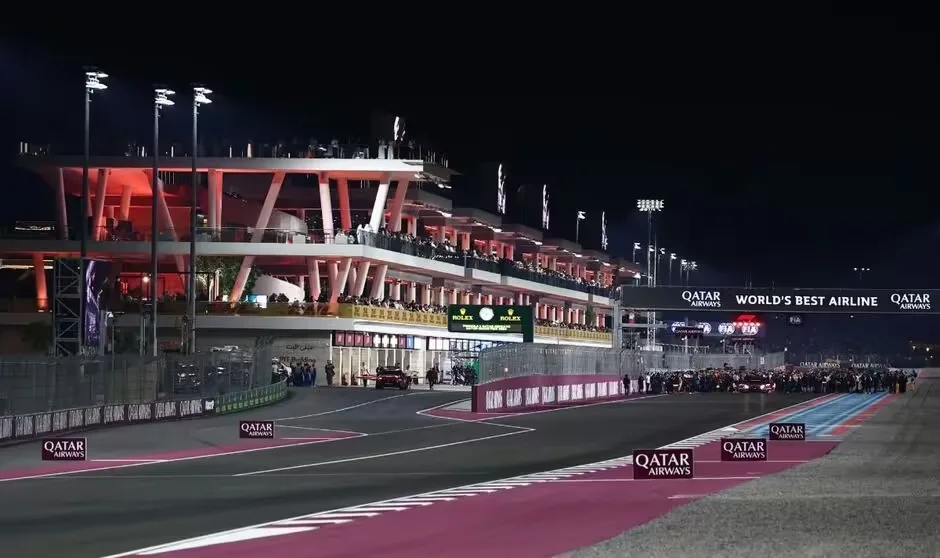
The 2024 Precedent: A Dangerous Near-Miss
The 2024 (previously scheduled for 2023) Qatar Grand Prix did not merely present a tough physical challenge; it constituted a critical breach of safety boundaries, where environmental conditions and technical limitations combined to produce a systemic health hazard for the drivers. The post-race investigation confirmed that the conditions had pushed elite human endurance past a dangerous physiological limit, necessitating immediate and sweeping regulatory adjustments.
Conditions of Crisis: Quantifying the Thermal and Physiological Load
The race at the Losail International Circuit was characterized as a “perfect storm” of compounding thermal and physical stressors. Ambient temperatures were high, exacerbated severely by humidity that dramatically “ramped up on race day”. This combination of factors elevated the thermal environment within the closed cockpit to unsustainable levels.
Measurements taken during the event indicated that the track surface reached approximately 50C. Crucially, the internal environment of the driver’s cockpit—an enclosed space shielded from natural airflow—was reported to have exceeded 60C for the entire duration of the 90-minute Grand Prix. This sustained exposure to hyperthermic conditions demanded maximum physiological regulation from the drivers, who were essentially operating in an oven-like environment.
Adding to the thermal burden was the unique strategic requirement of the 2024 race. Due to mandatory one-off tyre rules, the 57-lap Grand Prix was effectively transformed into a series of short, maximum-effort sprints. This intense format imposed draining, heavy g-loadings through the Losail circuit’s fast corner combinations. This pace eliminated the crucial moments of respite normally afforded during periods of routine tyre management, denying drivers the chance to manage their core temperature and heart rate. The combination of extreme external thermal conditions, an aggressive rise in humidity, and continuous maximal physical exertion created a profound physiological threshold breach that compromised human function.
Case Studies in Collapse: Acute Driver Exhaustion and Medical Failure
The severity of the crisis was immediately validated by the alarming number of acute medical incidents suffered by drivers, extending beyond simple fatigue into verifiable physical system collapse.

The most extreme cases highlighted the intrinsic danger of the event :
- Logan Sargeant: The Williams driver was unable to complete the race distance, retiring prematurely on Lap 40 due to heatstroke. His withdrawal confirmed that the sustained conditions were medically unsafe.
- Esteban Ocon: The Alpine driver required medical intervention after suffering acute physical distress, which included being sick inside his helmet during the race. This demonstrated a critical failure of the body’s thermal regulation systems under heat load.
- Lance Stroll: The Aston Martin driver reported the most concerning symptoms, revealing that he was “passing out in the car” and fading in and out of consciousness multiple times. Momentary loss of orientation or control at speeds exceeding 300 km/h represents an unacceptable risk to all competitors and necessitates fundamental intervention.
Drivers, including Lando Norris, universally validated the danger, stating the situation was “too much” and “pretty dangerous”. This collective assessment shifted the regulatory focus from expecting unlimited driver fitness to implementing mandatory technical solutions to ensure a safe cockpit environment in extreme conditions.
The Technical Impact: Driver Impairment and the Margin of Error
The critical consequence of driver thermal stress is the quantifiable degradation of cognitive function, which directly erodes the razor-thin margin of error available in high-performance motorsport.
Scientific evidence quantifies this dangerous link: studies focusing on heat stress show a significant decline in vigilance, where the overall proportion of signals missed increased by 50% in elevated temperatures. Furthermore, crucial cognitive response times lengthened by 22%. These performance deficits were found to be disproportionately greater in the latter stages of the activity, precisely when driver fatigue and thermal load peaked during the Qatar Grand Prix.
Applying these metrics to the Losail circuit, which demands constant, precise inputs under heavy G-forces, demonstrates a severe safety deficit. A 22% delay in reaction time, or a 50% increase in missed peripheral signals or vital dashboard information, translates directly into critically compromised safety margins during braking, steering corrections, and incident avoidance.
The acute medical incidents observed, such as Stroll’s intermittent consciousness, represented a catastrophic system failure that transcends simple measurable delay. A conscious loss of control, even for a fraction of a second at F1 race speeds, exposes the entire grid to high-energy, multi-car collisions. The regulatory imperative established by the 2024 race is that conditions must never again be allowed to breach the non-negotiable threshold for human safety integrity; the only viable solution is to actively engineer the car environment to sustain human cognitive and physiological function.
Heat Mitigation: Immediate and Long-Term Solutions
In the immediate aftermath of the 2024 thermal crisis, the FIA moved quickly to implement a dual-layered, redundant system of safety measures, combining proactive calendar changes with mandatory technical innovations.
Strategic Calendar Adjustment and Thermal Relief
The first line of defense against thermal risk involved strategically rescheduling the event. F1 CEO Stefano Domenicali acknowledged the difficulty of the early October slot in 2024 and confirmed the race would move.
The 2025 Qatar Grand Prix has been officially shifted to the weekend of November 28-30. This schedule adjustment positions the race within the recognized Qatari winter period, which features significantly milder and more pleasant climatic conditions. Historically, average high temperatures during the winter months drop substantially to range between 15C and 20C, offering significant relief compared to the intense 35C average daytime highs experienced in October.
While the November/December scheduling provides necessary passive thermal relief, the FIA’s subsequent implementation of the 31C Heat Hazard protocol confirms that calendar adjustment alone is not considered a sufficient safety guarantee. This proactive protocol ensures that if pre-weekend weather forecasts predict temperatures of 31 C or above at any point during a Sprint or Grand Prix, the use of active cooling technology becomes mandatory. This dual approach signifies the adoption of a safety redundancy philosophy, ensuring that human performance is protected even if regional climate fluctuations occur.
Mandated Cockpit Cooling Technology: Technical Deep Dive
The most substantial regulatory change is the mandatory introduction of the Driver Cooling System (DCS), officially defined as a safety component whose “sole purpose… is to provide additional cooling for the driver”. This move transitions F1 from reliance on passive methods toward an actively engineered solution for human thermal regulation.
Technical Specifications and Mechanism
The FIA formally approved updates to the technical regulations to permit the installation of air intakes and additional cooling options. The mandated DCS technology, miniaturized from existing high-performance motorsports applications, is based on a closed-loop fluid circulation system.

The system’s technical specifications include:
- Cooling Unit: A micro-compressor, evaporator, and condensation unit encased in a carbon fiber structure.
- Fireproof Shirt: Worn beneath the race suit, this crucial garment contains approximately 48 meters of specialized tubing to maximize thermal exchange across the driver’s chest and back.
- Operation: Cooling fluid is actively pumped from the external unit through the network of tubing to draw heat directly from the driver’s core.
The design is optimized for safe physiological balance. The system is engineered to circulate fluid at an optimal temperature of approximately 15 C, a level that provides comfort and reduces heart rate and respiration without negatively impacting blood flow or performance. This regulated capacity allows the system to effectively reduce a driver’s core temperature from a distressed 39 C down to a stable, optimal 36.5 C. This active thermal stabilization is designed specifically to mitigate the cognitive degradation (missed signals and delayed reactions) observed in 2024.
Economic and Regulatory Frameworks of Cooling
The integration of complex safety technology requires careful management of cost and weight impacts within the competitive regulatory structure of F1.
Budget Cap Exemption: To ensure universal and swift adoption, the FIA implemented a crucial financial adjustment. Costs associated with the development, definition, and implementation of the DCS are explicitly excluded from the annual budget cap, falling under exceptions related to sustainability and safety improvements. This regulatory maneuver removes any competitive or financial argument against prioritizing mandatory driver safety technology.
Weight Management and Phased Integration: The physical system, including the external battery pack required for 2025, necessitated an increase in the car’s minimum weight. To maintain competitive parity, the FIA proactively increased the car’s minimum weight by five kilograms for any race requiring the DCS. This compensates for the required safety ballast (the system itself weighs under 2kg. Looking ahead to the 2026 technical regulations, the DCS will be seamlessly integrated into the new chassis design, drawing power directly from the car and eliminating the need for the external battery pack, thereby optimizing the system’s weight and integration.
Track and Infrastructure Safety Enhancements (Beyond Heat)
The thermal crisis overshadowed other deficiencies in the 2024 Qatar Grand Prix related to circuit infrastructure and operational management protocols.
Surface Abrasiveness and Tyre Integrity: The 25-Lap Mandate
The Losail International Circuit presents an unusual challenge in the form of highly abrasive track surface characteristics, which lead to unsustainable structural fatigue in the tyres under racing conditions.
For the 2025 event, analysis of the 2024 race data revealed critical wear on the tyre construction, particularly on the left front. This wear is driven by the abrasive nature of the Losail asphalt combined with the intense thermal stress and severe lateral energy demands imposed by the circuit’s high-speed corners. To prevent structural failure, Pirelli, in agreement with the FIA, has enforced an exceptional strict maximum stint limit of 25 laps per set of tyres across all race weekend sessions.
This mandate forces a minimum two-stop race strategy for the 57-lap Grand Prix. While this intervention successfully mitigates the immediate risk of catastrophic tyre failure, its implementation functions as a profound regulatory admission that the current circuit surface is intrinsically hostile to Formula 1 tyres under high-load conditions. The surface acts like “sandpaper”, demanding an artificial constraint on racing strategy. For Losail to achieve long-term viability as a standard F1 venue supporting flexible racing, a complete circuit resurfacing is the eventual infrastructural solution required to reduce abrasion and the resultant structural fatigue.
Barrier and Run-Off Review: Procedural Risk Miscalculation
The 2024 event also exposed critical operational safety flaws regarding debris management by Race Control. During the Grand Prix, Alex Albon’s side mirror detached and landed off the racing line on the high-speed run toward Turn 1, the circuit’s primary overtaking zone.
Race Control made the controversial decision not to neutralize the race immediately, justifying the inaction by stating that “normal practice is for the safety car not to be deployed if there is a small amount of debris, and off the racing line”. This delay led directly to an escalation of the hazard: a driver moving off the racing line to lap a competitor subsequently hit the debris, immediately causing punctures for Lewis Hamilton and Carlos Sainz shortly thereafter.
The analysis confirms a procedural risk miscalculation. The FIA placed misplaced confidence in drivers avoiding debris rather than neutralizing the threat immediately. At high speeds, the definition of “off the racing line” is insufficient, as drivers inevitably use varied lines, especially during lapping. This incident mandates a fundamental revision of operational protocols for the 2025 event, requiring that any confirmed metallic or structural debris on high-speed sections must trigger the immediate deployment of a Virtual Safety Car (VSC) or Safety Car (SC) to ensure the safety of the entire field.
Regulatory Accountability and Implementation
The response to the 2024 crisis demands accountability from both the FIA (governance) and the Losail International Circuit (infrastructure).
The FIA’s Decisive Directives and Implementation Timeline
The Fédération Internationale de l l’Automobile (FIA) demonstrated decisive regulatory commitment. The necessary rule changes for the 2025 season were formally integrated into the technical and financial regulations, culminating in the publication of the 2025 Formula 1 Technical Regulations on December 11, 2024.
The directives mandate the Driver Cooling System, provide compensatory weight increases, exclude cooling costs from the budget cap , and enforce the strict 25-lap limit on tyres. This coordinated action across technical, financial, and sporting spheres ensures that teams are fully enabled and compelled to prioritize driver safety. The timeline demonstrates that immediate and comprehensive regulatory action was finalized within weeks of the 2024 incident.
The Circuit’s Commitment: Financial Retrenchment and Infrastructure Ambiguity
In the crucial area of host infrastructure, the commitment from the Losail International Circuit (LIC) promoter is reportedly concerningly ambiguous.
While LIC is engaging in high-profile promotion, such as hosting the inaugural Global Race Track Summit and Awards in February 2026, which showcases its commitment to “innovation” and “excellence” , reports suggest a contradictory reality regarding immediate infrastructural readiness for 2025. Planned infrastructure enhancements, which were initially budgeted for significant investment (at one point nearing €350 million), have been drastically postponed and scaled back due to alleged “financial constraints and logistical hurdles”. Reports specify that components essential for logistical flow and safety response, such as additional tunnels and new internal roads, have faced cancellation or budget cuts.
This financial retrenchment creates a serious governance risk. The FIA has addressed the safety failures of the car, but the promoter must ensure the safety of the venue. Insufficient investment in logistical infrastructure can critically compromise rapid emergency access and medical response times, potentially neutralizing the effectiveness of the FIA’s car-side safety mandates. The apparent prioritization of high-level branding over the verifiable completion of essential safety and logistical upgrades creates an unacceptable risk. The FIA must therefore demand quantifiable proof of expenditure and completion timelines for all necessary infrastructural upgrades before the 2025 Grand Prix to ensure full compliance with hosting requirements.
Conclusion: The Qatar GP 2025 – A Test Case for Driver Welfare
The 2024 Qatar Grand Prix exposed a critical systemic failure where environment, technology, and operations combined to jeopardize human health. The FIA’s regulatory response—mandating active cockpit cooling, providing financial exemptions, and enforcing extreme tyre safety measures—demonstrates a non-negotiable commitment to preventing a recurrence of the thermal crisis. These technical mandates represent a significant advancement in motorsport safety, ensuring physiological resilience in extreme climates.
However, the efficacy of these technical advances is critically dependent upon the commitment of the host venue. The reported postponement and scaling back of essential infrastructure investments by the Losail International Circuit creates a critical liability. An elite safety framework on the car must be matched by a robust, fully operational, and logistically sound venue.
The Qatar Grand Prix 2025 is the ultimate test case for the FIA’s commitment to driver welfare and regulatory enforcement. It requires the governing body to demonstrate absolute command, ensuring that mandatory safety measures are not limited to the technical specifications of the race cars, but are matched by verifiable, concrete, and financially supported infrastructural readiness from the host circuit. The credibility of Formula 1 in managing extreme conditions hinges on this event, demanding that the health and safety of its elite athletes are treated as an unquestionable imperative.


This is quite the motoring hot potato! While the FIAs quick fix of mandatory cooling and a later race date for Qatar sounds responsible, isnt it a bit like curing a fever with an ice cube and hoping the underlying flu goes away? Mandating driver cooling is progress, but relying on a budget cap exemption seems… convenient. And lets be real, telling drivers to swerve away from off-line debris at 200 mph is like asking a cat to ignore a laser pointer. The biggest laugh, though, is Losail promising innovation while cutting infrastructure corners. It’s like demanding a five-star meal but only giving the chef one pot to cook in! The real test in 2025 wont just be on the drivers skills, but on whether the FIA can enforce its safety bluster without the venue flinching at the cost. One to watch, indeed!