
Tension at Maranello? Ferrari Chief Elkann Slams Drivers Over Public Comments
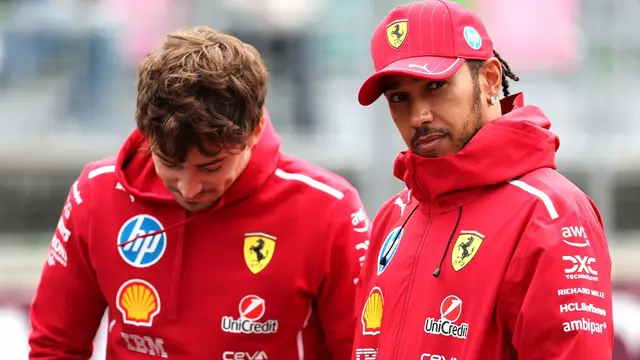
The spotlight on Scuderia Ferrari intensified dramatically this week after Chairperson John Elkann delivered a blistering, public critique aimed directly at the team’s Formula 1 drivers, Charles Leclerc and Lewis Hamilton. In a rare and unusually blunt statement, Elkann told his leading stars to “focus on driving and talk less,” fueling speculation about high-level friction and growing internal pressure within the Maranello structure.
Delivered at an Italian Olympic Committee event in Rome, Elkann’s words echoed through the F1 paddock, stirring significant debate over team discipline, accountability, and the long-term morale of the Scuderia. The statement was far from a simple plea for better performance; it was a directive from the very top of the Italian powerhouse, cementing the notion that Ferrari F1 leadership demands not only pace but also absolute silence amid struggle.
The extraordinary nature of the public rebuke—delivered by the head of the entire organization—has instantly become a major story, raising questions over whether this approach will inspire the team’s celebrated drivers or merely intensify the already suffocating internal atmosphere.
Context — What Led to Elkann’s Comments
Elkann’s pointed criticism was not delivered in a vacuum, but rather in the immediate aftermath of one of Ferrari’s most disappointing race weekends of the season: the São Paulo Grand Prix. The Brazilian event proved catastrophic for the team’s ambition to secure second place in the Constructors’ Championship. Both Hamilton and Leclerc suffered a dramatic double retirement, failing to score any points.
Leclerc’s race ended almost instantaneously in a frightening Turn One collision with Kimi Antonelli, resulting in a ripped front-left wheel. Meanwhile, Hamilton, struggling throughout the weekend to extract performance from the difficult SF-25 chassis, was involved in separate incidents, ultimately retiring late in the race. The zero-point haul allowed rivals to pull ahead, pushing the team into an increasingly uncomfortable fourth position in the Formula 1 2025 constructors’ standings, having been tipped earlier in the year to mount a serious title challenge.
The poor result followed a season marked by frustrating inconsistency, technical reliability gremlins, and several strategic missteps, forcing both drivers to shoulder intense media scrutiny. Following the race, Hamilton himself—who joined the Scuderia for the 2025 season—cut a dejected figure. He publicly described his experience as a mix of excitement and challenge, telling reporters, “This is a nightmare, I’ve been living it for a while. The flip between the dream of driving for this amazing team and then the nightmare of results that we’ve had, the ups and downs, it’s challenging.”
It is these high-profile, candid media remarks, alongside the disappointing track results, that appear to have precipitated the Chairman’s intervention. For Elkann, the internal frustration seems to have reached a boiling point, prompting a response that bypassed the usual channels of the Team Principal.
The Statement — What John Elkann Said
Speaking to reporters, Elkann was meticulous in his division of praise and criticism, reserving his strongest words for the drivers. His overall tone was firm, directive, and arguably frustrated, emphasizing the gap between the team’s performance on the track and the capabilities of the operational staff.
Elkann began by highlighting the achievements of the unsung heroes in Maranello:
However, the tone shifted abruptly when he addressed the core issue of on-track results, issuing a stark ultimatum that mentioned both drivers by implication and, according to several reports, specifically named Leclerc and Hamilton as targets. The core message was unambiguous:
The severity of the quote—demanding a focus on discipline and silence amid Ferrari drivers criticism—is striking. It suggests that Elkann perceives driver comments or post-race discussions as a potential distraction or an unwarranted airing of internal issues in the public domain, jeopardizing the team’s singular focus on securing the runners-up spot in the championship. The demand for silence underscores a desire for absolute unity and focus, regardless of the individual pain of a poor race result.
Reaction — How the F1 World Responded
The Chairman’s harsh words immediately sent ripples across the F1 news landscape. The reaction from the F1 community has been mixed, dividing observers and fans alike.

Driver Response and Silence: Neither Charles Leclerc nor Lewis Hamilton immediately issued a formal response to Elkann’s public critique. However, Hamilton’s earlier statement about the “nightmare” season, which preceded the Chairman’s comments, serves as a testament to the internal pressure. The strategic silence from both drivers following the rebuke may be a direct acknowledgment of the Chairman’s instruction to “talk less.” Team Principal Frédéric Vasseur, who usually manages media relations, has remained guarded, likely focusing on internal management of the fallout.
Pundits and Media Analysis: Leading F1 journalists and pundits swiftly characterized the statement as a major power play. Sky Sports F1 analyst Ted Kravitz suggested the move was less about media management and more about asserting leadership, viewing it as a desperate measure to motivate change. Italian media outlets, ever vigilant regarding Scuderia politics, reacted with a mixture of shock and historical resignation. La Gazzetta dello Sport and Corriere della Sera dedicated significant coverage, with some commentators suggesting the public nature of the statement only serves to increase, rather than alleviate, the pressure cooker atmosphere.
Fan Reaction: On social media platforms, the hashtag #Ferrari quickly trended, with fan opinions starkly divided. A section of the Tifosi agreed with the sentiment, arguing that legendary Ferrari drivers of the past “spoke only on the track,” while another large group criticized Elkann for publicly undermining his star assets, particularly a seven-time World Champion like Hamilton, in his difficult debut year with the team.
Internal Dynamics — Ferrari’s Pressure and Politics
Elkann’s public statement hints at a deeper, underlying internal frustration stemming from a history of high expectations and political instability. For decades, Ferrari has been notorious for its volatile internal dynamics.
The intervention is highly reminiscent of the intense, zero-tolerance leadership style of former CEO Sergio Marchionne, who often used public remarks to pressure team management and drivers. Similarly, the public airing of dissatisfaction contrasts sharply with the more insulated approach of previous eras, such as the period under former Team Principal Mattia Binotto, which was known for its attempts to maintain a unified, if sometimes defensive, front.
This style of leadership—delivering criticism from the top—demonstrates that the failure to meet the minimal target of securing P2 in the constructors’ championship is simply unacceptable. It risks being perceived as a signal of internal instability, potentially impacting team morale. While designed to foster discipline and unity, public criticism, especially when aimed at seasoned professionals, can easily become demotivational, suggesting a lack of trust from the upper echelons.
Broader Implications — Message to the Drivers
The immediate and broader implications of the Jack Eklann statement are profound, particularly for the partnership of Leclerc and Hamilton.
For Charles Leclerc, the homegrown talent who represents Ferrari’s future, the message is a direct demand for absolute focus and a reduction of the emotional volatility that sometimes surfaces in his post-race analysis. For Lewis Hamilton, who arrived at Maranello to chase an unprecedented eighth title, the criticism is arguably more stinging. It suggests that his public transparency about the team’s struggles is viewed as detrimental to the company’s image and internal spirit.
Ultimately, the comment reinforces Ferrari’s long-standing philosophy: the car is bigger than any driver, and the only acceptable place to communicate frustration or success is on the track—a philosophy encapsulated by the phrase “speak on track.” This highly public form of discipline is a gamble in modern F1. If the drivers respond positively and deliver results in the final few races, Elkann will be credited with injecting necessary toughness. However, if performances fail to improve, the criticism will be seen as damaging to the team’s prestige and a symptom of a broader leadership crisis. The impact on the team’s PR strategy is clear: focus externally on positive narratives while clamping down on any potential dissent.
Conclusion
John Elkann’s sharp admonition to “focus on driving and talk less” marks a significant turning point in Ferrari’s turbulent Formula 1 season, transforming an on-track struggle into a high-stakes political drama. The message is clear: the time for excuses, and even honest analysis, is over; only results matter in the final push for championship position.
As the F1 calendar heads towards the penultimate rounds, all eyes will be fixed on the Maranello team, anticipating how the championship-winning drivers—Leclerc and Hamilton—will respond to their Chairman’s unprecedented public directive. The true measure of Elkann’s intervention will be visible in the points scored and the tone of future post-race interviews. Whether Elkann’s blunt message inspires renewed focus or fuels simmering internal tension remains to be seen—but Ferrari’s intense spotlight just got significantly brighter.


