

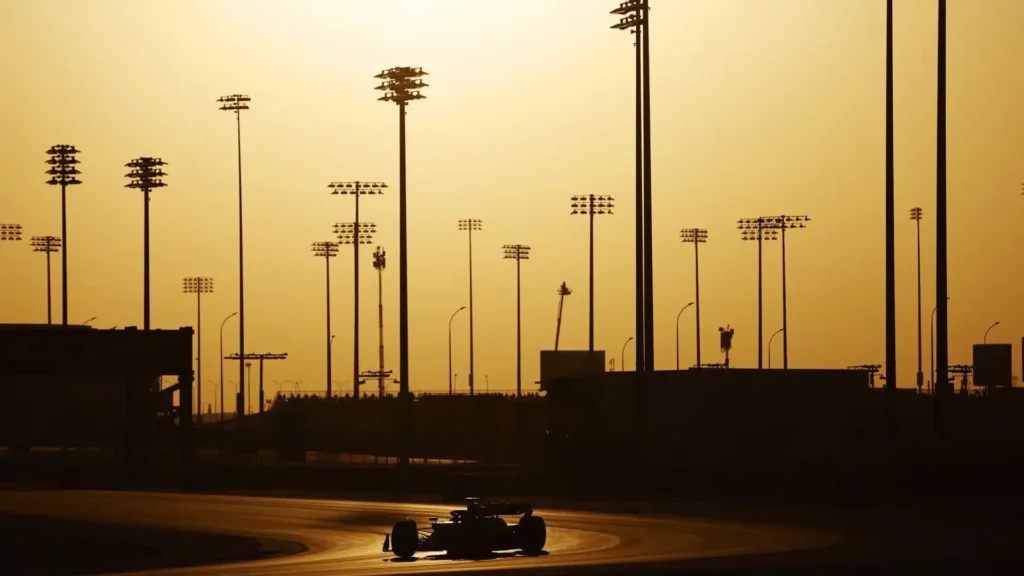
The Lusail International Circuit (LIC) in Qatar has swiftly cemented its place as one of the most technologically advanced and physically demanding venues in global motorsports. Located on the outskirts of the capital city, Doha , Lusail is defined by a dazzling spectacle: it is one of the select circuits where the entire race is conducted under the glare of immense, permanent floodlights. This unique identity, established long before Formula 1 arrived, is fundamental to the circuit’s global brand.
The narrative of LIC is one of rapid development and strategic escalation, unfolding in three distinct acts: its rapid inception in 2004 for MotoGP, its pioneering establishment of night racing in 2007, and the monumental, architectural rebirth undertaken between 2022 and 2023. The massive upgrades were necessitated by Qatar’s renewed, long-term commitment to Formula 1, securing an additional 10-year contract starting in 2023. Lusail, therefore, is not merely a transient location on the F1 calendar; it is a permanent, iconic landmark strategically designed to anchor the nation’s presence in elite global sport for the next decade.
The decision to invest in pioneering, record-setting night lighting in 2007, over a decade before the major F1 contract, revealed an inherent, long-term Qatari strategy. This investment, which created the largest permanent venue sports lighting project in the world at the time , was intended to create a globally differentiated spectacle. This confirmed that the subsequent 2023 architectural transformation was not a reactive decision to secure an F1 spot, but rather an escalation of an existing, long-standing national vision to establish Lusail as a recognized, world-class hub, aligning deeply with goals of national prestige and economic diversification.
Key Technical Specifications Snapshot
The post-renovation Lusail International Circuit retained its essential high-speed character while upgrading facilities to meet the stringent demands of Formula 1. The circuit’s current configuration, introduced in 2023, is slightly longer than the original layout, maintaining 16 turns and featuring a crucial, high-speed straight that dictates aerodynamic compromise.
Lusail International Circuit Key Technical Specifications (2023 GP Configuration)
Parameter | Metric |
Full Circuit Length | 5.419 km (3.367 mi) |
Number of Turns | 16 |
Main Straight Length | 1.068 km (0.664 mi) |
F1 Race Distance | 308.883 km |
F1 Race Laps | 57 laps |
Original Circuit (2004-2022) | 5.380 km (3.343 mi), 16 Turns |
Genesis and Pioneering Identity (2004–2021)
Rapid Foundation: The MotoGP Heritage
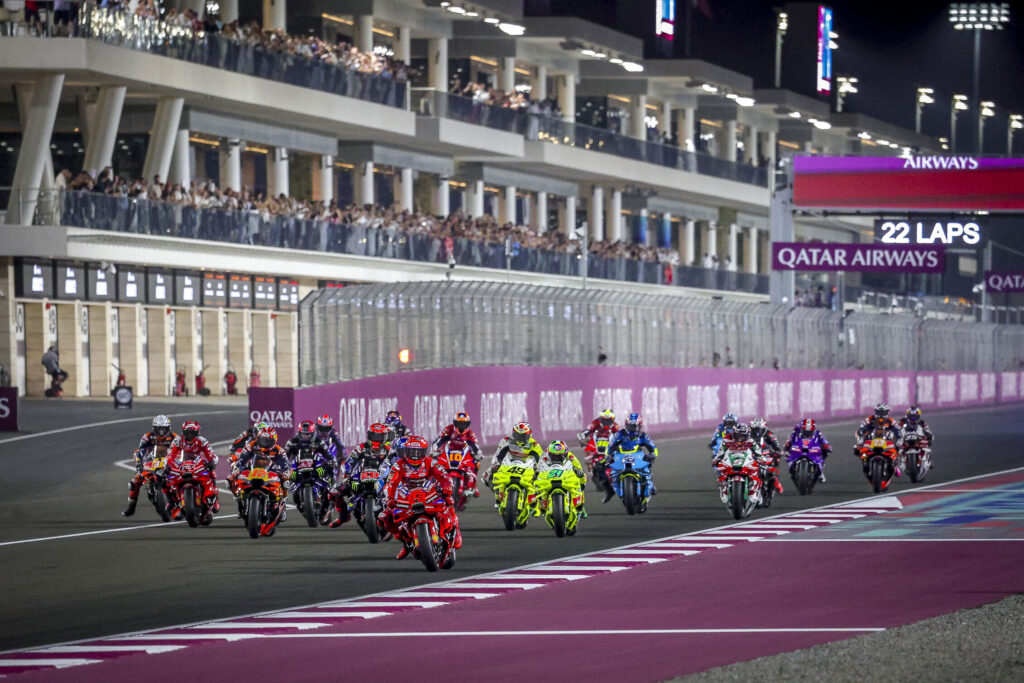
The Lusail International Circuit was first conceived and built with remarkable speed. It was originally commissioned in preparation for hosting Qatar’s first-ever MotoGP event in 2004. The construction was completed in just over a year , demonstrating the rapid project execution capabilities that characterize infrastructure development in the region.
The design philosophy behind the original track layout was fundamentally geared towards motorcycle racing. This resulted in a track DNA described as “fast and flowing,” dominated overwhelmingly by medium- and high-speed corners. This characteristic flow, which minimizes heavy braking zones and promotes sustained momentum, is crucial to understanding the circuit’s reputation today. Significantly, the original Grand Prix circuit length (5.380 km with 16 turns) is only marginally different from the current configuration (5.419 km with 16 turns). This remarkable consistency suggests that the core racing character—the high-speed flow—was intentionally preserved during the massive 2023 renovation, maintaining the circuit’s defining personality.
The Birth of the Night Race
Lusail achieved global recognition early on by embracing technological innovation. In 2007, the circuit added permanent outdoor lighting, supplied by Musco Lighting. At the time of its completion, this lighting system was the largest permanent venue sports lighting project in the world.
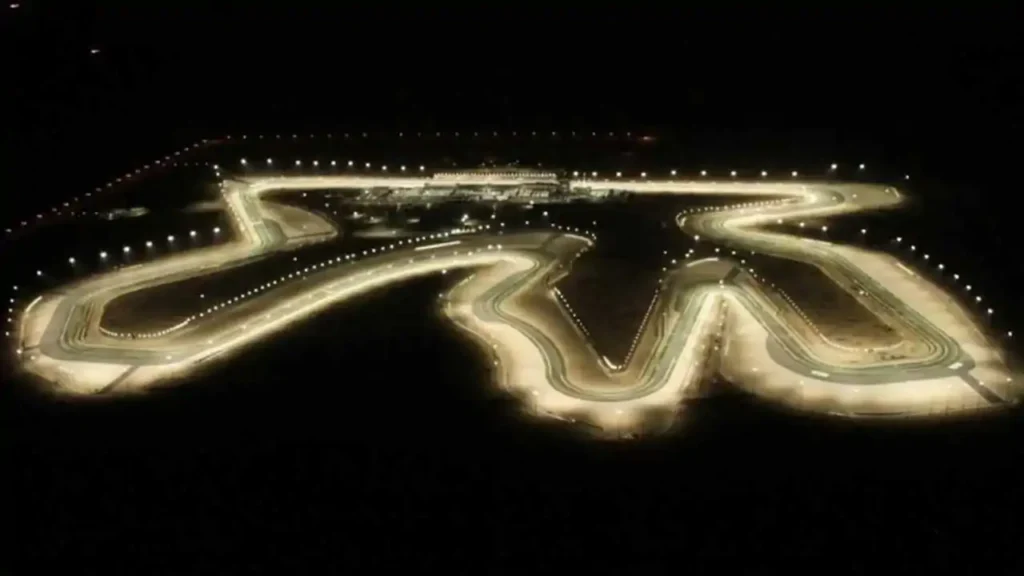
This technological marvel allowed Lusail to revolutionize motorcycle racing history by hosting the 2008 Qatar motorcycle Grand Prix—the first full night race in MotoGP history. By establishing this pioneering night-race identity, Lusail created a global brand for itself rooted in spectacle and innovation, years before Formula 1 considered night races a staple. While this record for the largest lighting system has since been surpassed by another Persian Gulf venue, the initial ambition established the precedent for the high-prestige events that followed.
The F1 Interlude and Strategic Hiatus
Lusail’s entry into the FIA Formula One World Championship was sudden. The year 2021 marked the first time Qatar hosted the event, acting as a late-season replacement for the cancelled Australian Grand Prix due to COVID-19 pandemic restrictions. This inaugural event, held on November 21, 2021, saw Lewis Hamilton take the victory, with Max Verstappen and Fernando Alonso completing the podium. It immediately became established as the fourth full-night race on the F1 calendar.
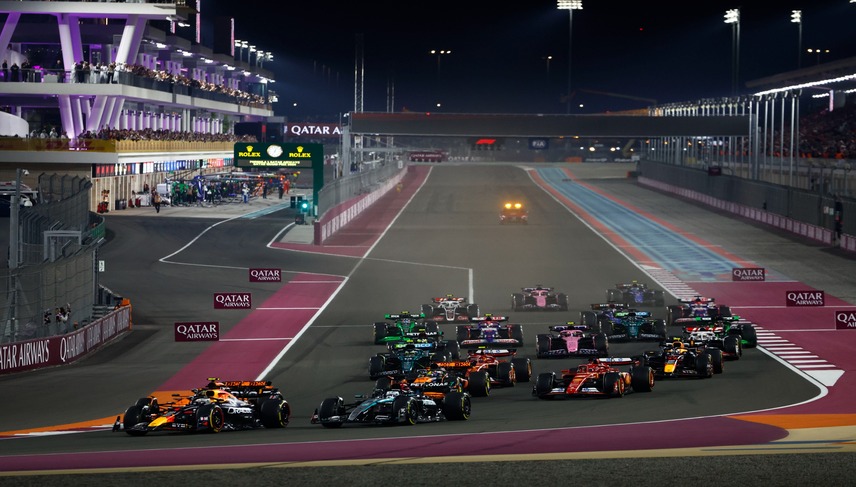
Following this successful debut, the Qatar Grand Prix did not take place in 2022. This hiatus was strategic; the country was dedicating its resources and infrastructure focus to hosting the 2022 FIFA World Cup, staged in Qatar between November and December. However, the pause was also deemed necessary because, while the 2021 race was successful, the original Lusail circuit facilities were considered temporary and required a substantial “makeover” to fulfill the terms of its newly announced long-term future as a permanent fixture on the F1 calendar. The country had secured an additional 10-year deal to host the sport starting from 2023.
The Architectural Renaissance: Building a Prestigious Landmark (2022–2023)
The 10-Year Mandate and Architectural Unity
The signing of a 10-year contract to host F1, commencing in 2023 , triggered a massive and comprehensive architectural transformation. Between 2022 and 2023, the racetrack, all buildings, and the surrounding area underwent extensive upgrades. This overhaul validated the necessity for permanent, world-class infrastructure to replace the facilities that were only sufficient for the one-off 2021 race.
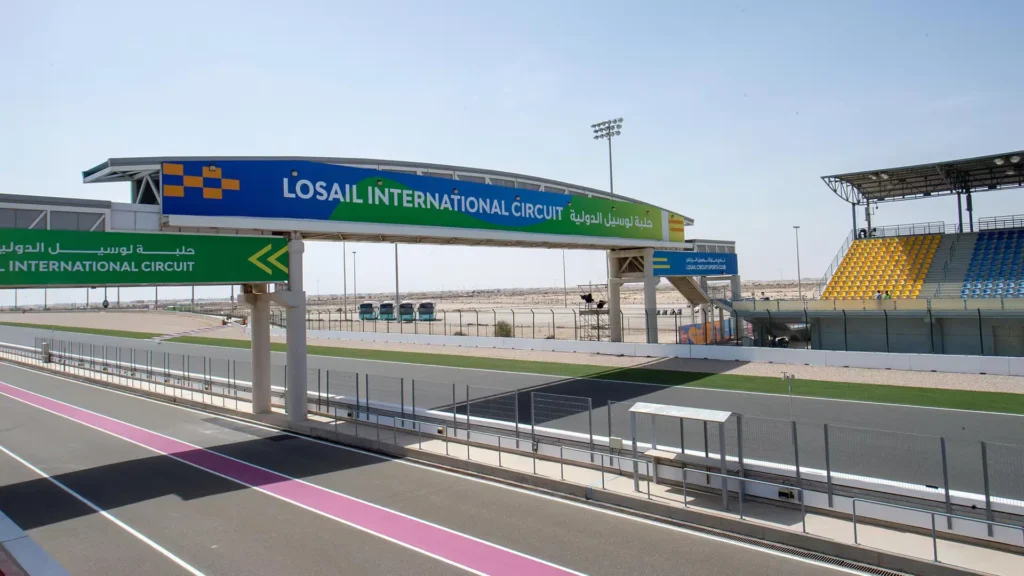
The architecture was entrusted entirely to Tilke, a name synonymous with modern F1 circuit design. Tilke ensured that all buildings around the circuit harmonized with each other, adhering to a “coherent architectural design language”. The specific directive was to completely replace the Paddock and race-related buildings with a modern, contemporary ensemble designed not only to meet the operational requirements of Formula 1 but also to fulfill the client’s desire for a prestigious and iconic landmark venue.
The Record-Holding Pit Complex: Function and Prestige
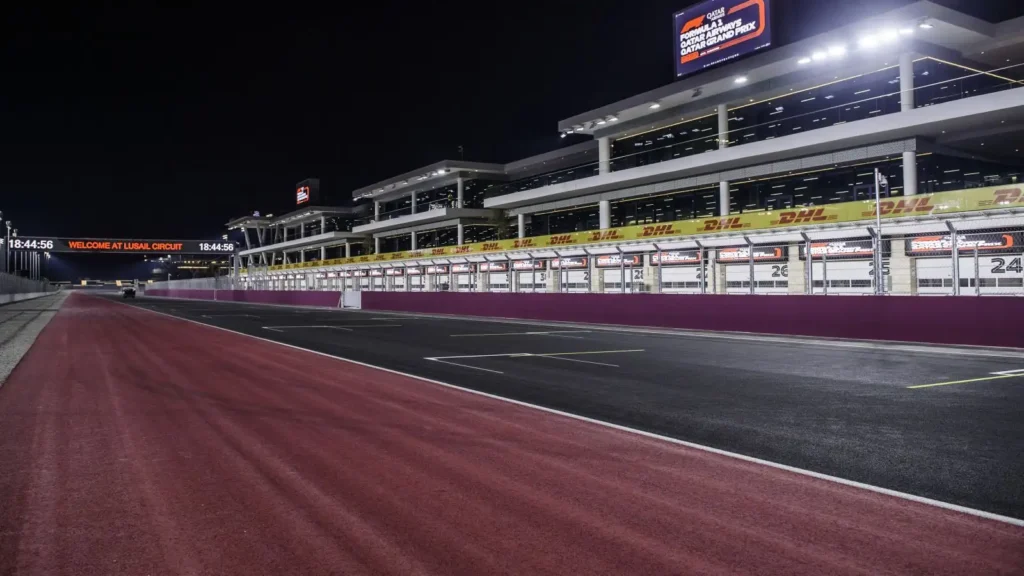
The centerpiece of this modernization is the new Pit Building. This structure successfully integrates the strict functionality of fifty ground-floor team garages with high-quality lounges and operational control. The scale of this structure is significant, stretching 402 meters along the pitlane, a dimension that earned it a Guinness World Record.
The pursuit of this world record demonstrates that the renovation’s strategic intent extended beyond mere operational necessity. It reveals a clear objective: to utilize architectural excellence as a tool of national soft power and global brand positioning. The design emphasizes both functionality and aesthetics equally, resulting in a harmonious appearance. This aesthetic quality is achieved through sophisticated detailing, such as white-colored ceiling edges that create a horizontal banding guiding the eye along the Paddock, and intentional projections and back-standing cubic elements on the upper floors designed to create an interesting “play of light and shadow”. The race control tower is strategically situated on the southern end of this complex.
World-Class Hospitality and Operations
The investment in the facility extended to every facet of the operation, ensuring it could support a top-tier international sporting event. The hospitality facilities were designed to maximize prestige and viewing experience. The VVIP Building, luxuriously equipped, is situated at the apex of Turn 1, providing high-level guests, including the Emir and his family, with a unique and optimal view of the start of the races. A connecting garden allows these guests to easily immerse themselves in the high-energy environment of the Paddock.
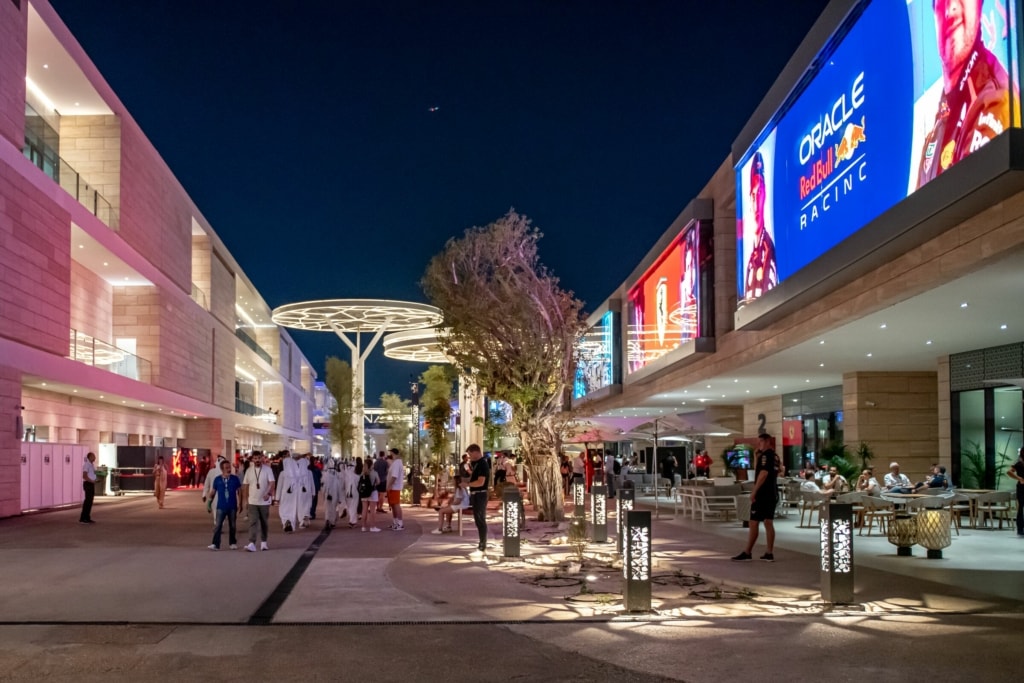
The sixteen Team Hospitality Buildings introduce a visual dynamism by utilizing a curved front profile, creating an “exciting contrast” to the rectilinear form of the main Pit Building. These villas are arranged in groups of four, with imposing LED screens providing branding opportunities for the teams. Meanwhile, the spacious terraces of the Paddock Club, located at the northern end of the Pit Building, offer sweeping views of the start-finish straight, connected by an imposing spiral staircase.
Operationally, the renovation emphasized supporting global press operations. A new, sizable Media Center was constructed, providing dedicated space for 400 journalists and photographers, complete with a press-conference room, a media café, and additional office space. Furthermore, the Paddock area’s landscaping concept incorporates native plants and unique metal shading canopies designed to resemble the branches of a tree, subtly integrating local cultural and environmental elements into the sleek, contemporary design. Lusail is thus designed to be a showcase—a tangible demonstration of Qatar’s ambition and commitment to hosting international competitive events at the highest level.
The Technical Layout: High-Speed Flow and Aerodynamic Demand
The racing layout of the Lusail International Circuit presents a distinctive technical challenge. Characterized by its continuous nature, the 5.419 km track avoids the traditional tight hairpins and heavy braking zones found on many modern F1 circuits. Instead, it prioritizes sweeping medium- and high-speed corners.
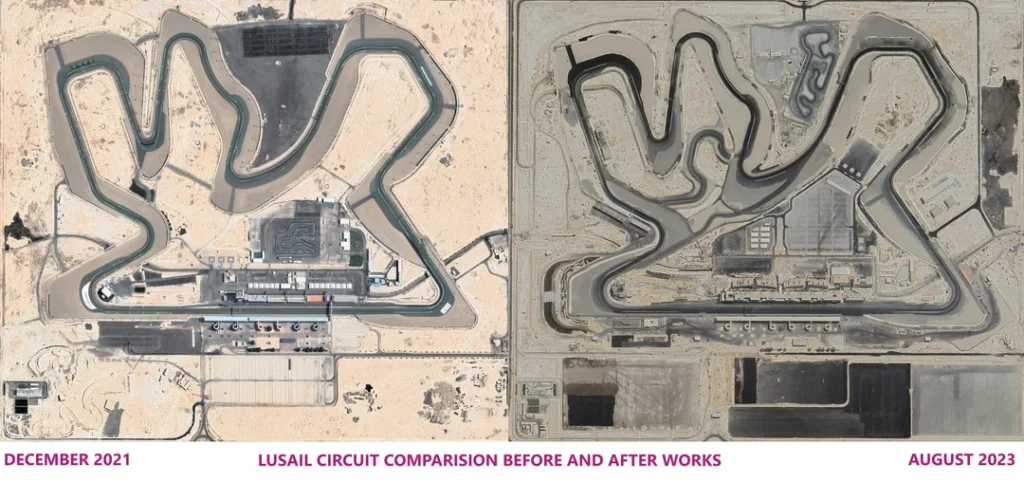
This high-flow geometry, inherited from its MotoGP origins, creates unique conditions of maximal, sustained G-forces for Formula 1 drivers. The lack of traditional braking and slow-speed corners minimizes the physical rest time for drivers during a lap. Drivers who tested the circuit, such as Lando Norris, correctly predicted that the track would be a significant physical challenge, being a “very fast circuit” that would be “very physical in terms of G-forces” because the average speed in the corners would be exceptionally high. This preservation of the original geometry, despite the massive renovation, was a deliberate choice that makes the circuit unique and mechanically demanding, setting the stage for human endurance issues.
The Overtaking Funnel
The track layout forces a significant engineering trade-off for teams. The circuit is effectively defined by a dichotomy between the main straight and the subsequent high-speed corner complex.
The main straight of the track is substantial, measuring 1.068 km (0.664 mi) in length. This long straight provides the primary—and arguably only guaranteed—opportunity for overtaking, which occurs under heavy braking into Turn 1. This element requires cars to be optimally configured for low drag to maximize top speed.
Conversely, the middle sectors consist of the demanding, high-speed, twisty complex where drivers noted that overtaking becomes significantly more difficult. To navigate these corners efficiently, F1 cars require maximum aerodynamic downforce. This severe difference between the single, kilometer-long straight and the complex middle sector necessitates a deeper aerodynamic setup compromise than on most F1 tracks. Engineers must balance maximizing top speed for the straight against maintaining optimal downforce for the relentless, high-G cornering. This engineering trade-off means that drivers must manage a compromised setup, which further exacerbates the physical toll, placing a high premium on driver precision, consistency, and fitness over brute power or braking prowess alone.
Additionally, due to its desert location, the track surface conditions often start off dusty at the beginning of a race weekend, making free practice sessions crucial for drivers to understand the rapidly evolving grip levels and track evolution.
Configurations and Technical Diversity
The 2023 renovation enhanced the venue’s operational versatility. While the 5.419 km Grand Prix track is the centerpiece, the circuit now offers several configurations, allowing the venue to host diverse motorsports events simultaneously. These variations include a 3.701 km Short Circuit featuring 11 turns, and a 2.446 km Club Circuit with 12 turns. This ability to operate multiple layouts concurrently supports the strategic goal of establishing Lusail as a permanent, multifaceted hub for motor racing.
The Crucible of 2023: Testing Human Endurance
The 2023 Qatar Grand Prix quickly became infamous for testing the absolute limits of human endurance, establishing Lusail’s reputation as perhaps the most physically brutal circuit on the calendar. The race was held in an environmental “perfect storm” of extreme heat and high humidity, which caused cockpit temperatures to soar to approximately 50°C (122F).
This environmental challenge was significantly compounded by the track’s unrelenting physical nature. The high-speed, high-G layout provided drivers with minimal rest, demanding maximum concentration and sustained muscular effort for nearly two hours. This inherent mechanical difficulty, combined with the extreme heat, created a situation where the body had no opportunity to recover. Furthermore, the problem was aggravated by the weight-saving tendency in F1, where drivers sometimes choose to carry limited water or electrolytes in their drink systems to optimize car performance.
Driver Distress and Public Outcry
The race pushed multiple elite athletes past safe physiological boundaries, prompting immediate and widespread condemnation from the grid. Esteban Ocon, the Alpine driver, publicly revealed that he had vomited inside his helmet due to the extreme heat. Aston Martin’s Lance Stroll reported feeling dangerously close to losing consciousness, while Mercedes driver George Russell, a director of the Grand Prix Drivers’ Association, stated he also came close to passing out. Both Stroll and Alex Albon had to be physically helped from their cars by team members after the race, and Albon required immediate attention at the medical center due to heat exhaustion. Williams’s driver, Logan Sargeant, was forced to retire from the race suffering from severe dehydration.
The drivers were forthright in their safety concerns. Russell stated explicitly that drivers’ lives should not be put at risk, declaring the conditions “beyond the limit of what is acceptable” and noting that “over 50% of the grid said they were feeling sick, couldn’t drive and were close to passing out”. Lando Norris echoed this sentiment, lamenting that it was “sad we had to find it this way” and asserting that when people retire or end up in such a bad state, “it is too dangerous”.
Industry and FIA Response
The widespread physiological crisis immediately attracted intense scrutiny and triggered an official industry response. The FIA initiated a review into the race conditions to examine the safety limits for driver endurance in extreme heat. This official review ensures that the discussion around Lusail will permanently include the topic of driver welfare, cementing its narrative as a true test of human capability.
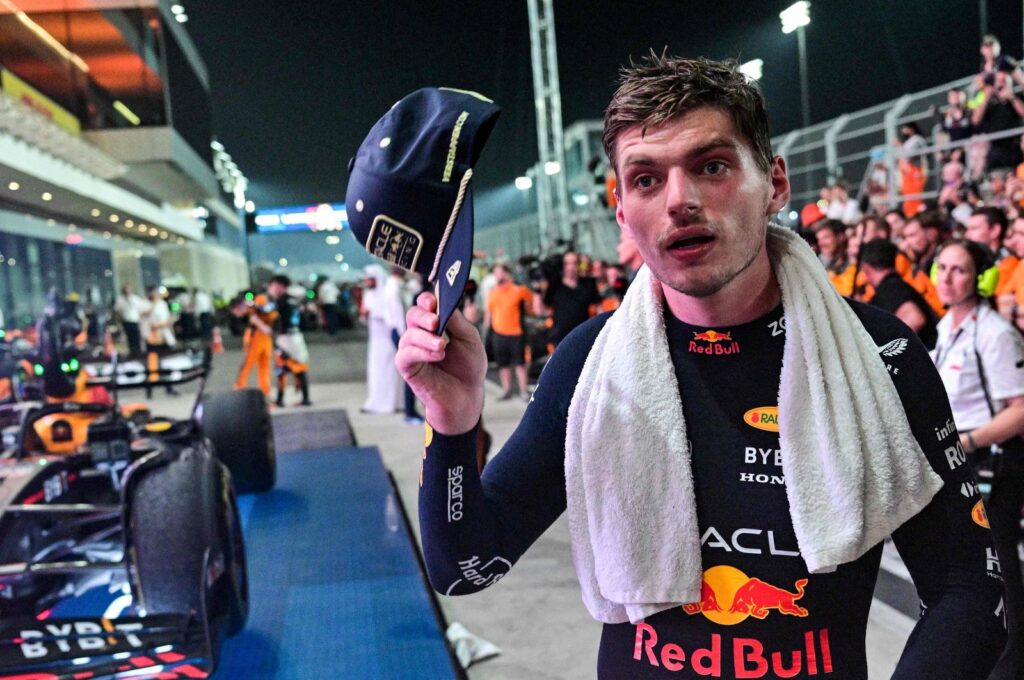
Despite the controversy and suffering, the 2023 race weekend successfully delivered a massive global broadcast event. Max Verstappen secured his third consecutive World Drivers’ Championship title during the Saturday sprint race. This WDC climax guaranteed maximum global exposure for the circuit precisely during the period of intense debate regarding the track’s physical difficulty, indelibly branding Lusail as a site of both luxury and brutal athletic challenge.
Contextual Data Summary
Lusail Grand Prix F1 History Highlights
Year | Status | Race Winner | Key Event/Context |
2021 | Inaugural Race | Lewis Hamilton | Late-season replacement GP; initial proof-of-concept |
2022 | Not Held | N/A | Hiatus due to focus on 2022 FIFA World Cup |
2023 | Contract Return | Max Verstappen | Beginning of 10-year contract; Extreme heat crisis and widespread driver exhaustion |
WDC Decider | 2023 Sprint Race | Oscar Piastri (Sprint) | Max Verstappen clinched his 3rd World Drivers’ Championship |
Night Racing Identity | Permanent Fixture | N/A | One of the select full-night events in F1 |
Global Significance and Future Strategy
The long-term commitment to Formula 1, secured by the 10-year contract, positions the Lusail International Circuit as a major strategic vehicle for realizing the Qatar National Vision 2030 (QNV 2030). QNV 2030 is Qatar’s comprehensive development plan, adopted in 2008, which aims to transform the nation into an advanced society capable of achieving sustainable development and securing a high standard of living for future generations.
The massive architectural investment and the hosting of a globally televised sporting event directly support the Economic Development pillar of QNV 2030. This pillar focuses on creating a competitive and diversified national economy. By establishing an iconic, world-renowned venue, Lusail enhances Qatar’s competitive capability and attracts international investment and tourism. Furthermore, F1 hosting aligns with the Social Development pillar, which seeks to promote a society capable of interacting with different societies and playing a significant role in global partnerships. The facility and the event serve as a physical demonstration of national capability and wealth, reinforcing Qatar’s global profile and diplomatic soft power.
The Commitment to Sustainable Motorsport
In response to increasing global focus on climate responsibility and to align with its own QNV 2030 goals, Lusail is actively embedding sustainability into its operational mandate. This strategic commitment addresses the Environmental Development pillar of the national vision, which mandates the management of the environment with harmony and balance between economic and social progress and environmental protection.
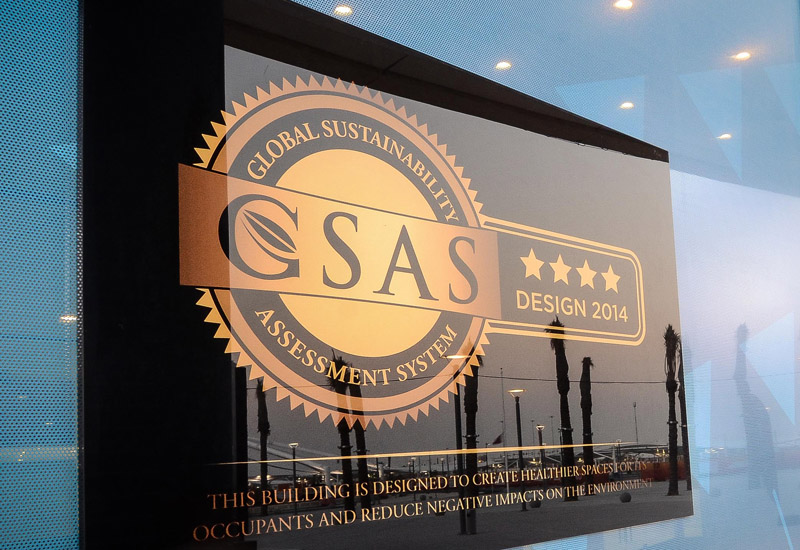
Lusail has achieved tangible progress, earning a two-star rating from the Global Sustainability Assessment System (GSAS) for its operations in 2023. The circuit is proactively positioning itself as a hub for future motorsport technologies. Strategic plans include the introduction of electric vehicle (EV) racing events and actively encouraging the use of hybrid and electric-powered racing technologies. Future initiatives include exploring the potential introduction of biofuels and other carbon-neutral racing initiatives.
Operationally, the circuit has introduced sustainable transportation options for major events, such as designated carpooling areas and shuttle services, aimed at reducing the overall environmental impact associated with large spectator gatherings. By proactively obtaining GSAS certification and focusing on future EV and biofuel mandates, Lusail is strategically attempting to insulate the project from common critiques leveled against large-scale, carbon-intensive Gulf sporting endeavors. This demonstrates a commitment to showcasing Qatar not just as a host, but as an innovator committed to the future evolution of motorsport.
Conclusion: A Permanent Fixture in the Motorsport Firmament
The Lusail International Circuit represents a complex and multifaceted study in ambition, technological mastery, and athletic challenge. Its identity is a synthesis of distinct elements: it is a pioneering night-race venue built upon a foundation of MotoGP heritage; it is an architectural triumph defined by the record-holding, 402-meter Tilke-designed pit complex; and it is, fundamentally, a relentless, high-speed circuit that demands absolute peak performance from its drivers.
The Dual Legacy
Lusail’s enduring legacy will be defined by its duality. On one hand, it is the spectacle of the floodlights and the prestige of the iconic architecture, designed to reflect the national aspiration for global excellence. On the other, this gleaming façade is sharply juxtaposed with the profound human challenge revealed during the 2023 Grand Prix, a race that tested the physiological limits of elite drivers and resulted in condemnation concerning safety. This combination—glittering luxury and brutal endurance—ensures that Lusail’s reputation remains both formidable and fiercely debated, creating a powerful narrative that guarantees continuous global attention.
Future Outlook
With the operational and architectural overhaul complete, and its status secured under a long-term, 10-year contract, the Lusail International Circuit is firmly cemented as a permanent fixture on the global motorsport stage. Its ongoing alignment with the comprehensive goals of the Qatar National Vision 2030—especially in economic development and environmental responsibility through sustainable motorsport initiatives—positions it not only as a world-class racing venue but also as a key element in Qatar’s broader strategy for international engagement and sustainable prosperity. Lusail stands ready to host the future of speed, under the lights, for generations to come.



I’m not sure exactly why but this website is loading incredibly
slow for me. Is anyone else having this issue or is it a issue on my end?
I’ll check back later and see if the problem still exists.
My spouse and i got really more than happy Ervin could conclude his research using the ideas he got from your weblog. It is now and again perplexing to just always be offering ideas a number of people have been making money from. And now we see we need you to be grateful to for this. These illustrations you’ve made, the easy web site navigation, the friendships you can assist to create – it’s mostly unbelievable, and it’s really making our son in addition to our family believe that this content is satisfying, which is certainly extremely serious. Thanks for all!
Pingback: Острието на Лусаил: Изкуството и агонията да овладееш най-безпощадната писта в Катар - Новият сайт за F1 в България!
Hi, this weekend is good designed for me, since this point in time i am reading this enormous educational post
here at my residence.