The conclusion of the 2025 Formula 1 season marks a definitive inflection point in the history of the Mercedes-AMG PETRONAS F1 Team. The narrative arc of the season, which began with the palpable anxiety of replacing a seven-time World Champion, has resolved into the confirmation of a new era. Andrea Kimi Antonelli, the 19-year-old prodigy from Bologna, has not merely occupied the seat vacated by Lewis Hamilton; he has, through a baptism of fire, begun to reshape the internal dynamics of one of the sport’s most dominant organizations.
As of November 2025, following a career-defining performance at the São Paulo Grand Prix, Antonelli stands as the highest-scoring rookie in the history of the sport, a statistic that requires contextual nuance but nonetheless underscores his raw efficacy. His season has been characterized by a distinct tripartite structure: an immediate, startling display of speed in the opening flyaway races; a debilitating mid-season slump precipitated by a failed suspension upgrade to the Mercedes W16; and a resurgent final third where he has consistently challenged, and occasionally eclipsed, his teammate George Russell.
This report provides an exhaustive analysis of Antonelli’s profile. It examines the genealogical and environmental factors of his upbringing in Italy’s “Motor Valley,” dissects the unprecedented velocity of his junior career—specifically the controversial decision to bypass Formula 3—and offers a granular technical analysis of his driving style. Furthermore, it investigates the psychological resilience required to overcome the technical missteps of the European leg, the evolving friction within the Mercedes garage, and the personal attributes that have endeared him to a global fanbase. The data suggests that while Antonelli remains a raw talent, his ability to adapt to technical adversity and his increasing assertiveness against an established teammate signal a trajectory toward future World Championship contention.
Genesis of a Racer: Heritage and Early Life
The Cradle of Motor Valley
Andrea Kimi Antonelli was born on August 25, 2006, in Bologna, Emilia-Romagna, a region colloquially known as “Motor Valley” for its density of high-performance automotive heritage. Unlike many contemporary drivers who enter the sport via corporate backing or simulation racing, Antonelli is a product of purebred racing lineage. He is the son of Marco Antonelli, a figure deeply embedded in the fabric of Italian motorsport.
Marco Antonelli was not only a sportscar racing driver of repute but is also the founder and owner of AKM Motorsport (formerly Antonelli Motorsport), a San Marino-based team established in 1993. This team has been a staple in the Italian GT Championship and, since 2022, the Italian F4 Championship. Consequently, Kimi’s mother, Veronica, has been an integral part of the team’s operational structure since 1997, managing logistics and team affairs. Thus, Kimi did not merely “enter” motorsport; he was born into a pre-existing ecosystem of mechanics, telemetry, and the smell of race fuel.
The depth of this immersion is best illustrated by his earliest memories. Kimi recalls sitting in a go-kart at the age of two. Physically unable to reach the pedals, he sat on his father’s lap, steering the wheel while Marco operated the throttle and brakes. By the age of five, he was piloting his own machine—a “Delfino” kart—at a minibike track in Forli. He vividly recounts the sensation of that first solo lap, describing an immediate, almost narcotic addiction to the speed that made him unwilling to stop even when flagged down.
The Name: Dispelling the "Iceman" Myth
A pervasive narrative in the motorsport media has been the assumption that Antonelli was named in homage to Kimi Räikkönen, the 2007 World Champion who was active in F1 at the time of Antonelli’s birth. This is a fallacy. “Kimi” is not a nickname but his registered middle name. The moniker was suggested by Enrico Bertaggia, a family friend and former racing driver, who argued that “Kimi” offered a phonetic fluidity when paired with “Andrea” and “Antonelli” that a traditional Italian name might lack.
Despite the lack of a direct tribute, Antonelli has grown to appreciate the connection. He met Räikkönen in 2018 when he was still a child karting prodigy. In later interviews, he has expressed admiration for the Finn’s “Iceman” persona, noting that after entering the high-pressure environment of F1 himself, he now fully understands the utility of Räikkönen’s emotionally detached approach to the media and competition.
A Sneaky Introduction to the Paddock
Antonelli’s first exposure to the Formula 1 paddock was illicit, a charming anecdote that contrasts with his current status as a factory driver. In 2014, at the age of seven, he accompanied his father to the Hockenheimring, where Marco was competing in the Porsche Supercup. Lacking the appropriate credentials for a minor to enter the F1 paddock, Marco hid his son inside a stack of tires on a trolley, covering the top with an umbrella to evade security checks. Once inside, a family friend secured a temporary pass, allowing the young Kimi to wander the pit lane for an hour—a formative experience he describes as “cool,” igniting a desire that would eventually see him return through the front door.
Education and Language Acquisition
Despite the logistical demands of a karting career that took him across Europe, Antonelli maintained a rigorous educational schedule at the ITCS Gaetano Salvemini in Casalecchio di Reno. His curriculum focused on international relations and marketing, a strategic choice that has paid dividends in his ability to navigate the complex commercial landscape of Formula 1.
Crucially, Antonelli utilized his weekends at the racetrack to master English. By immersing himself in the international karting paddocks, which are linguistically dominated by English, he developed a fluency that facilitated his seamless integration into the Mercedes Junior Programme. This linguistic capability was essential for his relationship with British engineers and his eventual move to the Mercedes base in Brackley.
Recruitment: The Mercedes Methodology
The trajectory of Antonelli’s career was irrevocably altered in April 2019. Having been scouted initially by Giovanni Minardi in 2014 , it was the Mercedes Junior Programme, led by Gwen Lagrue and Toto Wolff, that secured his signature at the age of 12.
Mercedes did not simply provide funding; they provided a pathway. The team recognized that Antonelli was a generational talent, comparable in their data models to Max Verstappen. This belief would later justify decisions that seemed reckless to outside observers, such as the aggressive fast-tracking through the junior formulae.
The Meteoric Ascent: Analyzing the Junior Career
Antonelli’s rise through the junior ranks is distinguished not just by his success, but by the velocity of his progression. In an era where drivers often spend two years in each category to master tire conservation and aerodynamics, Antonelli’s career has been a sprint.
Karting Dominance (2014–2021)
Antonelli’s karting résumé is a litany of championships. After winning his first title in the Trofeo Easykart in 2015, he moved through the ranks with ruthless efficiency.
- 2018: Signed by Mercedes, he won the WSK Champions Cup and the ROK Cup International Final in the Mini class.
- 2019: Moving to OK-Junior, he secured the WSK Euro Series and Super Master Series titles.
- 2020–2021: The transition to the senior OK class is often a stumbling block for juniors due to the increased physicality and tire management required. Antonelli, however, won the FIA Karting European Championship in consecutive years.

A critical indicator of his mental fortitude occurred during the 2020 World Championship at Portimão. While contending for the title, he was involved in a severe collision with Maya Weug, resulting in a broken left tibia and metatarsus. The injury forced a lengthy rehabilitation, but his return to form in 2021—retaining his European title—demonstrated a resilience that Mercedes noted as a key differentiator from his peers.
The Formula 4 "Gold Standard" (2022)
Antonelli’s first full season in single-seaters in 2022 serves as the benchmark for modern junior performance. Competing for Prema Racing, he undertook a dual campaign in the Italian F4 and ADAC (German) F4 championships.

- Statistical Dominance: He won both championships. Across the two series, he amassed 22 victories from 35 starts.
- Significance: This level of dominance is rare. F4 grids are often large and chaotic, making consistency difficult. Antonelli’s ability to qualify on pole (21 times) and control races from the front mirrored the early careers of drivers like Lewis Hamilton and Charles Leclerc. He also secured a Gold Medal for Italy in the FIA Motorsport Games, further solidifying his status as the nation’s great hope.
Formula Regional (FRECA): The Heavy Car Test (2023)
In 2023, Antonelli graduated to the Formula Regional European Championship by Alpine (FRECA). The FRECA car is notoriously difficult to drive; it is heavy, lacks power steering, and requires a distinct physical inputs compared to the nimble F4 cars.
- Outcome: He won the championship on his first attempt, securing five wins and six podiums.
- Analysis: This victory was pivotal. It proved that his F4 success was not reliant on a specific car characteristic. His ability to manhandle the heavy FRECA machine convinced Mercedes that he physically ready for higher categories.v
The Formula 3 Bypass and the Formula 2 Gamble (2024)
The most controversial decision of his career was Mercedes’ choice to skip the FIA Formula 3 Championship entirely. Traditionally, F3 is the venue where drivers learn to manage high-degradation Pirelli tires and DRS zones. Bypassing it meant Antonelli entered Formula 2 with a significant experience deficit compared to rivals who had spent years on the F1 support ladder.
The 2024 Campaign:
- Early Struggles: The gamble initially appeared to backfire. Prema Racing struggled to unlock the setup of the new 2024-spec F2 car, leaving Antonelli fighting in the midfield.
- The Silverstone Breakthrough: The turning point came at Silverstone. In torrential rain—conditions that equalize machinery and highlight driver talent—Antonelli dominated the Sprint Race, winning by a margin that silenced critics.
- Spa-Francorchamps: His overtake on Franco Colapinto into Eau Rouge in wet conditions remains one of the highlights of the 2024 season, a move of such commitment that it reportedly left the Mercedes pit wall “speechless”.
- Result: Finishing 6th in the standings with two wins, he did enough to secure his Super Licence and the Mercedes seat.
The 2025 Formula 1 Season: A Narrative of Resilience
The 2025 season will be remembered as a rollercoaster for Antonelli. It was not a linear progression but a complex three-act drama defined by technical variables and psychological endurance.
Season Statistics Overview (Rounds 1–21)
Metric | Value | Context |
Championship Position | 7th | 122 Points |
Grand Prix Starts | 21 | |
Podiums | 2 | Canada (P3), Brazil (P2) |
Sprint Results | 1 Podium | P2 in Brazil Sprint |
Pole Positions | 0 (GP), 1 (Sprint) | Sprint Pole in Miami |
Fastest Laps | 3 | Includes Suzuka |
DNFs | 4 | Imola, Spain, Austria, Silverstone |
Average Qualifying | Varied | Strong start, mid-season dip, strong finish |
Phase I: The Flyaway Surprise (Rounds 1–6)
Antonelli’s debut in Melbourne was met with intense scrutiny. He qualified strongly and finished P4, scoring 12 points—a debut bettered by few in history. This immediate speed validated the decision to promote him.
The China Incident:
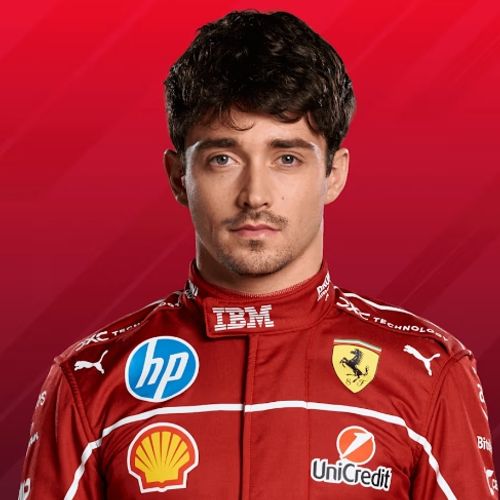
His P6 finish in China was deceptive. During the race, he drove over carbon fiber debris from a clash between Hamilton and Leclerc. Mercedes Trackside Engineering Director Andrew Shovlin revealed that this damaged the floor fences of the W16, costing Antonelli “two to three-tenths” per lap and significantly reducing rear downforce. Despite reporting “no rear grip,” he adapted his driving lines to nurse the car home, a feat of damage limitation that earned high praise internally.

Miami Magic:
In Miami, Antonelli secured his first piece of F1 silverware—a Sprint Pole Position. This made him the youngest driver in history to secure P1 in any F1 qualifying session, a record previously held by Sebastian Vettel. Although the race result was a P6 due to tire degradation management, the raw speed was undeniable.
Phase II: The European Slump and the Suspension Saga (Rounds 7–14)
The European leg of the season (Imola to Belgium) was a catastrophe. Antonelli suffered four DNFs and failed to score points in multiple races. The media narrative quickly turned, questioning if he had been promoted too soon.
The Technical Root Cause:
The slump was not entirely driver error. Mercedes introduced a suspension upgrade around the time of the Emilia-Romagna GP. This new specification, designed to increase peak aerodynamic load, had a catastrophic side effect: it made the car’s limit handling unpredictable.
- The “Flip” Phenomenon: Antonelli described the car’s behavior as binary: “The limit is so high that, once you pass it… it flips. When you go over it, you have nothing”.
- Experience Deficit: While George Russell could use his experience to drive around the issue (albeit while complaining of instability), Antonelli lost confidence. He admitted, “I expected things that didn’t happen… I put myself under pressure and made mistakes I never normally made”.
- The Correction: The team eventually reverted to the older suspension specification for the Hungarian Grand Prix. The effect was immediate. Antonelli reported that his confidence returned, stating, “It’s a shame that we didn’t go earlier to the old suspension”.
Phase III: The Resurgence and Brazil (Rounds 15–21)
Following the suspension reversion and the summer break, Antonelli underwent a “hard reset.” He revealed that he had a “tough meeting” with Toto Wolff and his father, Marco, where he received “tough love” regarding his mental approach. Wolff advised him to stop worrying about the media and “hide in the engineering room”.
The Brazilian Masterclass:
The São Paulo Grand Prix was the apotheosis of his rookie season.
- Consistency: He qualified P2 for both the Sprint and the Grand Prix.
- Racecraft: In the Sprint, he finished P2. In the main race, he repeated the feat. Notably, he held off a charging Max Verstappen on fresher tires and managed a chaotic restart involving Oscar Piastri.
- Significance: Crucially, he was faster than George Russell all weekend. Russell admitted to being “off the pace,” while Antonelli described it as the weekend where he “finally put things together”. This performance cemented his arrival as a top-tier competitor.

Record-Breaking Achievements
Antonelli has rewritten the history books in 2025:
- Rookie Points Record: With 122 points, he has technically surpassed Lewis Hamilton’s 2007 rookie tally of 109 points. Note: This comparison is skewed by the modern scoring system (25 points for a win vs. 10 in 2007), but it remains a significant benchmark of consistency in the modern era.
- Youngest Leader: In Japan, he became the youngest driver to lead a lap and set a fastest lap.
Technical Profile: The Pilot and the Machine
Driving Style Analysis
Antonelli possesses an “instinctive” driving style that favors a sharp front end and aggressive rotation on entry. He relies heavily on feeling the rear of the car rotate to position the nose.
- The Double-Edged Sword: This style is potent when the car is stable, as seen in F4 and FRECA. However, with the flawed mid-season W16 suspension, this aggression “exacerbated” the instability. His inputs were inducing snaps that the car could not recover from.
- Adaptation: His late-season success came from consciously “adjusting, not changing” his style. He learned to identify corners where the car could accept his aggressive input and corners where he had to be more conservative.
Wet Weather Proficiency
A recurring theme in Antonelli’s career is exceptional performance in the wet.
- Evidence: His F2 win at Silverstone (wet), his pass at Spa (wet), and his P3 in Canada (mixed conditions) all demonstrate a heightened sensitivity to grip levels.
- Canada 2025: In Montreal, he secured his first podium (P3). In the post-race press conference, he admitted to the intensity of the battle, revealing, “I pushed a bit too hard behind Max, and I killed a bit the front left,” showing that even in success, he was learning the limits of tire preservation against the world’s best.
Technical Feedback
Despite his youth, Antonelli’s feedback has been praised. His ability to diagnose the suspension issue—even if he couldn’t drive around it initially—was crucial for the team’s decision to revert the spec. His comments on the sidepod geometry and aerodynamic packaging of the W16 suggest a driver who is deeply engaged with the engineering side of the sport.
The Human Element: Psychology and Team Dynamics
Toto Wolff’s management of Antonelli has been paternal yet demanding. The dynamic mirrors the early days of Hamilton’s career. Wolff has been protective in the media, often deflecting blame for the mid-season slump onto the car. However, privately, he has been rigorous. The “tough love” meeting after Monza was a pivotal moment where Wolff demanded that Antonelli refocus on the engineering and ignore the “noise” of his celebrity.
The Evolving Rivalry with George Russell
The relationship between Antonelli and George Russell has undergone a palpable shift.
- Early Season: Russell was the clear mentor, the team leader guiding the rookie.
- Late Season: As Antonelli’s pace has converged with and occasionally surpassed Russell’s, the dynamic has hardened.
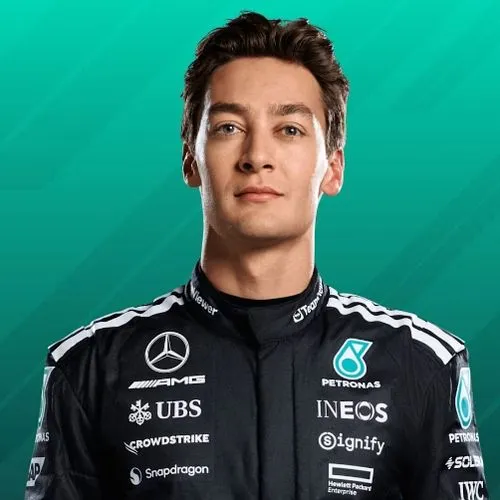
- The Friction Point: Following the Brazil GP, where Antonelli beat Russell on merit, the rookie was candid: “My relationship with George is definitely changing… It’s natural that he isn’t happy finishing behind me, just as I’m never happy when I’m behind”. This admission signals the beginning of a potentially volatile intra-team rivalry for 2026.
Hamilton's Shadow
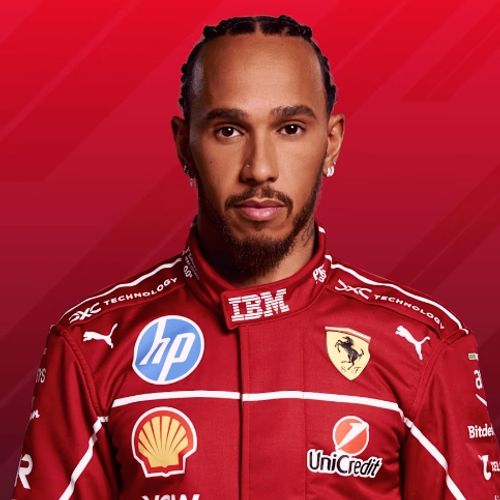
Lewis Hamilton, now at Ferrari, has maintained a “big brother” relationship with Antonelli. A poignant moment occurred at Spa, where Hamilton was seen comforting a dejected Antonelli after a difficult session, bridging the gap between rival teams to support his successor.
Personal Life: Behind the Helmet
Off the track, Antonelli is described as a calm, almost introverted character who enjoys solitude to recharge. However, he possesses a playful side.
- Fan Interaction: He has embraced the strangeness of fame. He recounts a fan asking him to sign the cockpit of their Mercedes road car, which he did with a marker. He also lists receiving a “weird plush toy” of an unidentifiable animal species as the strangest gift he has received.
- Driving Test: In a moment of relatability, he revealed the stress of his road driving test. Having never practiced parallel parking or driven a manual car extensively, he was terrified of failing and having to ask his mother for rides. He passed on the first attempt, a relief he ranks highly among his achievements.
Hobbies and Mentorship
- Junior Drivers: Antonelli has already begun to give back. During the off-season, he was spotted karting in the rain at Whilton Mill with Mercedes junior recruits like Luna Fluxa and Kenzo Craigie, acting as a benchmark and mentor for the next generation.
- Interests: He is an obsessive fan of the NBA and Michael Jordan, citing The Last Dance as a major inspiration for his work ethic. His pre-race ritual includes listening to “Can’t Hold Us” by Macklemore.
- Diet: While strictly disciplined, he admits that he cannot live without pasta (specifically Tortellini) and his cheat meal of choice is a burger with caramelized onions and bacon.
Helmet and Number 12
Antonelli’s helmet design is a consistent evolution of his karting lid, featuring the Italian Tricolore and blue (his favorite color), adorned with stars. For the Miami GP, he ran a special burgundy edition to match the team’s special race suits.
He races with the number 12, a tribute to his idol Ayrton Senna, who wore the number during his early championship years. It is also the number Antonelli carried during his dominant F4 and FRECA campaigns.

Conclusion: The Future is Silver
As the sun sets on the 2025 season, Andrea Kimi Antonelli has answered the most pressing question in Formula 1: Was he ready? The answer is a definitive yes. While his rookie campaign was marred by technical instability and the inevitable errors of youth, his recovery from the mid-season abyss demonstrates a mental fortitude that separates good drivers from great ones.
The “gamble” to skip Formula 3 has paid off, albeit with a steep learning curve. Antonelli has not only replaced Lewis Hamilton; he has begun to forge his own legacy. With the technical regulations stable for 2026, and his relationship with George Russell shifting from mentorship to rivalry, the stage is set for Antonelli to cease being the “rookie sensation” and become a genuine contender for the Drivers’ World Championship. The Silver Arrow has a new sharpshooter, and his aim is proving to be deadly accurate.