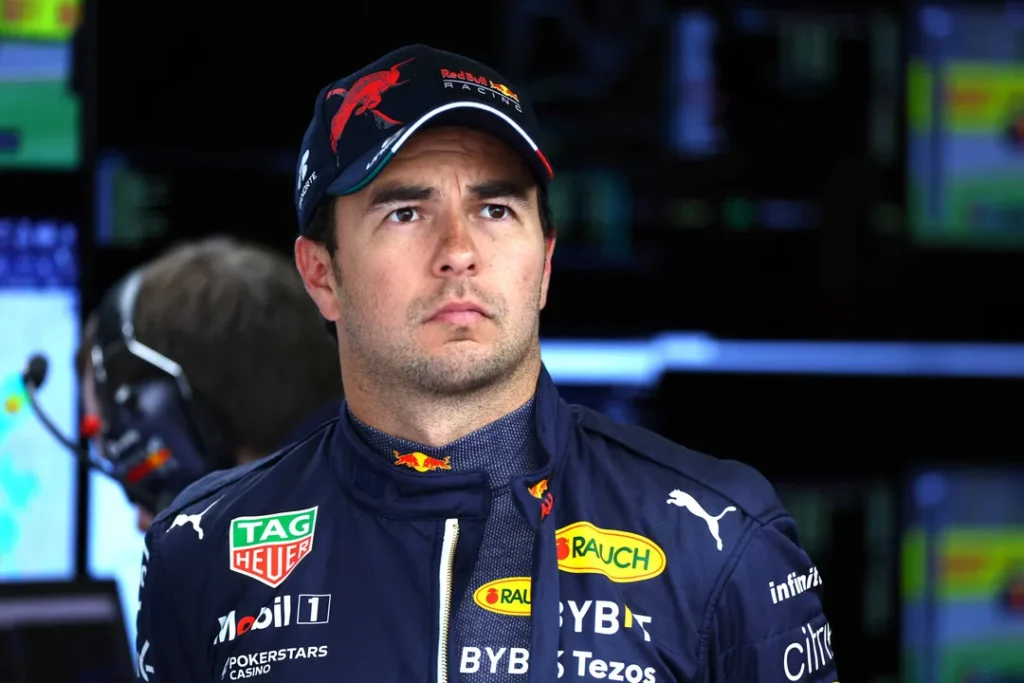
Formula 1 has a short memory. You are only as good as your last race, and for Sergio “Checo” Perez, his last race for Red Bull Racing at the end of 2024 felt like a funeral for a career that deserved a better eulogy. Broken by the relentless pressure of partnering with Max Verstappen—a generational talent who reshaped the team in his own image—and discarded by a system that chewed up talent with industrial efficiency, Perez looked destined for the history books as a “solid number two” who flew too close to the sun. The narrative was written: he was the driver who couldn’t keep up, the man who cracked under the weight of the Red Bull machinery.
But F1 is also a sport of cycles, of redemption arcs that mirror the undulations of the tracks they race on. Thirteen years ago, a young Perez sat in a boardroom in Woking, stunned that he had been chosen to replace Lewis Hamilton at McLaren—a move he “never expected” and one that nearly ended his career before it truly began. That move, born of opportunity and desperation, taught him the brutal reality of the sport: prestige does not equal performance.
Today, he stands on the precipice of a new era, not as a replacement, but as a founder. The announcement that Perez will join the newly formed Cadillac F1 Team in 2026, alongside fellow veteran Valtteri Bottas, is not just a transfer market update; it is a statement of intent from General Motors and a vindication for the Mexican driver. With a reported $10 million base salary, equity in the project’s success, and the weight of the American market on his shoulders, Perez is stepping back into the fire—but this time, he holds the matches.
This report serves as the definitive analysis of this move. We will dissect the full trajectory of Perez’s unique career: from the retrospective lessons of replacing Hamilton in 2013 and the “Mercedes option” he rejected, to the “toxic” end at Red Bull where “everything was a problem,” and finally, why Cadillac is betting $1 billion that experience beats youth in the brave new world of 2026. This is the story of how Sergio Perez survived the meat grinder of Formula 1 to write his own final chapter.
REPORT: The Resurrection of Checo — From the Shadow of Hamilton to the Light of Cadillac
Part I: The Ghost of 2013 — "I Never Expected to Make This Move"
To understand the magnitude of Sergio Perez’s 2026 return with Cadillac, one must first dissect the trauma and lessons of his 2013 season with McLaren. In a recent, revealing interview on the Cracks Podcast, Perez offered a retrospective that colors his entire career philosophy, shedding light on decisions that seemed inexplicable at the time but now form the foundation of his resilience.
The Hamilton Vacancy and the 2012 Context
In late 2012, Sergio Perez was the hottest property in the F1 midfield. Driving for Sauber, a team with a solid chassis but limited budget, he had secured three podiums. His performance at the Malaysian Grand Prix was the catalyst; in torrential rain, he hunted down Fernando Alonso’s Ferrari, lapping significantly faster than the double world champion.1 He eventually finished second, a result that sent shockwaves through the paddock. He was a member of the Ferrari Driver Academy, and the paddock consensus was that his path led inevitably to Maranello.
“I never thought I would drive for two teams: McLaren and Red Bull,” Perez admitted in his recent reflection.1 “They already have all their drivers lined up through their academy.”
This statement reveals the rigid structure of F1 at the time. Red Bull had the Junior Team (Toro Rosso), and McLaren had their Young Driver Programme (which had produced Hamilton). Perez, as a Ferrari junior, felt his destiny was red. However, the landscape shifted tectonically when Lewis Hamilton made the shock decision to leave McLaren for Mercedes—a move widely criticized at the time but now seen as the greatest transfer in F1 history. McLaren, caught on the back foot and needing a star to partner Jenson Button, looked past their own juniors and poached Perez.
“McLaren was very convincing,” Perez recalled. “They were nervous because Hamilton was going to leave the team… They offered me a contract, and in the end, I accepted it”.
The "Mercedes Option": A Career-Defining "What If"
Perhaps the most startling revelation from his recent reflections is how close Perez came to taking a very different path—one that would have altered the history of the sport entirely. He revealed that he had “three different options from three big teams” during that chaotic 2012 silly season.
- Ferrari: His natural home. However, Ferrari operated conservatively. They could not offer him a seat until 2014, preferring to keep Felipe Massa for one more year. Perez, young and “desperate” for a title fight, didn’t want to wait.
- McLaren: The team that had built the “fastest car” of 2012, the MP4-27, which won the final race of the season in Brazil. It seemed the safest bet for immediate glory.
- Mercedes: Perez claims, “If Hamilton didn’t go to Mercedes, I also had the Mercedes option”.
It is a staggering “what if” scenario. Niki Lauda and Ross Brawn were shopping for a replacement for Michael Schumacher. Lewis Hamilton was their primary target, but Perez was the contingency. Had Hamilton stayed at McLaren—which was his inclination until the Singapore GP failure—Perez might have found himself in the silver car. That car would go on to dominate the turbo-hybrid era from 2014 onwards, winning eight consecutive Constructors’ Championships. Instead of battling in the midfield for a decade, Perez could have been Nico Rosberg’s teammate, potentially a World Champion. Instead, he chose Woking, a decision he made because McLaren told him they had “made the best car in their history”.
The MP4-28 Disaster: Anatomy of a Failure
Perez joined McLaren believing the hype. “They told me they had made the best car in their history,” he said. “They had the front of a McLaren, the middle section of a Red Bull and the rear of a Ferrari”. This Frankenstein description alludes to McLaren’s aggressive design philosophy for 2013, where they attempted to amalgamate the best concepts from the grid into a single chassis.
In reality, the 2013 McLaren MP4-28 was a catastrophe of over-engineering and a lesson in the dangers of revolution over evolution. The team had abandoned the race-winning concept of the 2012 car to switch to a pull-rod front suspension, mimicking Ferrari, which proved difficult to set up and aerodynamically unstable.
- The Setup Error: During winter testing at Jerez, Jenson Button set a blistering pace, topping the timesheets. The team and Perez were ecstatic. However, it was later discovered this pace was a mirage; a suspension component had been installed incorrectly, lowering the ride height to an illegal or unsustainable level. When the part was fixed, the car’s true, lacklustre pace was revealed.
- The Outcome: It became the “worst year in McLaren’s history” to that point. The car suffered from poor correlation between the wind tunnel and the track. It was stiff, unpredictable, and harsh on tires—negating Perez’s greatest strength, his tire management.
Perez, trying to overdrive a difficult car to prove his worth as Hamilton’s successor, clashed with Button on track, notably at Bahrain. The pressure was immense. “I was very young, very immature in many things,” Perez admitted. By the end of the season, despite out-qualifying Button nine times, the politics of the team turned against him. He was unceremoniously dropped after a single season in favor of rookie Kevin Magnussen.
Analytical Insight: The 2013 failure taught Perez a lesson that defines his 2026 Cadillac move: Don’t trust the legacy; trust the project. At McLaren, he joined a sinking ship disguised as a titan, blinded by the brand’s history. At Cadillac, he is joining a startup with no illusions of immediate dominance. The psychological baseline is fundamentally different; he is not replacing a legend, he is building a legacy.
Part II: The Red Bull Exit — "Everything Was a Problem"
If McLaren was a lesson in technical failure, Red Bull Racing (2021-2024) was a masterclass in psychological endurance and the unique toxicity of being the “second driver” to a generational phenomenon. Perez’s departure from the team at the end of 2024 was messy, and his recent comments expose the depth of the fracture between driver and team, offering a rare glimpse into the Milton Keynes pressure cooker.
The Toxicity of the Second Seat
In his interview with the Cracks Podcast, Perez did not mince words about the environment at Milton Keynes. “At Red Bull, everything was a problem,” Perez stated. This phrase, “everything was a problem,” is a damning indictment of the team’s operational culture regarding the second car.
- The Double Bind: “If I was faster than Max, it was a problem. If I was slower than Max, it was a problem,” Perez revealed. This suggests a team culture so centered around Verstappen that any deviation—success or failure by the second driver—was viewed as a disruption to the equilibrium. If Perez was faster (as he was in Jeddah and Baku 2023), it created tension between the camps. If he was slower, he was failing the Constructors’ Championship. There was no “safe” zone.
- The Development War: Perez alluded to the car development moving away from him. “The upgrades continued, but everything was for Max,” he noted. This is a common grievance in F1, but Perez’s specific driving style (preferring a stable rear end to manage tire slip) clashed violently with the sharp, nose-heavy characteristics Verstappen prefers. When the car was neutral (early 2022, early 2023), Perez could win. As aerodynamic development progressed to add downforce, the car became “pointy,” narrowing the operating window to a point only Verstappen could exploit.
The Breakdown of Trust
Perez’s comments suggest a breakdown in the engineering feedback loop. “The team complained about everything,” he asserted. In a high-functioning team, driver feedback is treated as data. In a dysfunctioning relationship, feedback is treated as an excuse. Perez felt that his technical inputs were disregarded because they contradicted the data coming from Verstappen’s garage.
He recounted a conversation with Christian Horner regarding his potential replacements: “I said to him, ‘Christian, what are you going to do when it doesn’t work out with Liam?’ He replied that there was Yuki. ‘And what are you going to do when it doesn’t work out with Yuki?’ He replied, ‘We have a lot of drivers.’ I told him he was going to use them all”.
Vindication Through Failure: The Lawson/Tsunoda Validation
Perez’s reputation took a severe beating in 2024, leading to his exit. However, he now points to the struggles of his replacements—Liam Lawson and Yuki Tsunoda—as vindication of his own performance.
“I think Yuki and Liam, they’ve scored like seven points… So it is very, very difficult,” Perez remarked. He argues that the world now realizes the magnitude of the job he did. “Now you realize the job I’ve done in that car and that team”.
The "Red Bull Second Seat" Graveyard (2019-2025)
A statistical comparison of the drivers who attempted to partner Max Verstappen.
Driver | Tenure | Fate | Key Issue Cited |
Pierre Gasly | 2019 (Half Season) | Demoted to Toro Rosso | Couldn’t handle the car’s instability; immense pressure to match Max immediately. |
Alex Albon | 2019-2020 | Dropped from F1 (temporarily) | “Rear instability” destroyed confidence; large qualifying gaps. |
Sergio Perez | 2021-2024 | Contract Terminated early | Qualifying gaps; mental fatigue; “toxic” environment. |
Liam Lawson | 2025 (Partial) | Replaced/Struggled | Inability to match Max’s data traces; lack of development direction. |
Analytical Insight: Perez’s comments reveal a driver who felt set up to fail by the end. The “everything was a problem” quote indicates that the team’s feedback loop had broken down. This context is crucial for Cadillac: Perez needs a team that listens to his feedback rather than demanding he replicate a teammate’s data. He is seeking a collaborative environment, not a dictatorial one.
Part III: The Cadillac Manifesto — 2026 and Beyond
After a “mental reset” year in 2025—where he admitted to “falling back in love” with the sport while watching from the sidelines —Perez has signed a multi-year deal with the Cadillac Formula 1 Team. This is not merely a driver signing; it is the foundation of a billion-dollar enterprise.
The Deal Structure: A Commercial Masterstroke
The move is significant not just for the driver, but for the commercial landscape of F1. The financial details emerging from Mexican and American sources paint a picture of a driver who knows his worth.
- Salary: Reports indicate a base salary of approximately $10 million per season, putting him in the upper bracket of earners, comparable to what he earned at Red Bull.
- Incentives: The contract is heavy on bonuses, including specific kickbacks for merchandise sales. This is a masterstroke by his management. Perez is arguably the most marketable driver in North and Latin America. With Cadillac being a quintessential American brand, Perez selling Cadillac caps and shirts in Mexico, Texas, Miami, and Las Vegas will generate revenue streams that justify his salary regardless of on-track performance.
- Duration: The deal is described as “multi-year” (likely 2+1), signaling that Cadillac sees him as a development pillar, not a stop-gap.
Why Cadillac Chose Perez & Bottas: The "Zero" Factor
Cadillac, entering as the 11th team, faced a strategic fork in the road: hire a young American hotshot (like Colton Herta) to build the brand hype, or hire veterans to build the car. They unequivocally chose the latter.
- The “Zero” Factor: Cadillac is starting from a blank sheet of paper. They have no historical data. They need drivers who can differentiate between a fundamental aero flaw, a mechanical grip issue, and a setup error. A rookie cannot do this effectively because they lack the reference points.
- The Experience Vault: Between Perez and Bottas, Cadillac has acquired over 500 Grand Prix starts and experience from Mercedes (dominance era), Red Bull (dominance era), McLaren, Williams, Sauber, and Force India. This provides a massive database of “what good looks like” and “what bad looks like.”
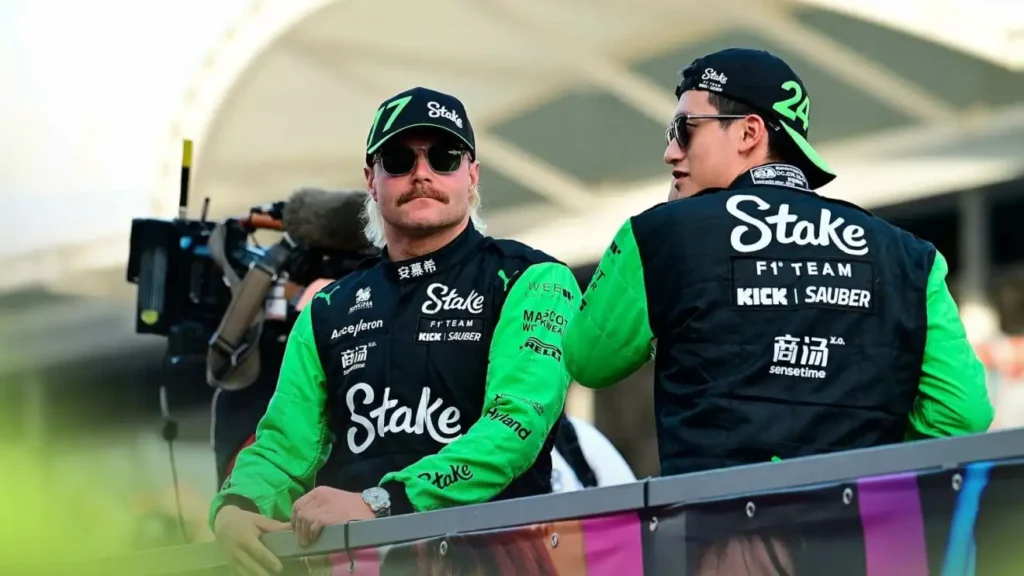
- The Bottas/Perez Dynamic: Unlike the toxic rivalry at Red Bull, Perez and Bottas have no need to prove they are “future world champions.” They are in the “legacy” phase of their careers. Bottas stated, “We don’t need to prove anything to each other… We are here in this together”. This collaborative atmosphere is essential for a new team that cannot afford civil wars.
The Technical Challenge: 2026 Regulations
Cadillac enters at a moment of regulation reset, which is both a blessing and a curse.
- The Engine: Cadillac will use Ferrari customer engines for the 2026-2028 seasons before their own GM works engine comes online in 2029. This is a safe bet; Ferrari’s 2026 power unit is expected to be competitive, removing one variable from the equation.
- The Chassis: This is the risk. The team is operating out of Silverstone (F1 hub) and the US. They are restricted by the cost cap and wind tunnel limits immediately. However, having no 2025 car to develop means they can dedicate 100% of their resources to the 2026 concept—a luxury existing teams do not have.
Analysis of the Line-Up:
“The choice of Bottas and Perez for F1’s newest team is as unambitious and drab as it is pragmatic and engineering-led,” wrote one critic. This criticism misses the point of a new entry. A new team cannot afford a rookie who crashes (costing millions under the cost cap) or a driver who cannot provide accurate feedback. Perez is known for his tire management and race craft; Bottas is known for his qualifying speed and technical feedback. They cover each other’s weaknesses perfectly.
The Commercial "Super Team" for the Americas
The pairing of General Motors (Cadillac) and Sergio Perez is a commercial juggernaut that F1 Liberty Media has likely dreamed of.
- Geopolitics of F1: The sport is aggressively expanding in the US (Austin, Miami, Las Vegas). Perez is the de-facto “home” driver for these races due to the massive Mexican-American fanbase. His presence ensures that Cadillac has immediate fan engagement, even if the car is at the back of the grid.
- Sponsorship: Perez brings the backing of the Slim family (Telcel/Claro). Combined with GM’s corporate backing, Cadillac is arguably the most financially stable “new entry” in F1 history, avoiding the pitfalls of HRT, Caterham, or Manor, who relied on pay drivers or shaky investment funds.
Predictions for 2026
- Performance: History suggests new teams struggle. However, Haas scored points on debut in 2016. Cadillac’s resource level is significantly higher than Haas’s was. Expect them to fight in the lower midfield (P8-P10), battling with Alpine and perhaps Sauber/Audi.
- Perez’s Role: Perez will likely assume the “team captain” role regarding race strategy and tire data, while Bottas may lead on one-lap pace. If Perez can consistently bring the car home and provide clear development paths, he will secure his legacy not as the man who failed to beat Max Verstappen, but as the man who built America’s F1 team.
Conclusion: The Last Laugh?
Sergio Perez’s career is a testament to survival. He survived the collapse of Sauber, the disaster of McLaren, the administration of Force India (where he triggered the legal action that saved the team’s jobs), and the pressure cooker of Red Bull.
His quote, “I never expected to make this move,” referring to McLaren in 2013, was about youthful naivety. He thought he had made it to the top. His move to Cadillac in 2026 is about mature realism. He knows he isn’t joining a championship winner. He is joining a project where “everything is a problem” not because of toxicity, but because it is new. And for the first time in years, Checo looks ready to solve problems, rather than be blamed for them.