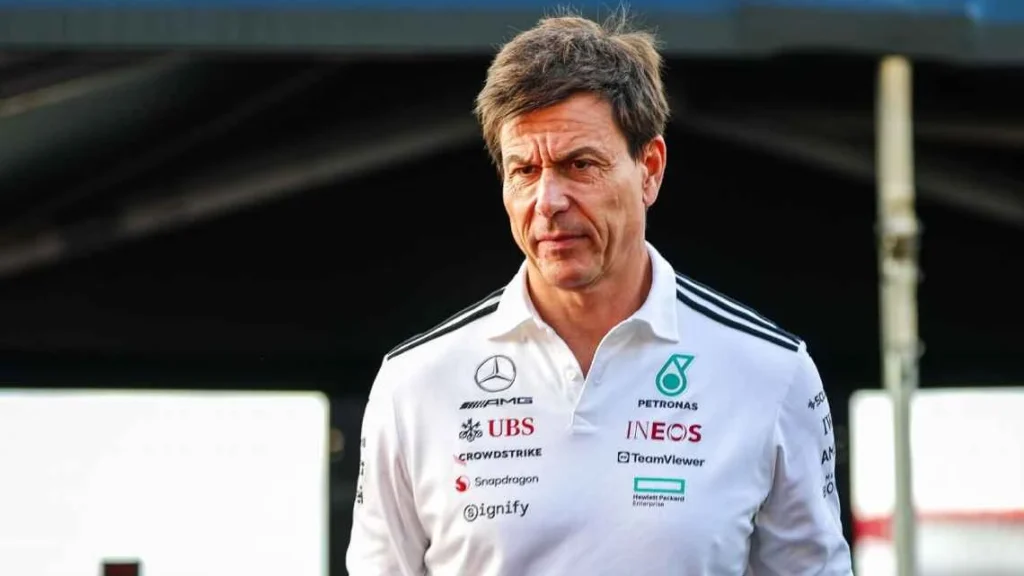
In the high-stakes theatre of Formula 1, where tenths of a second on the track translate into millions of dollars in prize money and sponsorship, the financial machinations occurring in the boardroom often eclipse the drama of the Grand Prix itself. The announcement that Toto Wolff, the Team Principal and CEO of the Mercedes-AMG Petronas F1 Team, has divested a portion of his shareholding to George Kurtz, the co-founder and CEO of cybersecurity titan CrowdStrike, marks a watershed moment not just for the Brackley-based squad, but for the economic valuation of the entire sport.
Confirmed amidst the neon glare of the Las Vegas Grand Prix weekend—a fitting backdrop for a deal rooted in American capital and global spectacle—the transaction fundamentally resets the valuation benchmarks for Formula 1 franchises. While the precise cash figures remain guarded under the veil of private equity confidentiality, verified reports and analyst consensus indicate that the deal values the Mercedes F1 team at approximately £4.6 billion ($6 billion). This figure represents a staggering appreciation of the asset class, placing a Formula 1 team on par with the world’s most elite sporting institutions, such as the Dallas Cowboys, New York Yankees, and Real Madrid.
This report provides an exhaustive analysis of the transaction, dissecting the complex ownership structure, the strategic rationale behind George Kurtz’s entry as an owner, the role of CrowdStrike in the team’s technological infrastructure, and the broader implications for the sport as it barrels toward the comprehensive regulatory overhaul of 2026. Furthermore, it situates this business development within the immediate competitive context of the 2025 season, specifically the team’s performance at the Las Vegas Grand Prix, where the announcement was made.
The Transaction: Structure, Valuation, and Governance
To understand the significance of this sale, one must first deconstruct the intricate ownership architecture of the Mercedes-AMG Petronas Formula One Team. Prior to this transaction, the team operated under a tripartite ownership model established in late 2020, designed to ensure stability and shared commitment between the manufacturer, the operational leader, and a strategic partner.
The Pre-Transaction Ownership Landscape
Following the departure of Niki Lauda and the restructuring of the team’s equity in December 2020, the ownership was divided into three equal tranches. This structure was celebrated as a model of stability, binding the German automotive giant (Mercedes-Benz), the British petrochemical conglomerate (INEOS), and the Austrian management architect (Toto Wolff) into a pact of mutual interest.
Shareholder | Entity | Stake (Pre-2025) | Role |
Daimler AG | Mercedes-Benz Group AG | 33.3% | Manufacturer / Chassis & PU Branding |
INEOS | Ineos Industries Holdings | 33.3% | Principal Partner / Financial Backing |
Toto Wolff | Motorsport Invest | 33.3% | Team Principal & CEO / Operational Control |
The Mechanics of the Kurtz Acquisition
The transaction announced in Las Vegas does not involve the issuance of new shares by the team itself, nor does it dilute the holdings of Mercedes-Benz Group AG or INEOS. Instead, it is a secondary market transaction occurring solely within Toto Wolff’s personal investment vehicle.

George Kurtz has acquired a 15% stake in Motorsport Invest, the holding company solely controlled by Toto Wolff. Because Motorsport Invest owns exactly one-third (33.3%) of the Mercedes F1 Team, Kurtz’s 15% stake in the holding company translates mathematically to an approximate 5% indirect equity interest in the Mercedes-AMG Petronas F1 Team.
This distinction is vital for governance. While Kurtz becomes a beneficial owner with a significant financial interest, the voting rights associated with the one-third block likely remain consolidated under Wolff’s stewardship to ensure decision-making agility. Wolff confirmed that he retains his executive roles as Team Principal and CEO, and “the governance of the team will be unchanged”.
The Valuation Benchmark: From £1 to £4.6 Billion
The trajectory of the Brackley team’s valuation serves as the definitive case study for the success of Liberty Media’s “franchise model” for Formula 1. The entity now valued at £4.6 billion has a lineage that traces back to Tyrrell, BAR, Honda, and Brawn GP.
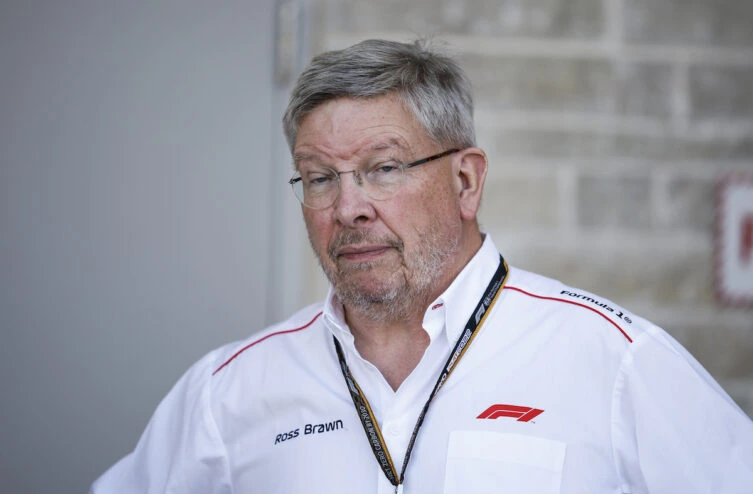
In early 2009, Ross Brawn famously purchased the team from a departing Honda for a symbolic £1, saving it from liquidation. A year later, Mercedes-Benz acquired the team (then the reigning champions Brawn GP) for roughly $170 million. When Toto Wolff initially invested in 2013, acquiring 30% of the team alongside Niki Lauda’s 10%, the valuation was a fraction of current levels, estimated in the tens of millions.
The leap to a £4.6 billion ($6 billion) valuation in 2025 represents an exponential multiplier.
- 2020 Benchmark: When INEOS bought their 33% stake, the team was valued at approximately £625 million ($800 million).
- 2025 Benchmark: The Kurtz deal values the team at roughly 7.3 times the 2020 valuation.
This massive appreciation is driven by three primary factors:
- Scarcity: With the FIA and FOM strictly controlling the entry of new teams (as seen in the resistance to the Andretti bid), the ten existing franchises hold a monopoly on the grid.
- Profitability via Cost Cap: The introduction of the budget cap in 2021 (initially $145m, gliding down to $135m plus inflation adjustments) decoupled expenditure from revenue. Top teams like Mercedes, which previously spent $400m+ annually to win, now have their costs fixed while revenues from sponsorship and FOM prize money continue to soar, guaranteeing profitability.
- US Expansion: The explosion of interest in the United States, evidenced by the Las Vegas Grand Prix itself, has opened lucrative new revenue streams and attracted American institutional capital.
Wolff emphasized this shift in his comments to Sky Sports F1: “I think it shows a good development because the teams have become sustainable and profitable. It’s not just some valuation that has been taken out of the sky. When you look at our revenues and our cash flows, we are among the five, maybe three most profitable sports teams in the world, and this is where the valuations come from”.
Profile of the New Owner: George Kurtz
The entry of George Kurtz into the ownership structure is not merely a financial injection; it represents the convergence of Silicon Valley technology culture and European motorsport heritage. Unlike private equity investors who are often passive capital providers, Kurtz brings a dual profile that aligns perfectly with Mercedes’ identity: he is both a technologist and a racer.
The Technologist: Architect of CrowdStrike
Kurtz co-founded CrowdStrike in 2011, building it into one of the world’s leading cybersecurity firms. The company revolutionized the industry with its cloud-native Falcon platform, which uses artificial intelligence to detect and prevent breaches.

CrowdStrike has been a partner of the Mercedes F1 team since 2019. This preexisting relationship is critical; the sale was not a solicitation on the open market but an evolution of a long-standing corporate alliance. Under the partnership, CrowdStrike has provided the digital shield protecting the team’s most valuable asset: its intellectual property. In modern F1, where a team’s competitive advantage lies in terabytes of CFD (Computational Fluid Dynamics) data and proprietary simulation code, cybersecurity is synonymous with competitive security.
Kurtz’s transition from sponsor to owner signals a deepening of this technological integration. He has been appointed as the team’s Technology Advisor and will sit on the Strategic Steering Committee alongside Wolff, Ola Källenius (Chairman of Mercedes-Benz), and Sir Jim Ratcliffe (Chairman of INEOS).
The Racer: A Genuine Petrolhead
Crucially for the paddock’s perception, Kurtz is a “car guy.” He is a successful gentleman driver in sportscar racing, campaigning Mercedes-AMG GT3 machinery. His accolades are non-trivial for a non-professional:
- Le Mans 24 Hours: Class winner in LMP2 Pro-Am.
- GT World Challenge America: 2023 Team & Drivers’ Champion.
- 24 Hours of Spa: Two-time class winner.
- Indy 8 Hour: Class winner.
This pedigree provides Kurtz with a nuanced understanding of the sport that pure financiers lack. Wolff cited this specifically: “George’s background is unusual in its breadth: he’s a racer, a loyal sporting ambassador for Mercedes-AMG, and an exceptional entrepreneur. He understands both the demands of racing and the realities of building and scaling technology businesses”.
Strategic Rationale: Why Sell? Why Now?
The timing of this transaction, concluding near the end of the 2025 season, invites analysis regarding the motivations of both the seller (Wolff) and the buyer (Kurtz).
Wolff’s Liquidity and "De-Risking"
For Toto Wolff, this sale represents a classic “de-risking” strategy. Having invested heavily in the team over a decade ago, his wealth is disproportionately tied to the valuation of this single asset. By selling a minority stake (approximately 15% of his holding), he is able to realize substantial liquidity—estimated at roughly $300 million—without ceding operational control or his position as a primary face of the franchise.
This move mirrors trends seen in other sports, where owners sell minority slivers of equity to establish a public valuation marker and free up capital for other investments, while retaining the majority of their upside exposure. It is a vote of confidence in the asset’s value, locking in gains from the team’s dominant era (2014–2021) while retaining 85% of his stake to ride the future growth curve.
The "Dotted Line" Integration
From a team perspective, elevating CrowdStrike from sponsor to owner creates a “sticky” partnership. In the salary cap era, teams cannot simply outspend rivals on personnel or parts. Efficiency is the new currency.
CrowdStrike’s COO, Rob Thomas, has previously described the company as a “dotted line extension of our IT department”. By formalizing this through equity, Mercedes ensures that CrowdStrike’s best resources—its AI threat detection, its data handling capabilities, and its cloud infrastructure experts—are prioritized for the team.
This is particularly relevant as F1 teams face increasing cyber threats. The data generated during a race weekend—telemetry, strategy simulations, voice comms—is highly sensitive. A breach could reveal strategy secrets to rivals or, worse, compromise the car’s operating systems. Kurtz’s role as Technology Advisor ensures that the team’s digital fortress is overseen by one of the world’s foremost experts.
Validating the Business Model
For the broader F1 ecosystem, this deal serves as a validation of the Liberty Media era. When Liberty purchased F1, many skeptics doubted that teams could ever become self-sustaining profit centers. The £4.6 billion valuation proves that the transition from “constructor” to “sports franchise” is complete.
This valuation has ripple effects. It strengthens the balance sheets of Daimler and INEOS, who can now mark their holdings to this new market value. It also sets a formidable barrier for any new entrant; if 5% of a team costs $300 million, the anti-dilution fee for a new 11th team (currently debated at $200m or $600m) looks increasingly like a bargain, justifying the incumbents’ demand to raise it significantly.
The 2026 Horizon: Technology Meets Regulation
The strategic imperative for this partnership becomes even clearer when viewed through the lens of the pending 2026 regulations. Formula 1 is preparing for the most significant technical overhaul in its history, and the convergence of Kurtz’s tech expertise with Mercedes’ engineering is timely.
The 2026 Regulatory Landscape
The 2026 ruleset introduces two fundamental changes that heighten the importance of software and simulation:
- The Power Unit Reset: The new power units will feature a 50/50 split between internal combustion and electrical power (approx. 400kW each). This massive increase in electrical deployment requires sophisticated energy management strategies. The software that controls when and how this energy is deployed will be a key performance differentiator.
- Active Aerodynamics: To compensate for the drag of the new chassis, cars will feature “X-Mode” (low drag for straights) and “Z-Mode” (high downforce for corners), with moveable wings front and rear. This system must be perfectly synchronized with the driver’s inputs and the engine’s deployment.

The Data Challenge
These regulations increase the computational load on teams. Simulations must now account for active aero maps interacting with variable energy deployment profiles in real-time. “Data wins,” as Kurtz succinctly put it in his statement.
The ability to process, secure, and analyze this data faster than the competition is where CrowdStrike’s infrastructure becomes a competitive lever. With testing time in wind tunnels and CFD strictly limited by the sporting regulations (ATR – Aerodynamic Testing Restrictions), the efficiency of data analysis is paramount. A team that can run secure, cloud-based simulations with lower latency and higher reliability has a tangible advantage. Kurtz’s guidance on the Strategic Steering Committee will likely focus on optimizing this “digital production line.”
Paddock Reaction and Competitive Context
The announcement of the sale was timed to coincide with the Las Vegas Grand Prix, a nexus of American commerce and F1 glamour. The paddock reaction has been one of acknowledgement rather than surprise, viewing the deal as a natural evolution of the sport’s commercial growth.
Stability Amidst Speculation
Prior to the announcement, there had been murmured speculation regarding Toto Wolff’s long-term future. Having achieved everything possible in the sport—eight consecutive titles—and enduring the burnout of the relentless schedule, some wondered if he was looking for an exit.
This deal effectively silences those rumors. By selling only a fraction of his stake and recommitting to his executive roles, Wolff has signaled he is staying. Industry analysts note that if Wolff intended to leave, he would likely have sought a buyer for his entire stake or a roadmap to a full exit. Instead, he has brought in a partner to bolster the team’s longevity.
Martin Brundle, the Sky Sports F1 pundit, noted the significance of the valuation, suggesting it protects the team’s future. “It shows a good development because the teams have become sustainable,” Brundle echoed, reinforcing the consensus that financial stability leads to competitive stability.
The Las Vegas Grand Prix Context
The business deal was set against a dramatic on-track backdrop in Las Vegas. The Mercedes team arrived in Nevada embroiled in a tight battle for P2 in the Constructors’ Championship, fighting to extract consistency from the W15 chassis.
The race weekend itself highlighted the team’s current operational reality: a mix of promise and frustration.
- Qualifying Drama: In a wet-to-dry qualifying session, George Russell showcased the car’s potential by securing P4. However, he was hampered by a power steering issue midway through Q3, which prevented him from challenging Lando Norris for pole position. “I think we could have been best of the rest,” Russell noted, lamenting the mechanical gremlin.
- Rookie Struggles: Kimi Antonelli, the 19-year-old phenom confirmed as Lewis Hamilton’s successor for 2025, faced a steep learning curve. In his first-ever wet qualifying session in F1 machinery, he locked up on a crucial lap in Q1, resigning him to a P17 start. This result underscored the risks inherent in Mercedes’ bold driver strategy—replacing a seven-time world champion with a rookie requires patience
The contrast between the multi-billion dollar boardroom triumph and the gritty reality of a P17 qualifying result illustrates the duality of modern F1. A team can be a financial juggernaut and still face significant sporting challenges. However, the capital injection and stability provided by the Kurtz deal ensure that Mercedes has the resources to weather these developmental storms.
Detailed Ownership & Governance Analysis
To fully appreciate the stability this deal offers, it is necessary to examine the governance structure that Kurtz is joining. The “Strategic Steering Committee” is the team’s highest decision-making body.
The Strategic Steering Committee
Member | Role | Represents | Primary Focus |
Ola Källenius | Chairman, Mercedes-Benz | Daimler AG | Brand alignment, technical transfer (road to race), sustainability targets. |
Sir Jim Ratcliffe | Chairman, INEOS | INEOS | Financial discipline, high-performance culture, capitalization. |
Toto Wolff | Team Principal & CEO | Motorsport Invest | Daily operations, sporting performance, political strategy (FIA/FOM). |
George Kurtz | Technology Advisor | CrowdStrike | Cybersecurity, digital infrastructure, AI integration, US market expansion. |
This “Board of Directors” approach differs from the autocratic style of F1’s past (e.g., Ron Dennis at McLaren or Frank Williams). It brings together diverse expertise—automotive, industrial, racing, and now technology—to govern the franchise.
Voting Rights and Control
While Kurtz owns equity, reports suggest that the voting rights for the one-third block held by Motorsport Invest remain with Wolff. This is a crucial detail. It prevents decision-making paralysis. In F1, agility is key; the Team Principal needs the autonomy to make split-second decisions regarding budget allocation or political stances without needing a boardroom vote for every minor issue. Kurtz’s influence will be “advisory” and strategic, rather than operational or obstructive.
Future Outlook: The Franchise Era
The Mercedes-CrowdStrike deal is likely a harbinger of future transactions across the grid. As valuations rise, we can expect to see more:
- Partial Exits: Long-term owners monetizing a portion of their holdings to realize gains while staying involved.
- Strategic LPs: The entry of Limited Partners (LPs) who bring specific expertise (tech, media, retail) rather than just “dumb money.”
- Valuation Transparency: Deals like this provide hard data points for other teams (e.g., Alpine, Aston Martin) to value their own equity, potentially aiding them in securing credit or investment.
Implication for Mercedes Competitors
For rivals like Red Bull and Ferrari, the Mercedes valuation is a double-edged sword. It confirms the immense value of their own teams (Ferrari, arguably, would command an even higher premium due to its historic status). However, it also signals that Mercedes is fortifying its “war chest.”
With Wolff, Ratcliffe, Källenius, and now Kurtz aligned, Mercedes has arguably the most commercially robust ownership group in the sport. They have the financial firepower of a petrochemical giant, the technical resources of a premier automaker, the operational savvy of F1’s most successful modern team boss, and the digital acumen of a Silicon Valley leader.
Conclusion
The sale of a 5% indirect stake in the Mercedes-AMG Petronas F1 Team to George Kurtz is a transaction that transcends the mere exchange of shares. It is a definitive statement on the health of Formula 1 as a business and Mercedes’ position at its apex.
Valued at £4.6 billion, the team has completed its metamorphosis from a racing squad into a premier global sports franchise. For Toto Wolff, the deal is a masterstroke of personal financial management and strategic team building, securing his own liquidity while embedding a critical technology partner into the team’s DNA.
As the sport looks toward 2026, the challenges are immense: active aerodynamics, sustainable fuels, and hybrid power units that demand perfect software integration. By bringing George Kurtz—a racer who speaks the language of zero-latency data—into the fold, Mercedes has signaled that it intends to win the future not just with horsepower, but with computing power. The “Silver Arrows” are now fully digitized, funded, and fortified for the next era of Grand Prix racing.