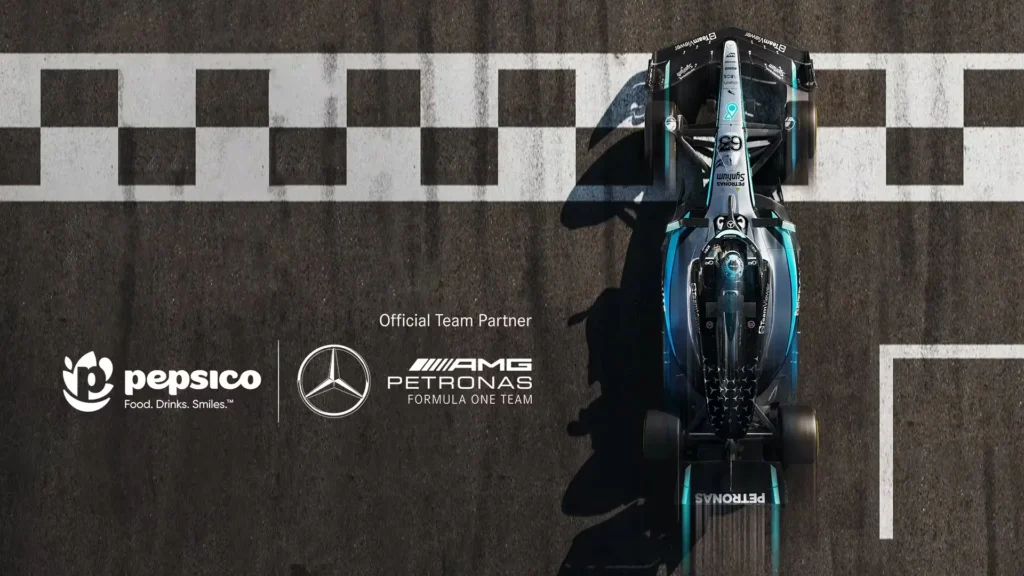
DECEMBER 2025 — In a move that reshapes the commercial landscape of Formula 1 ahead of the sport’s new era, the Mercedes-AMG Petronas Formula One Team has announced a landmark global partnership with PepsiCo, headlined by its rapidly expanding energy drink brand, Sting Energy.
The multi-year agreement, set to commence in the 2026 season, sees PepsiCo joining the eight-time Constructors’ Champions as an Official Team Partner. While the deal encompasses a “powerhouse trio” of PepsiCo brands—including Gatorade and Doritos—it is Sting Energy that takes center stage as the designated energy partner, signaling a direct challenge to established players in the paddock and marking a significant strategic pivot for Mercedes following its long-standing relationship with Monster Energy.
This partnership underscores Mercedes’ enduring commercial resilience. Despite a transitional period on track, the Silver Arrows continue to command the sport’s most premium sponsorship inventory, attracting a blue-chip conglomerate like PepsiCo to replace a rival energy drink giant.
Who Is Sting Energy & Why F1?
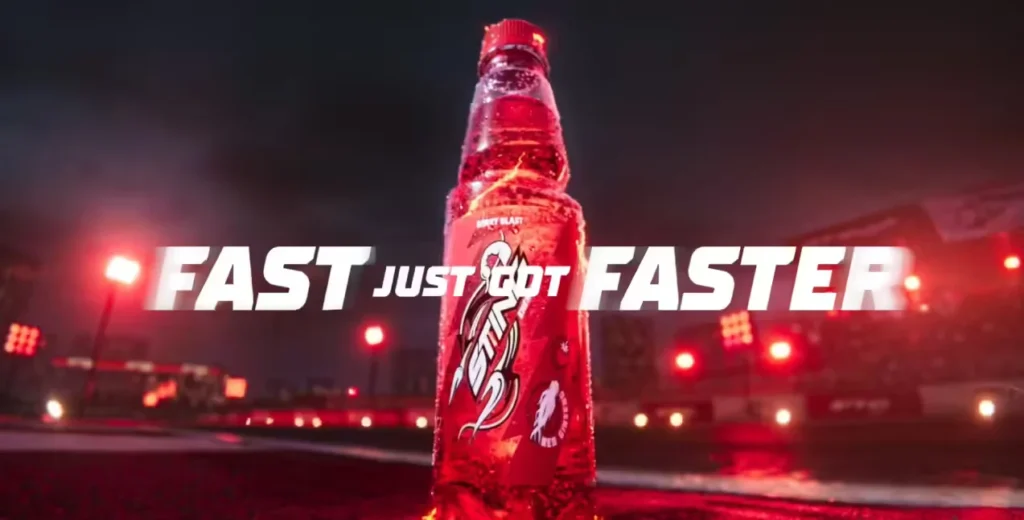
For many Western Formula 1 fans, Sting might be a new name, but in the global beverage market, it is a titan. Owned by PepsiCo, Sting Energy is the #1 energy drink brand in key high-growth markets including India, Pakistan, Vietnam, and Egypt.
Sting’s entry into Formula 1 is a calculated play for global visibility. The brand has experienced “explosive growth” in Asia and the Middle East, markets where Formula 1 has aggressively expanded its footprint over the last decade. By partnering with Mercedes, Sting is leveraging the sport’s massive platform to transition from a regional powerhouse to a truly global contender.
The synergy with Formula 1 is unmistakable. Sting positions itself around “youthful energy” and high-octane performance—branding pillars that mirror F1’s own demographic shift toward Gen Z audiences, driven by digital engagement and the Drive to Survive effect. The partnership is designed to “electrify” the paddock, using the speed and technological excellence of F1 to validate Sting’s product promise: fast just got faster.
Why Mercedes-AMG Petronas?
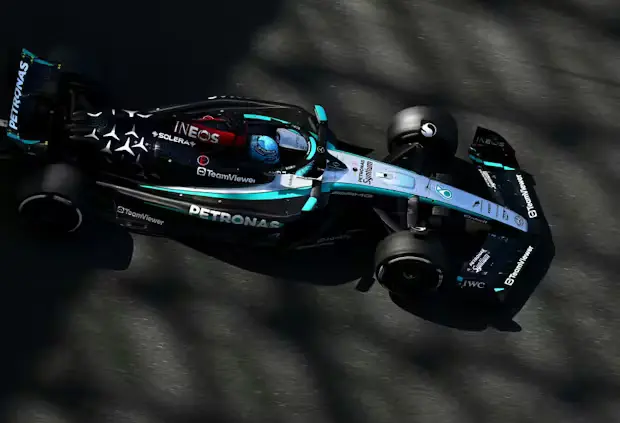
For PepsiCo, the choice of Mercedes-AMG Petronas was strategic. Despite the rise of McLaren and Ferrari’s resurgence, Mercedes remains the gold standard for corporate integration and global reach in Formula 1.
“Welcoming a company with a portfolio as strong as PepsiCo’s into our partner ecosystem is another sign of the strength of our team and our sport,” stated Toto Wolff, Team Principal and CEO of Mercedes-AMG Petronas. The collaboration aligns with Mercedes’ ethos of “chasing ultimate performance,” offering PepsiCo a partner that shares its values of innovation and excellence.
Mercedes offers Sting a level of premium association that few other sports properties can match. The team’s ability to retain global giants like PETRONAS and INEOS, and now attract PepsiCo, speaks to the immense value of the Mercedes star. For Sting, aligning with a team based in Brackley but celebrated globally provides instant credibility and a direct line to millions of affluent and aspirational consumers.
What the Partnership Includes
The deal is far more than a logo-slapping exercise. It involves deep integration across the team’s operations, marketing, and performance structures starting in 2026.
Sting Energy Activation: Sting will focus on high-visibility branding and digital engagement. The launch campaign featured a digital film where the Mercedes car’s engine roar was tuned to scream “STINGGGGGG,” setting the tone for a disruption-focused marketing strategy. Sting will utilize the team’s digital channels to connect with Gen Z fans, bringing the “energy” of the race weekend to a younger demographic.
Driver Involvement: Mercedes drivers George Russell and rookie sensation Kimi Antonelli will be central to the activations. Russell’s established star power and Antonelli’s representation of the “next generation” perfectly segment the market for PepsiCo’s diverse portfolio. Both will feature in campaigns, behind-the-scenes content, and global fan experiences.
Performance Integration (Gatorade): Uniquely, this partnership brings Gatorade’s Sports Science Institute (GSSI) into the garage. With drivers losing up to 4kg of weight per race, Gatorade will provide customized hydration plans for drivers and pit crew, giving the commercial deal a legitimate performance upside.
Fan Engagement (Doritos): Doritos will handle the “flavor” and “boldness” aspect, focusing on trackside fan zones and experiential activations that capture the tension and excitement of the Grand Prix weekend.
Commercial & Strategic Impact
Financially, this is a massive win for Mercedes. Industry analysts estimate the value of the deal to be in the range of $20 million to $50 million annually, a significant sum that reinforces Mercedes’ financial stability under the budget cap era.
Crucially, this deal fills the void left by Monster Energy, which had been a partner since 2010. Swapping one energy drink giant for the global might of PepsiCo (via Sting) suggests Mercedes has not just replaced a sponsor, but upgraded its portfolio diversity.
“It’s a partnership that adds real value to how we operate day-to-day,” noted Richard Sanders, Mercedes’ Chief Commercial Officer. By bringing in a consumer goods conglomerate with the scale of PepsiCo, Mercedes diversifies its revenue stream beyond automotive and petrochemical sectors, insulating the team from industry-specific downturns.
Quotes & Official Reactions
The leadership from both organizations emphasized the “cultural” fit of the partnership, moving beyond simple transactional sponsorship.
Eugene Willemsen, CEO of International Beverages at PepsiCo, highlighted the holistic nature of the deal:
“This partnership unites performance, energy, and flavor under one banner—connecting three of PepsiCo’s most iconic brands with the world’s most successful Formula 1 team. Through Gatorade, Sting, and Doritos, we’re inside the culture of the sport, fueling both the athletes and the fans who live for the thrill of F1.”
Toto Wolff reinforced the strategic alignment:
“Gatorade’s expertise in sports science, Sting’s youthful energy, and Doritos’ cultural relevance each bring something unique. Together, they create a partnership that not only supports our team’s performance but also enhances the experience for our fans around the world.”
Wider F1 Sponsorship Context
Sting’s arrival heats up the “Energy Drink Wars” in the F1 paddock. Red Bull Racing naturally dominates the space with its ownership of two teams. However, the rest of the grid is a battleground: Monster Energy (likely moving to McLaren or remaining prominent elsewhere), Celsius with Ferrari, and now Sting with Mercedes.
This move also marks a significant return for PepsiCo to Formula 1 team sponsorship. While the company has had a presence via smaller deals or league-wide partnerships (like Gatorade’s Sprint involvement), this is its first major team livery presence since the 7Up-Jordan partnership of 1991—a deal still remembered fondly for the iconic green car driven by Michael Schumacher.
The entry of a mass-market consumer brand like Sting into a premium team like Mercedes signals that F1’s commercial appeal has fully transcended “luxury” and “tech.” It is now a primary platform for FMCG (Fast-Moving Consumer Goods) brands to fight for market share.
What This Means Going Forward
The 2026 season brings new technical regulations, new cars, and new engines. By securing this partnership now, Mercedes enters the new era on a solid financial footing.
For Sting, this is likely just the beginning. The “multi-year” nature of the deal suggests a long-term strategy to make Sting a household name in Europe and the Americas, mirroring the path Red Bull took two decades ago. If the partnership proves successful in driving market share in Asia and the Middle East, we could see PepsiCo expanding its F1 investment even further, potentially using Sting as the tip of the spear for other beverage brands entering the sport.
Conclusion
The Mercedes-PepsiCo partnership is a textbook example of modern sports marketing: a collision of premium performance and mass-market appeal. For Mercedes, it validates their status as F1’s commercial juggernaut, capable of attracting world-leading conglomerates even during competitive lulls. For Sting Energy, it is a declaration of intent—a high-speed ticket to global recognition, strapped to the side of a Silver Arrow. As the 2026 season approaches, the battle on track will be fierce, but the battle for brand dominance has already been won in the boardroom.