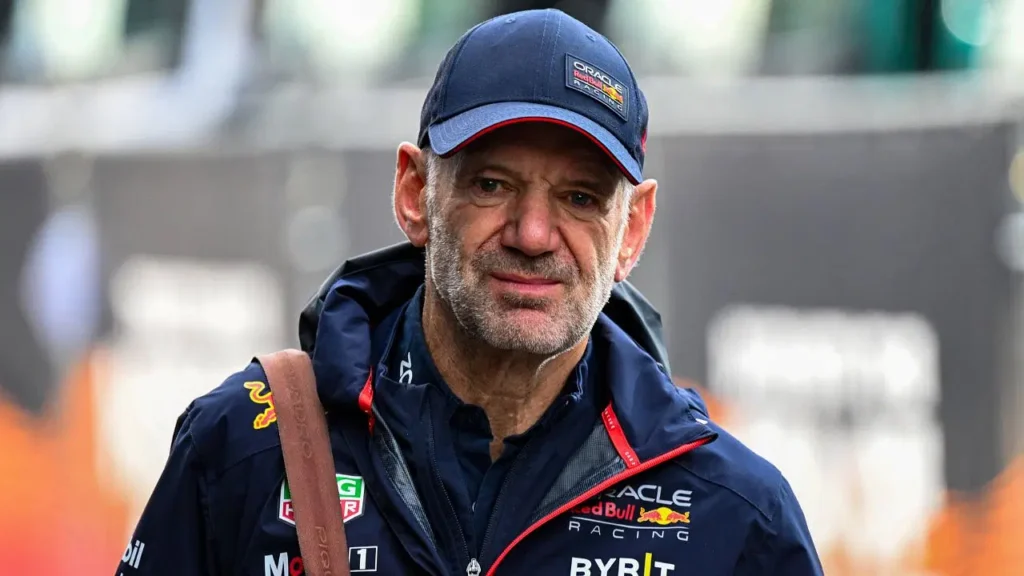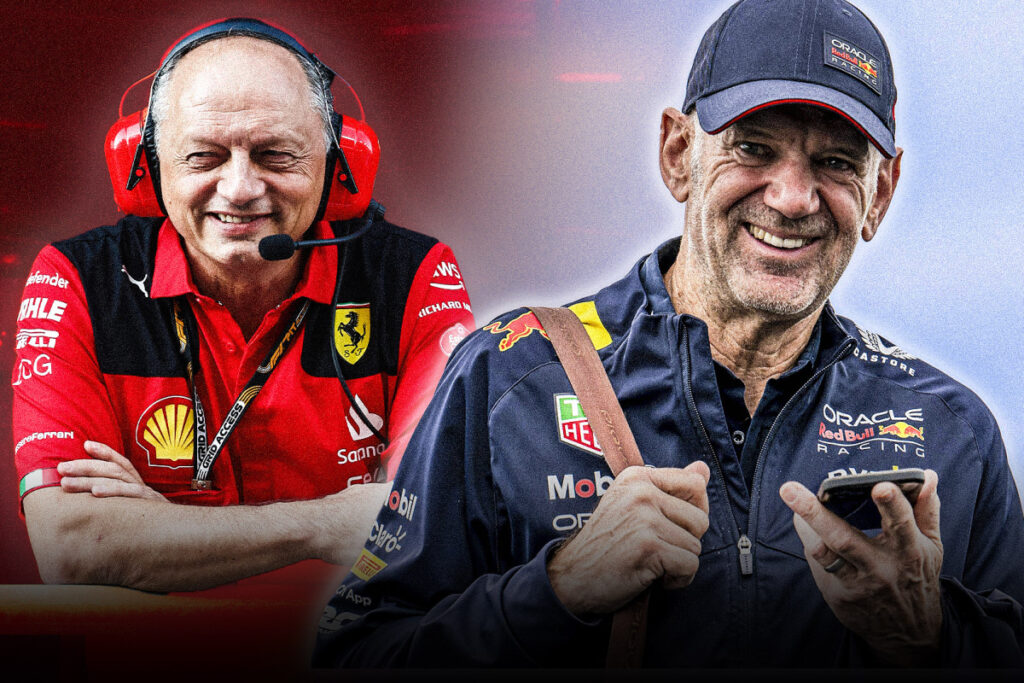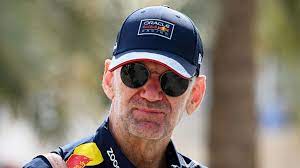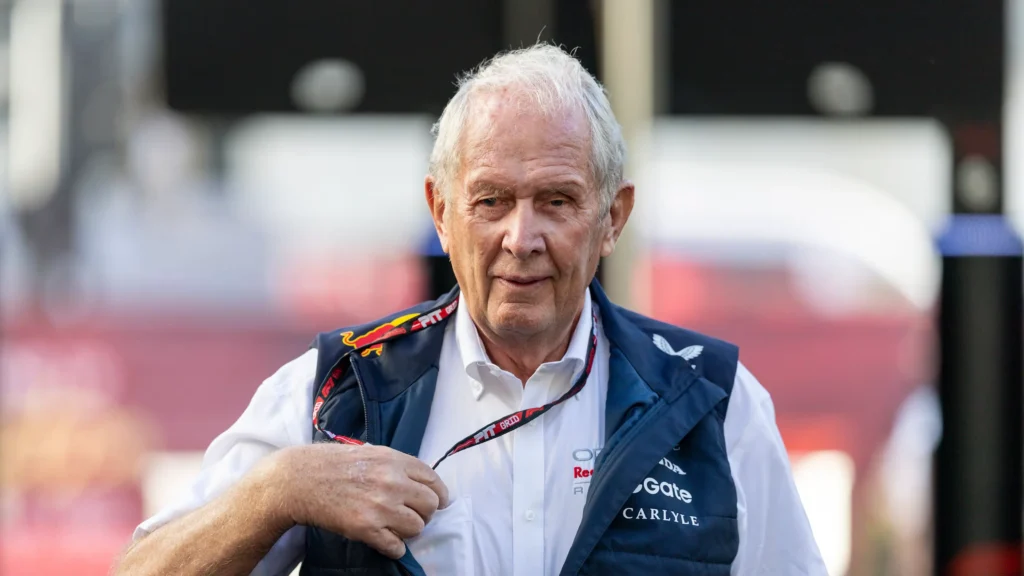
The confirmation that Dr. Helmut Marko will depart Red Bull Racing at the conclusion of the 2025 Formula 1 season marks more than just a personnel change; it signifies the final, irrevocable severance of the team’s connection to its founding ethos. For over two decades, the 82-year-old Austrian served not merely as a motorsport advisor but as the de facto arbiter of Red Bull’s racing soul—the right hand of the late Dietrich Mateschitz, the architect of the sport’s most ruthless driver development program, and the uncompromising standard-bearer for a team that prioritized raw speed over corporate niceties.
His exit, coming just months after the dramatic mid-season dismissal of long-time Team Principal Christian Horner in July 2025, signals the completion of a total leadership overhaul orchestrated by the Austrian parent company, Red Bull GmbH, and its CEO of Corporate Projects, Oliver Mintzlaff. The announcement, made in the immediate aftermath of a bitter season finale in Abu Dhabi where Max Verstappen narrowly lost the Drivers’ Championship to McLaren’s Lando Norris, has sent shockwaves through the paddock, confirming that the Red Bull of the last twenty years—the sharp-edged, politically incorrect, and devastatingly effective racing machine—is effectively no more.
While Marko’s official title was “Motorsport Advisor,” his influence permeated every stratum of the organization. He was the kingmaker who plucked a teenage Max Verstappen from Formula 3, the executioner who ruthlessly cut drivers like Nyck de Vries and Daniil Kvyat, and the political infighter who protected the racing team’s interests against corporate encroachment. His departure is not an isolated retirement; it is the capstone of a systematic dismantling of the triumvirate—Mateschitz, Horner, Marko—that built a drinks company into a six-time Constructors’ Champion. Red Bull Racing enters 2026 not as the dominant force of the early 2020s, but as an organization in deep transition, fighting to redefine its identity without the figureheads who forged it.
The Immediate Shockwaves
The timing of the announcement—immediately following the loss of the 2025 Drivers’ title—adds a layer of poignancy and drama to the exit. Marko admitted in the paddock that “narrowly missing out on the world championship this season has moved me deeply and made it clear to me that now is the right moment”. This admission reveals a man who, perhaps for the first time, felt the weight of a competitive decline he could no longer arrest through sheer force of will.
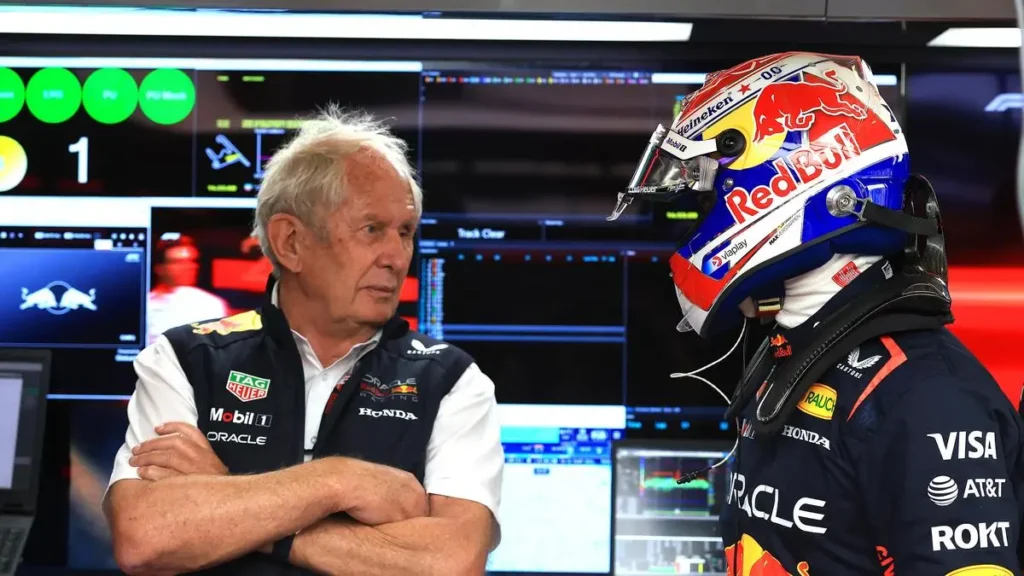
Reaction in the paddock has been swift and polarized. To his detractors, including Mercedes Team Principal Toto Wolff, Marko was a relic of a bygone era—a “brainless” antagonist whose controversial comments often overshadowed the team’s achievements. To his loyalists, particularly the Verstappen camp, he was the only remaining guarantor of the “pure racing” philosophy that attracted them to Red Bull in the first place. His exit leaves a vacuum that corporate structures may struggle to fill.
Key Event | Date | Significance |
Horner Sacking | July 9, 2025 | Ended 20-year tenure; marked the beginning of the end for the old guard. |
Title Loss | Dec 8, 2025 | Lando Norris defeats Verstappen in Abu Dhabi; Red Bull’s dominance officially broken. |
Marko Announcement | Dec 9, 2025 | Confirms exit at end of 2025; completes leadership overhaul. |
WHO IS HELMUT MARKO TO RED BULL? The Architect of Aggression
To understand the gravity of this departure, one must look beyond the official press releases. Helmut Marko was not an employee in the traditional sense; he was a confidant, a visionary, and a ruthless operator who operated outside the normal chain of command.
The Mateschitz Connection
Marko’s power derived entirely from his relationship with Red Bull co-founder Dietrich Mateschitz. They shared a Styrian heritage and a philosophy that valued risk-taking and autonomy. Mateschitz trusted Marko’s “eye” for talent implicitly, granting him carte blanche to run the Red Bull Junior Team and the F1 operations without interference from the marketing department. This unique protection allowed Marko to make high-stakes decisions—such as promoting an 17-year-old Verstappen or demoting Pierre Gasly mid-season—that a corporate board would never have sanctioned. With Mateschitz’s death in October 2022, Marko lost his protector, and the countdown to this moment began.
The Junior Team Architect
Marko revolutionized the concept of the F1 driver academy. Before Red Bull, junior programs were often loose affiliations. Marko turned the Red Bull Junior Team into a high-performance, high-pressure pipeline designed to produce world champions or nothing.
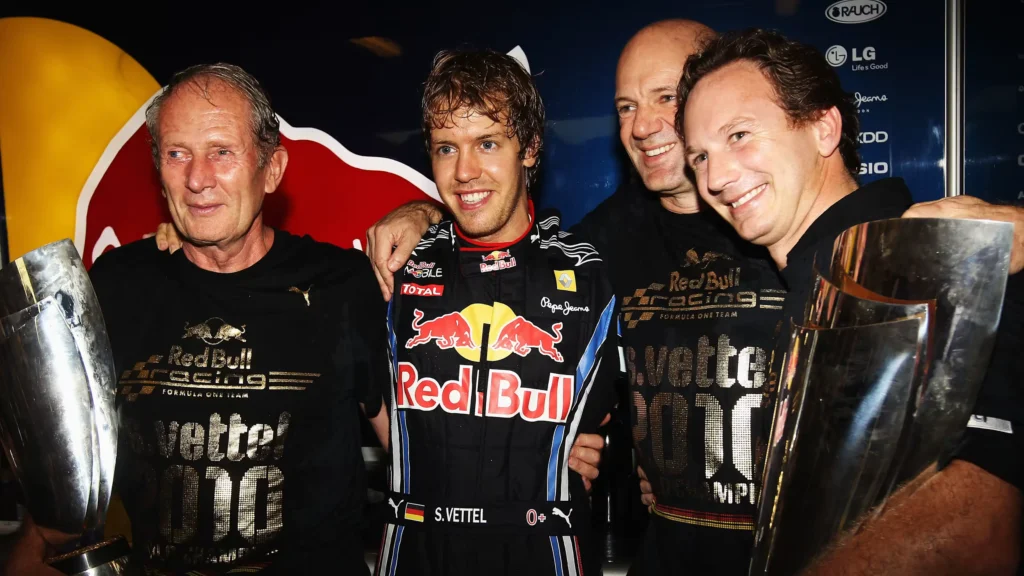
- The Successes: Sebastian Vettel, Max Verstappen, Daniel Ricciardo, Carlos Sainz. These names define the modern grid and validate Marko’s brutal methods.
- The Philosophy: “If you can’t stand the heat, get out of the kitchen.” Marko believed that if a driver cracked under his pressure, they would crumble under the pressure of a title fight. This Darwinian approach was cruel but undeniably effective for two decades.
The Internal Power Broker
Within the team, Marko acted as a check on Christian Horner’s power. While Horner ran the day-to-day operations in Milton Keynes, Marko reported directly to the ownership in Austria. This dual-leadership structure created a dynamic tension that, for years, drove the team forward. They were the “good cop, bad cop” of the paddock—Horner the polished diplomat, Marko the blunt truth-teller. However, as the team grew and success became sustained, this relationship soured into a rivalry that would eventually consume them both.
WHY THIS HAPPENED: Anatomy of a Civil War
Marko’s departure is the culmination of a three-year civil war that has torn Red Bull Racing apart from the inside. The catalyst was the power vacuum left by Mateschitz, but the fuel was a toxic mix of personal ambition, corporate restructuring, and scandal.
The Corporate Takeover: Austria vs. Thailand
Following Mateschitz’s death, the ownership structure of Red Bull became a battleground.
- The Austrian Faction: Led by Oliver Mintzlaff (CEO of Corporate Projects), this group sought to modernize the F1 operation, bringing it under tighter corporate governance and reducing the autonomy of the “Garagistas”.
- The Thai Faction: The Yoovidhya family, holding 51% of the shares, largely supported Christian Horner initially, seeing him as the architect of their commercial success.
Marko, representing the old Austrian guard but often operating as a rogue agent, found himself squeezed. Mintzlaff viewed Marko’s loose-cannon approach—unauthorized driver signings, controversial media comments, and lack of accountability—as a liability for a global brand.
The Horner Scandal and Fallout
The investigation into Christian Horner in early 2024 for alleged inappropriate behavior was the spark that ignited the powder keg. While Horner was initially cleared, the internal maneuvering that followed destroyed the trust between the team’s pillars.
- The Leaks: Marko was investigated for allegedly leaking information regarding the Horner case to the media, a move that nearly led to his suspension during the 2024 Saudi Arabian GP.
- The Power Struggle: Horner, empowered by the Thai shareholders, reportedly attempted to oust Marko to consolidate control. Marko, backed by Verstappen, survived the initial coup, but the relationship was irretrievably broken.
The Final Straw: Performance Collapse
The political infighting inevitably bled onto the track. By mid-2025, with Adrian Newey gone and the team distracted by leadership wars, the car’s development stalled. The loss of the 2025 championship to McLaren deprived Marko of his ultimate shield: success. In F1, you can be difficult if you are winning. If you are losing, you are just difficult.
- Operational Failures: The “brain drain” of key personnel like Rob Marshall and Jonathan Wheatley weakened the team’s operational sharpness.
- Unauthorized Moves: Reports surfaced of Marko attempting to sign drivers like Alex Dunne without board approval, only to be overruled—a public humiliation that signaled his loss of absolute authority.
With Horner sacked in July 2025 and replaced by Laurent Mekies, Marko became an isolated figure—an “old school” racer in a “new corporate” structure. His resignation was less a choice and more an acknowledgment that his era had already ended.
HOW THIS AFFECTS MAX VERSTAPPEN: The King Without His Castle
The most immediate and critical consequence of Marko’s exit concerns Max Verstappen. The relationship between the two is profound and transcends the typical driver-manager dynamic. Marko was the man who believed in Verstappen when the rest of the world thought he was too young.
The "Marko Clause" and Contractual Reality
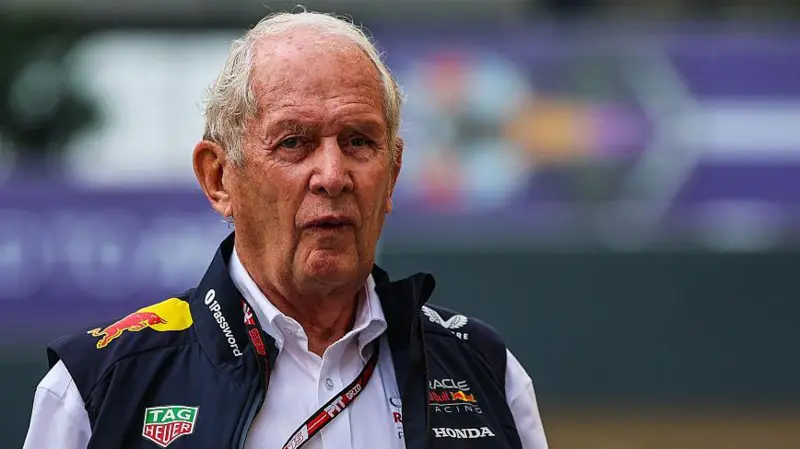
Verstappen is contracted to Red Bull until 2028, but the stability of that contract has always been predicated on Marko’s presence.
- The Escape Clause: It was an open secret in the paddock that Verstappen’s contract contained a clause allowing him to leave if Marko was removed.
- The Renegotiation: Sources suggest that in the wake of the Horner scandal, this clause may have been modified or removed to ensure stability, but the spirit of the agreement remains.
- The Loyalty Factor: Verstappen has publicly stated, “I cannot continue without him,” referring to Marko as a “second father”.
A Dangerous Vulnerability
With Marko gone, Verstappen has lost his “human shield.” Marko absorbed media heat, fought political battles with the FIA, and managed the internal politics, allowing Max to exist in a bubble of pure driving.
- New Leadership: While Verstappen respects new Team Principal Laurent Mekies, he does not have the deep, decade-long bond he shared with Marko.
- The Mercedes Threat: Toto Wolff has been openly courting Verstappen. With Marko out of the picture, and the team’s performance faltering, the barrier to a Verstappen exit has never been lower.
- The 2026 Question: Verstappen has explicitly linked his future to the competitiveness of the 2026 engine. Without Marko there to guarantee the project’s success or protect him if it fails, Verstappen’s wandering eye will turn toward Mercedes or Aston Martin.
Public Reaction
Verstappen’s tribute to Marko was emotional but resigned: “We’ve achieved everything we ever dreamed of… forever grateful”. This sounds less like a man ready to fight the decision and more like a man accepting that the team he loved is changing—perhaps into something he no longer recognizes.
HOW THIS AFFECTS RED BULL’S PERFORMANCE: The Brain Drain Reality
Marko’s exit cannot be viewed in isolation; it is part of a systemic “brain drain” that threatens to derail the team’s competitiveness.
The Leadership Vacuum
The team has lost its entire founding leadership tier in less than three years:
- Dietrich Mateschitz (Founder) – Died 2022
- Adrian Newey (CTO/Genius) – Left early 2025
- Christian Horner (Team Principal) – Sacked July 2025
- Jonathan Wheatley (Sporting Director) – Left 2024
- Helmut Marko (Advisor) – Leaving Dec 2025
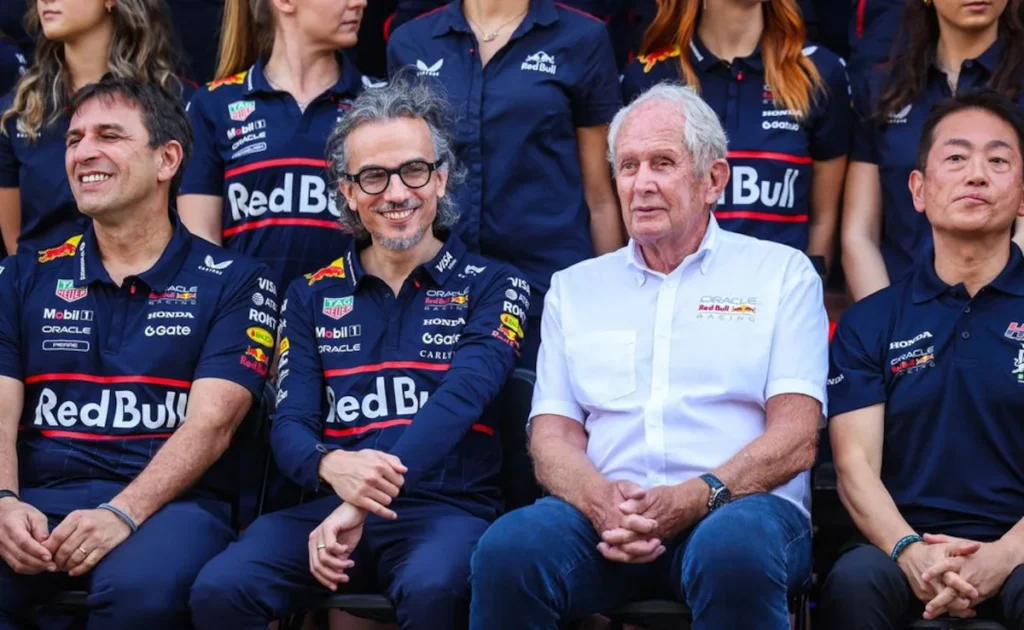
This is a catastrophic loss of institutional memory and leadership. The new team—Mintzlaff, Mekies, and technical director Pierre Waché—are competent, but they lack the cohesion and battle-hardened experience of the previous regime.
Cultural Dilution
Red Bull’s competitive advantage was its culture: aggressive, fast-moving, and anti-corporate. Under Mintzlaff and Mekies, the team is becoming more structured and process-driven. While this brings stability, it risks dulling the sharp edge that allowed them to out-develop rivals. The failed upgrades of the RB21 in late 2025, which cost them the title, are seen by insiders as the first symptom of this new, more bureaucratic approach.
IMPACT ON DRIVER PROGRAM: From Ruthless to Refined
Helmut Marko’s legacy is most visible in the Red Bull Junior Team. His departure signals a fundamental shift in how Red Bull identifies and nurtures talent.
The New Sheriff: Guillaume "Rocky" Rocquelin
Taking over the reins is Guillaume Rocquelin, Sebastian Vettel’s former race engineer. “Rocky” has been working with the juniors since 2022 and represents a philosophical pivot.
- Data vs. Gut: Where Marko relied on instinct and raw speed, Rocquelin focuses on data analytics, engineering feedback, and incremental improvement.
- Nurture vs. Nature: The “sink or swim” method is expected to be replaced by a more supportive development pathway, reducing the burn-out rate of young drivers.
The Immediate Pipeline
- Isack Hadjar: The French-Algerian firebrand is set to debut in 2026, a final gift from the Marko era. His aggressive style mirrors the old philosophy.
- Arvid Lindblad: The 17-year-old prodigy, fast-tracked by Marko, will need to prove himself to a new leadership that may be more risk-averse.
- Liam Lawson: Having been a pawn in Marko’s chess games, Lawson now faces a meritocratic but uncertain future without his old patron.
The question is whether Red Bull will lose its ability to spot “rough diamond” talents like Verstappen, opting instead for safer, more polished corporate-friendly drivers.
HOW THIS SHAPES RED BULL’S FUTURE: Red Bull 2.0
As the team transitions into 2026, it faces an identity crisis.
Corporate Control
The era of the “Garagista” is over. Red Bull Racing is now fully integrated into the corporate structure of Red Bull GmbH. Oliver Mintzlaff’s vision is one of financial sustainability, brand safety, and structured success. This aligns the team more closely with manufacturers like Mercedes and Ferrari, but it strips away the insurgent spirit that made them dangerous.
Red Bull Powertrains (RBPT)
The 2026 engine project is the elephant in the room. Initiated by Horner and Marko, it is now an orphan project. While Ford is a partner, the internal champions of the project are gone. If RBPT fails to deliver a competitive engine in 2026, the new management will have nowhere to hide. Rumors persist that without Marko’s protection, the budget for RBPT could come under scrutiny if results aren’t immediate.v
PADDOCK & INDUSTRY REACTION: A Mixed Verdict
The paddock’s reaction reflects Marko’s polarizing nature.
- Toto Wolff (Mercedes): Never one to mince words, Wolff’s recent clashes with Marko—calling his comments “brainless”—highlight the relief many rivals feel. Wolff likely views Marko’s exit as the removal of a dangerous, unpredictable variable.
- Oliver Mintzlaff: His statement was carefully calibrated, expressing “deep regret” and gratitude while firmly closing the door on the era. It was a corporate eulogy for a maverick.
- The Media: Analysts see this as inevitable. The Race describes Marko as a “cultural dinosaur” whose methods were outdated, yet acknowledges that his exit leaves a void of personality and power that cannot be filled.
CLOSING ARGUMENT — A New Era Begins
Helmut Marko’s departure is the final act in the dismantling of the Red Bull Racing dynasty. The team that enters the 2026 season will bear the name and the logo, but the DNA has been rewritten.
The “Pirate Ship” has been docked. In its place stands a corporate frigate—sturdier, perhaps, and better managed, but lacking the buccaneering spirit that terrorized the establishment for two decades. For Max Verstappen, this is no longer a family; it is a workplace. And workplaces are left far more easily than families.
History may remember this moment—the sacking of Horner, the loss of the 2025 title, and the exit of Marko—as the point where Red Bull ceased to be a racing team that sold drinks, and became a drinks company that owned a racing team. The distinction is subtle, but on the stopwatch, it may prove to be everything.
The Political Battlefield: Mintzlaff's Victory
The victory of Oliver Mintzlaff in this internal war cannot be overstated. When Dietrich Mateschitz died, a power vacuum emerged. Christian Horner attempted to fill it by aligning with the Thai shareholders, creating a fiefdom that operated almost independently of Austria. Mintzlaff, a man with a background in European football (RB Leipzig), understood that to control the brand, he had to break the autonomy of the F1 team.
The sacking of Horner was the first strike. By replacing him with Laurent Mekies—a man with strong ties to the Red Bull family but without Horner’s independent power base—Mintzlaff regained operational control. Marko remained the final obstacle. His status as a “consultant” made him difficult to fire, but the strategic isolation following Horner’s exit made his position untenable. By enforcing a stricter corporate structure where Marko could no longer unilaterally sign drivers or speak to the press without oversight, Mintzlaff effectively forced Marko’s hand. The “resignation” was a face-saving measure for an icon who had been maneuvered into obsolescence.
The Verstappen Contract: A Ticking Time Bomb
While Red Bull has publicly stated that Verstappen is secure, the removal of Marko fundamentally alters the risk calculation for the Dutchman. The “Marko Clause” was more than a legal mechanism; it was a statement of intent. It signified that Verstappen trusted Marko’s judgment above all others. With Marko gone, that trust is broken.
Industry insiders now point to 2026 as the critical juncture. Verstappen will drive the 2026 car. If the new Red Bull-Ford engine is competitive, he may stay. But if it lacks the punch of the Mercedes or Ferrari units, the emotional tie to the team is severed. Without Marko to plead the team’s case or promise fixes, Verstappen will likely exercise performance clauses to exit. The courting by Toto Wolff is not just noise; it is a strategic positioning for that exact moment.
The Junior Team: Rocky's Challenge
Guillaume Rocquelin inherits a program that is both the envy of the paddock and its most brutal meat grinder. The challenge for “Rocky” is to modernize the pipeline without losing its edge.
- The Data Revolution: Rocquelin is an engineer. He will look at telemetry, simulator correlation, and technical feedback. This is a stark contrast to Marko, who often judged a driver by their attitude in a single meeting or their bravery in one corner.
- The Risk of Safety: The danger is that a data-driven approach favors “safe” drivers—those who don’t crash and deliver consistent points—over the raw, volatile geniuses like Verstappen. Would a 16-year-old Max Verstappen, with his crashes and aggression, pass Rocquelin’s engineering filter? Or would he be deemed “too raw”? This is the existential question for Red Bull’s future talent pool.
The Strategic Future: 2026 and Beyond
Red Bull Racing faces the 2026 regulations—the biggest shake-up in engine rules in a decade—without its founding fathers. The Red Bull Powertrains project is an immense undertaking. It requires agile decision-making and massive financial commitment.
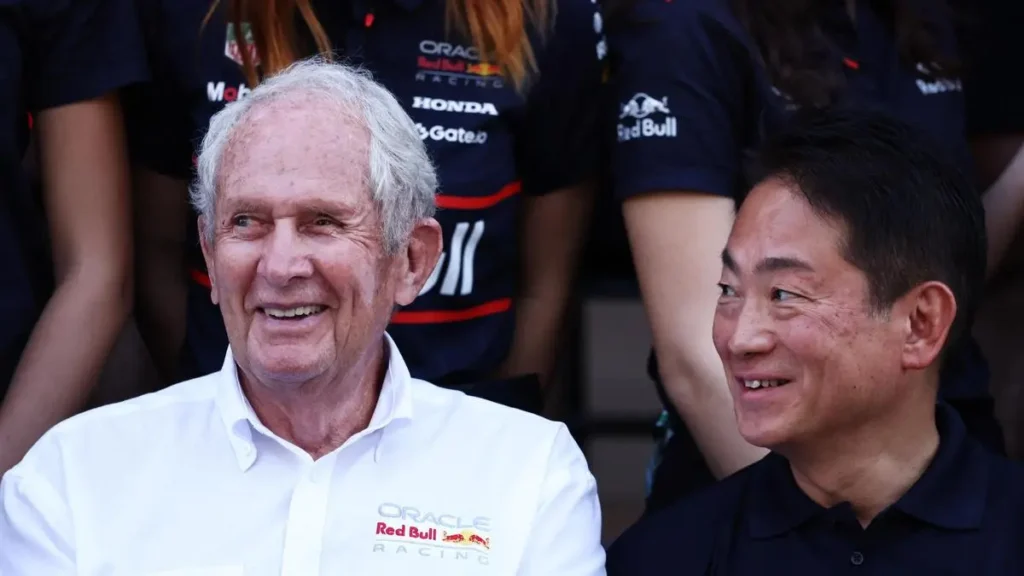
- Budget Caps and Corporate oversight: Under Marko and Horner, if the engine project needed another $10 million, they found it. Under Mintzlaff, budgets will likely be scrutinized with corporate rigor. In a development war, this bureaucratic friction could be fatal.
- The Ford Partnership: The relationship with Ford becomes critical. Without the strong personalities of Horner and Marko to manage the American giant, the dynamic could shift. Will Ford demand more input? Will the cultural clash between a corporate automaker and a racing team intensify without the buffers of the old guard?
Helmut Marko leaves a legacy that is unmatched in modern motorsport. He built a system that democratized the path to F1 for talented drivers lacking billionaire backing. He proved that age and experience could be beaten by youth and raw speed. But he also leaves behind a trail of broken careers and a team that is now struggling to find its soul in his absence.
The “New Era” of Red Bull is cleaner, more corporate, and less controversial. But in Formula 1, “clean” rarely wins championships. The chaotic, aggressive, ruthless energy of the Marko era was the fuel that powered the machine. It remains to be seen if the machine can run on anything else.
Red Bull Leadership Transition Table
Role | Old Guard (The Era of Dominance) | New Guard (The Era of Transition) | Philosophy Shift |
Owner/Oversight | Dietrich Mateschitz (Founder) | Oliver Mintzlaff (CEO Corporate Projects) | From passion-project autonomy to corporate accountability and structure. |
Team Principal | Christian Horner (The ‘Garagista’) | Laurent Mekies (The Manager) | From dictatorial, independent leadership to collaborative, corporate-aligned management. |
Talent Chief | Helmut Marko (The Headhunter) | Guillaume Rocquelin (The Engineer) | From “sink or swim” gut-instinct selection to data-driven, supportive development. |
Technical Lead | Adrian Newey (The Visionary) | Pierre Waché (The Technical Director) | From individual genius-led design to committee-based engineering processes. |
Sporting Director | Jonathan Wheatley | (TBD/Restructured) | Loss of deep regulatory knowledge and pit-wall sharpness. |
Key Statistics of the Marko Era (2005–2025)
- Drivers’ Championships: 7 (Vettel x4, Verstappen x3)
- Constructors’ Championships: 6
- Grand Prix Wins: 120+
- F1 Graduates: 18+ (Including Vettel, Verstappen, Ricciardo, Sainz, Gasly, Albon, Tsunoda, Lawson).
This statistical legacy is the benchmark against which the new Red Bull will be judged. The bar has been set impossibly high, and the architects of that height have left the building.