In the heart-pounding world of Formula One, where split-second decisions separate victory from defeat, onboard cameras offer an invaluable perspective. These tiny technological marvels, nestled within the cockpit, pierce the veil of high speed and reveal the driver’s reality.
Imagine the blur of the track as you rocket down straights, the car a living extension of your will as you thread the needle through a tight chicane – onboard cameras make this a visceral experience for viewers. They showcase, not just the incredible speed, but the immense skill and focus required to pilot these finely tuned machines at the pinnacle of motorsport.
More than just entertainment, onboard cameras provide strategic insights, a window into the driver’s emotions, and a deeper understanding of the technical wizardry that pushes an F1 car to its limits. So, get ready to feel the G-forces and witness the thrill firsthand as we explore the fascinating world of onboard cameras in Formula One.
What is the purpose of Onboard camera?
Onboard cameras in Formula One cars serve multiple purposes, enhancing the viewing experience for fans and offering valuable insights into the race itself.
Enhancing the Viewing Experience:
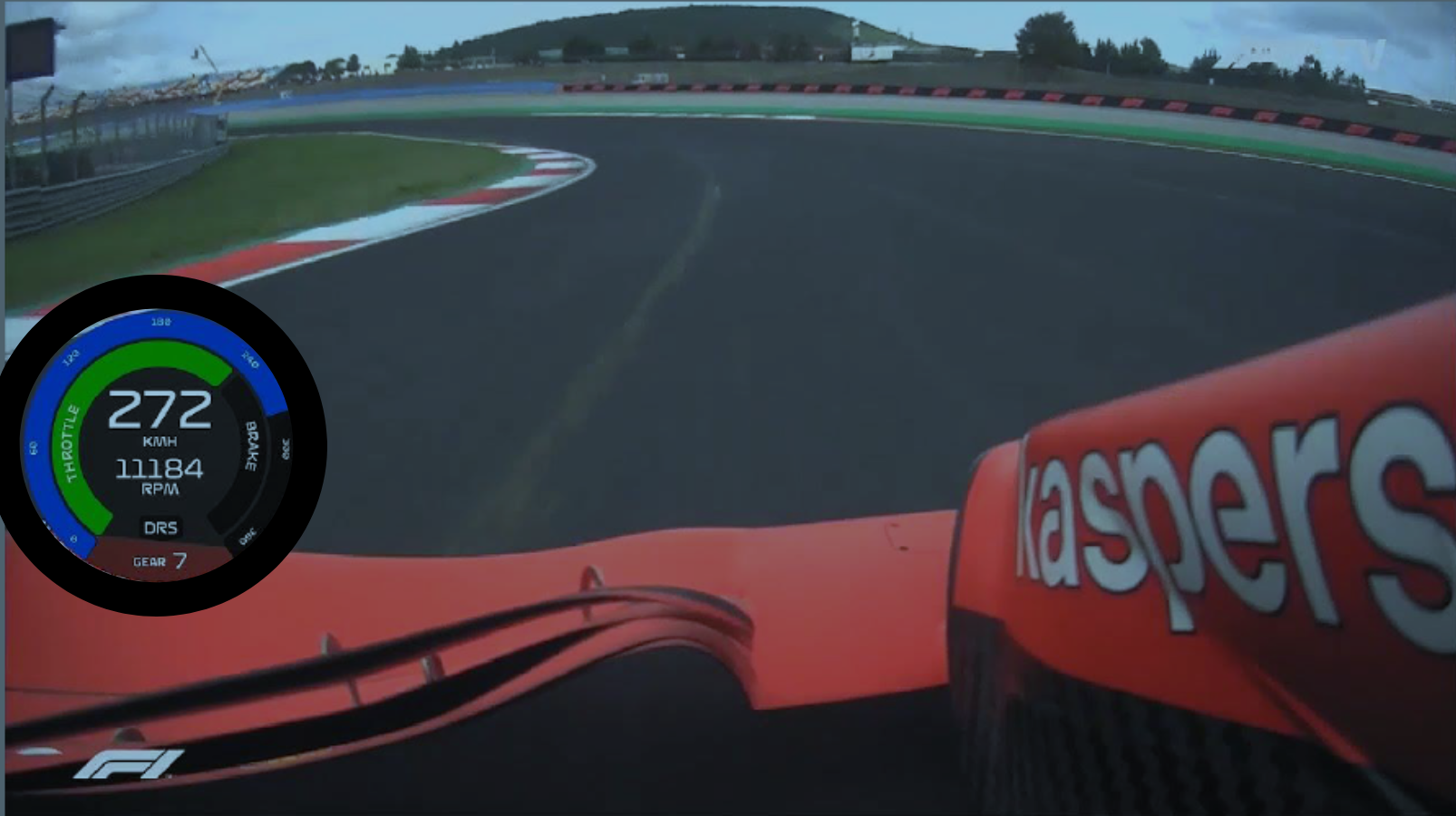
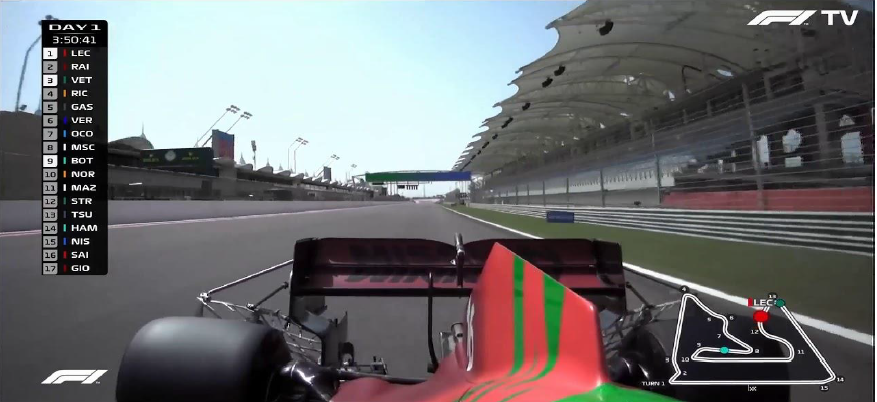
- Immersive View: Onboard cameras transport viewers into the cockpit, offering a driver’s-eye view of the track. They capture the rapid acceleration, constant steering adjustments, and the blur of the track, creating a thrilling and immersive experience.
- Driver Skill on Display: Viewers can witness the incredible skill and focus required to pilot these high-speed machines. The cameras show the constant gear changes, precise steering inputs, and anticipation of upcoming corners, highlighting the driver’s mastery of the car.
- Emotional Connection: Onboard cameras capture the driver’s reactions throughout the race. This allows viewers to connect with them on an emotional level, experiencing the relief of a successful overtake or the frustration of a missed opportunity.
Strategic Insights:
- Understanding Strategies: When combined with telemetry data, onboard footage can provide valuable insights into driver decisions and race strategies. Commentators can analyze overtaking attempts, tire management techniques, and the impact of car setup on performance.
- Driver Communication: Sometimes, onboard cameras capture drivers communicating with their teams via radio, providing viewers with a glimpse into real-time race strategy discussions and car adjustments.
Additional Benefits:
- Educational Tool: Onboard cameras can be used as an educational tool, helping viewers understand the complexities of F1 car design and the forces acting on the car during a race.
- Reviewing Incidents: Race stewards utilize onboard footage when reviewing incidents and accidents to determine fault and penalties.
Overall, onboard cameras are a vital part of Formula One, providing a unique window into the race from the driver’s perspective. They enhance the viewing experience for fans, offer valuable insights for commentators and strategists, and contribute to the overall understanding and appreciation of this high-tech sport.
Different types of Onboard camera mounted on the Formula One Car
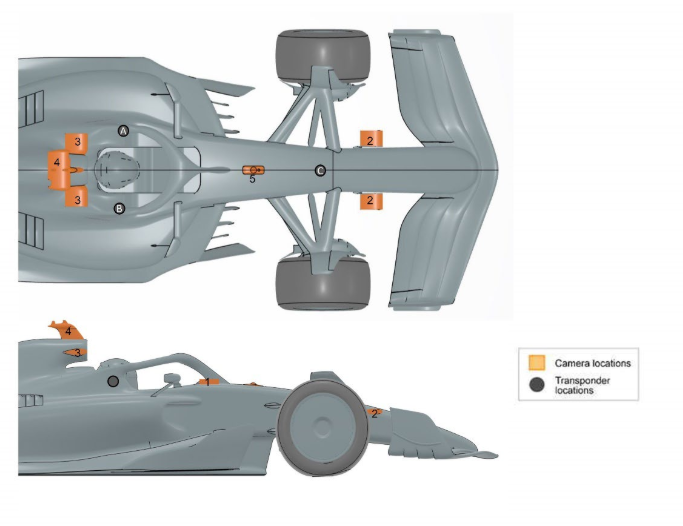
In Formula One cars, there isn’t a huge variety of onboard cameras due to space limitations and technical considerations. However, there are a few key types that play crucial roles in capturing the action:
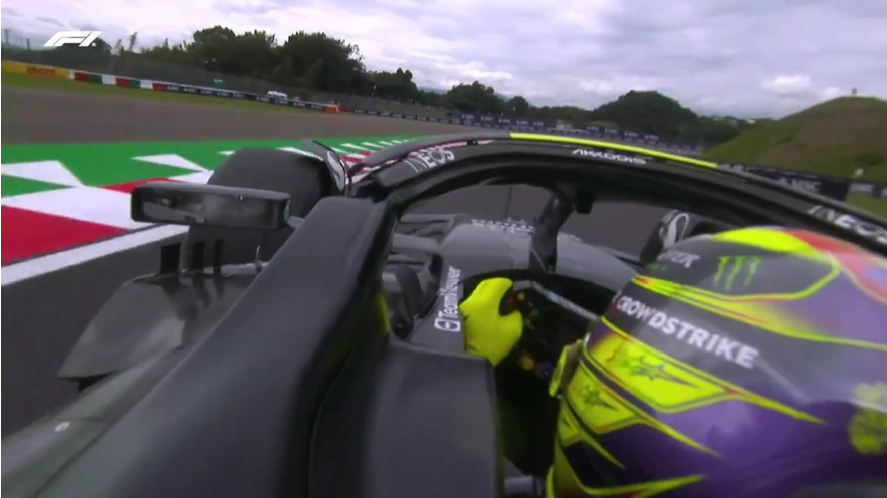
- T-Cam (Television Camera): This is arguably the most recognizable onboard camera. Mounted on the roll hoops just above the driver’s helmet, the T-cam offers a wide view that includes the driver’s hands on the wheel, the top of the dashboard, and a significant portion of the track ahead. It provides the classic “driver’s eye view” that most viewers associate with onboard footage.
- Forward-Facing Camera: Mounted on the car’s nose cone, this camera offers a broad view of the track directly ahead of the car. It’s often used for replays and to follow battles between cars closely positioned on the track.
- Rear-Facing Camera(s): Typically one or two cameras are mounted on the rear wing or sidepods of the car. These cameras provide a view behind the car, allowing drivers and race strategists to monitor following drivers and potential overtaking attempts.
Less Common Onboard Cameras:
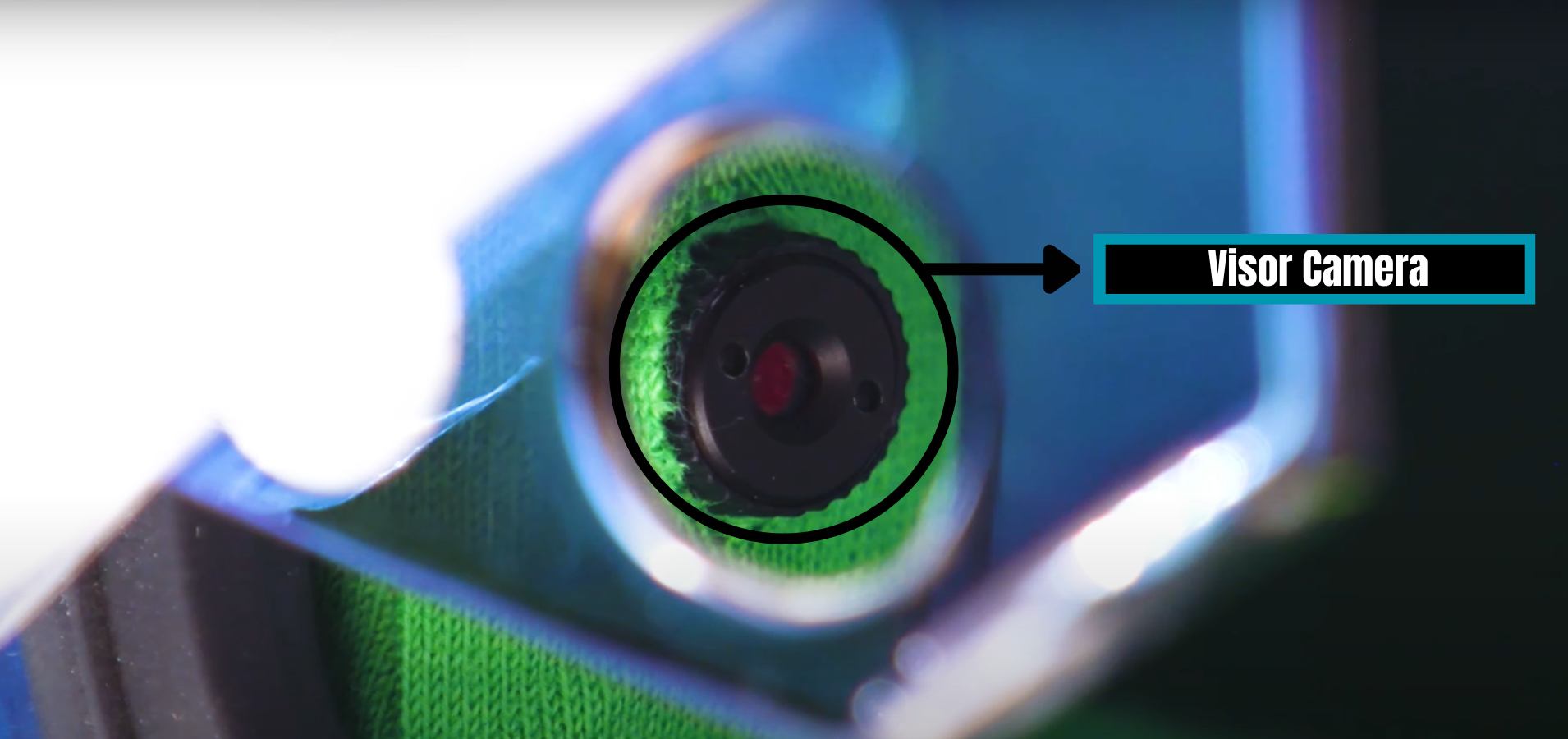
- Helmet Camera/Visor Camera: A small camera mounted inside the driver’s helmet can capture close-up views of their face and reactions during the race. However, these are less common due to potential safety concerns and the limited field of view they offer
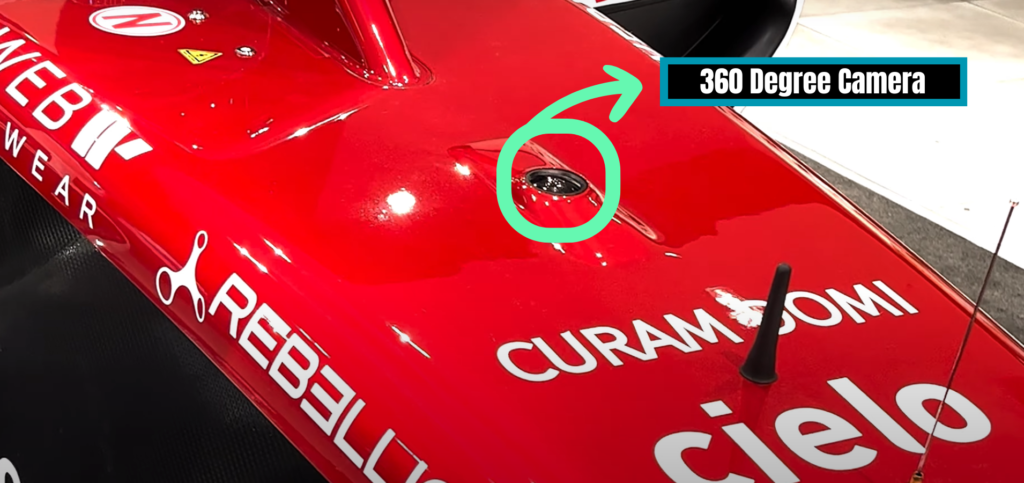
- 360-Degree Camera (Experimental): In 2018, F1 experimented with 360-degree cameras mounted on the chassis. While not widely used, this technology offered a glimpse into a potentially revolutionary future with panoramic views of the cockpit. However, technical hurdles and broadcast integration challenges remain.
Recent Innovations:
- Gimbal Camera (Limited Use): A relatively new addition, the gimbal camera utilizes gyroscopic technology to stabilize the image. This can be particularly beneficial on high-speed tracks, reducing vibrations and offering a smoother viewing experience, especially when the car is bouncing or weaving through corners.
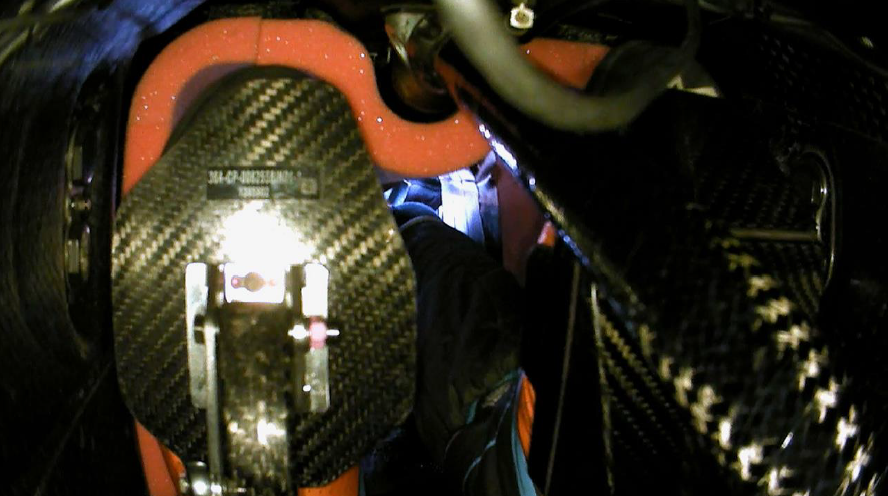
- Pedal Camera (Limited Use): Another recent innovation, the pedal camera offers a unique perspective – a close-up view of the driver’s feet and their interactions with the pedals (accelerator, brake, clutch). This can provide valuable insights into driver technique, particularly during crucial overtaking maneuvers or tight cornering situations. It’s important to note that both gimbal and pedal cameras are still under development and not used by all teams in every race.
This camera angle was last seen during the Belgian Grand Prix in 2000, showcasing Pedro De La Rosa’s pedal work.
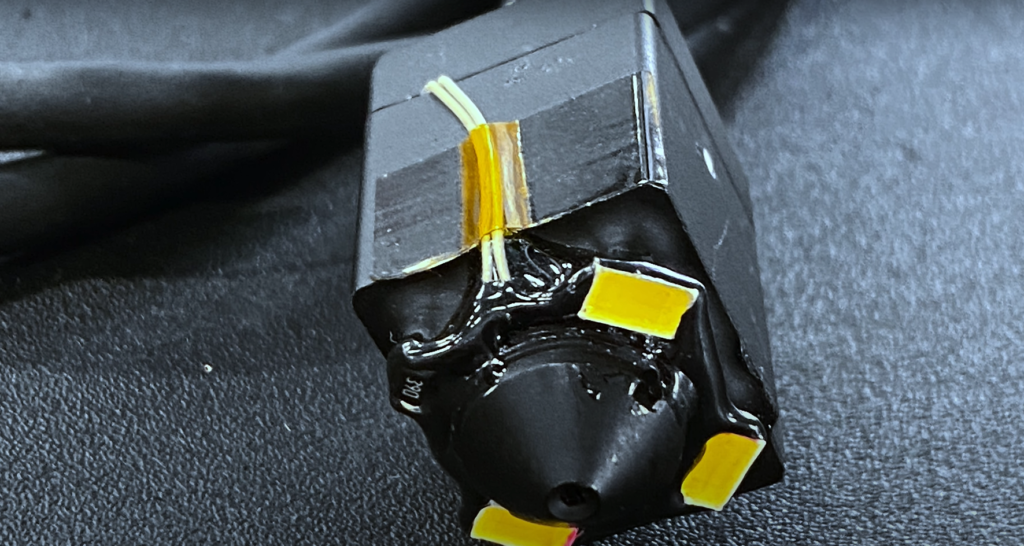
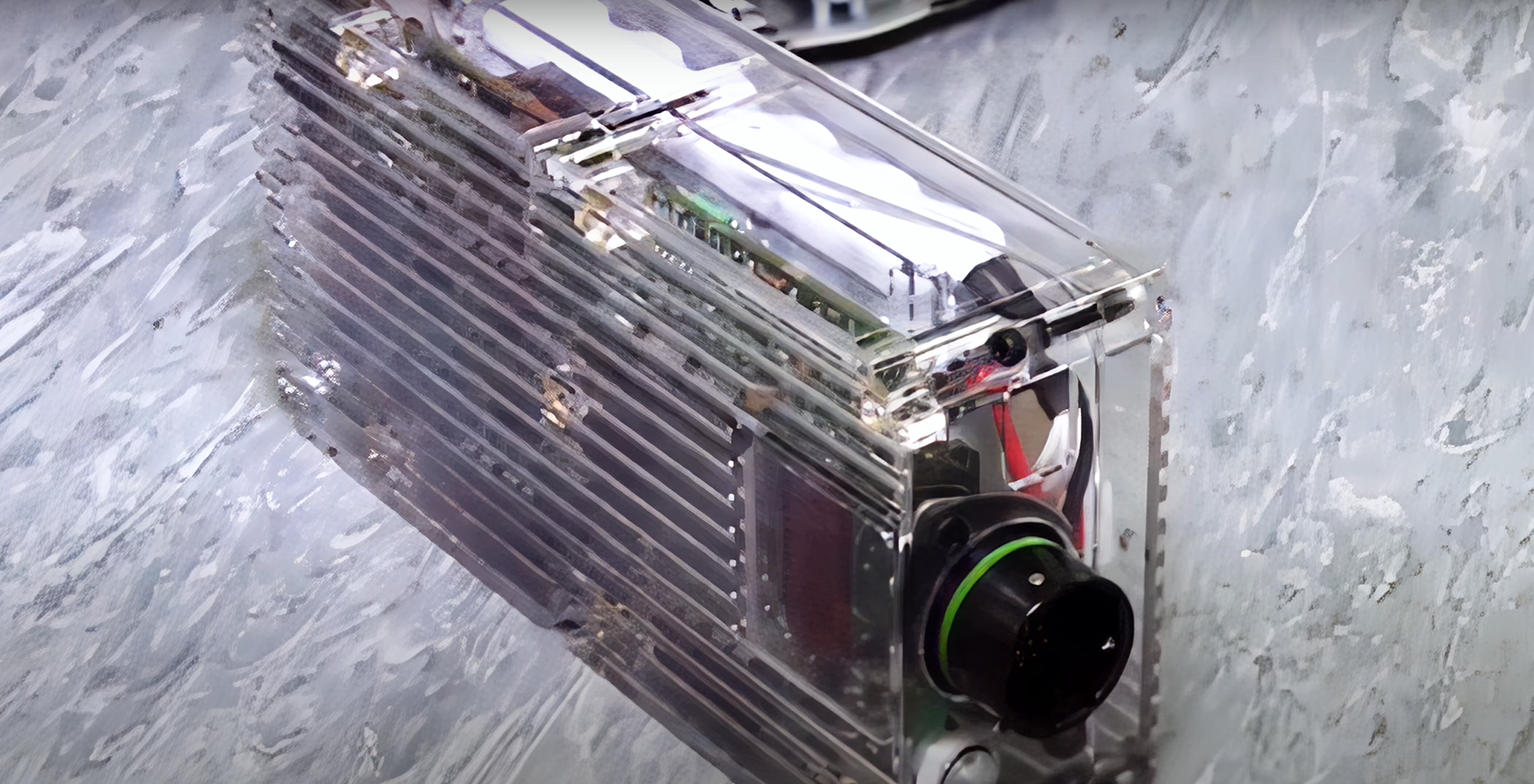
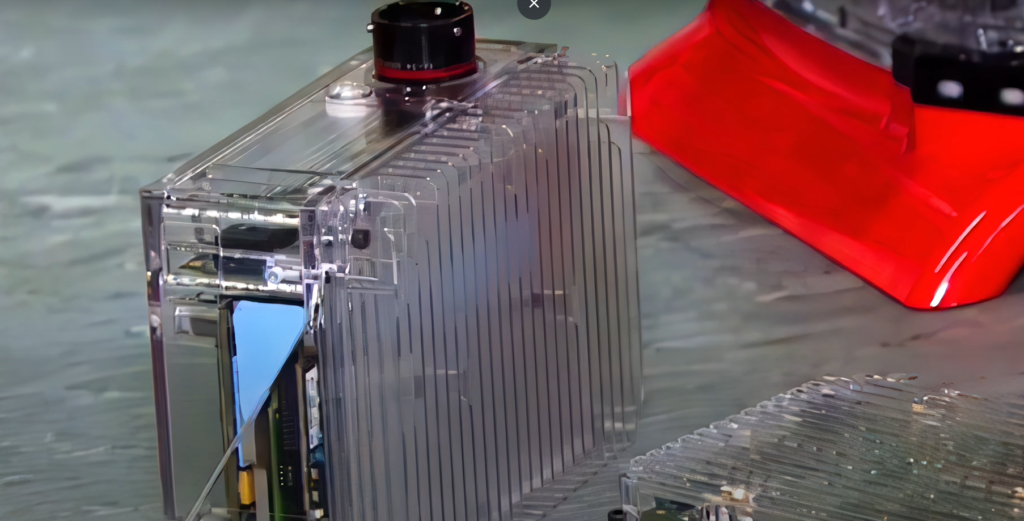
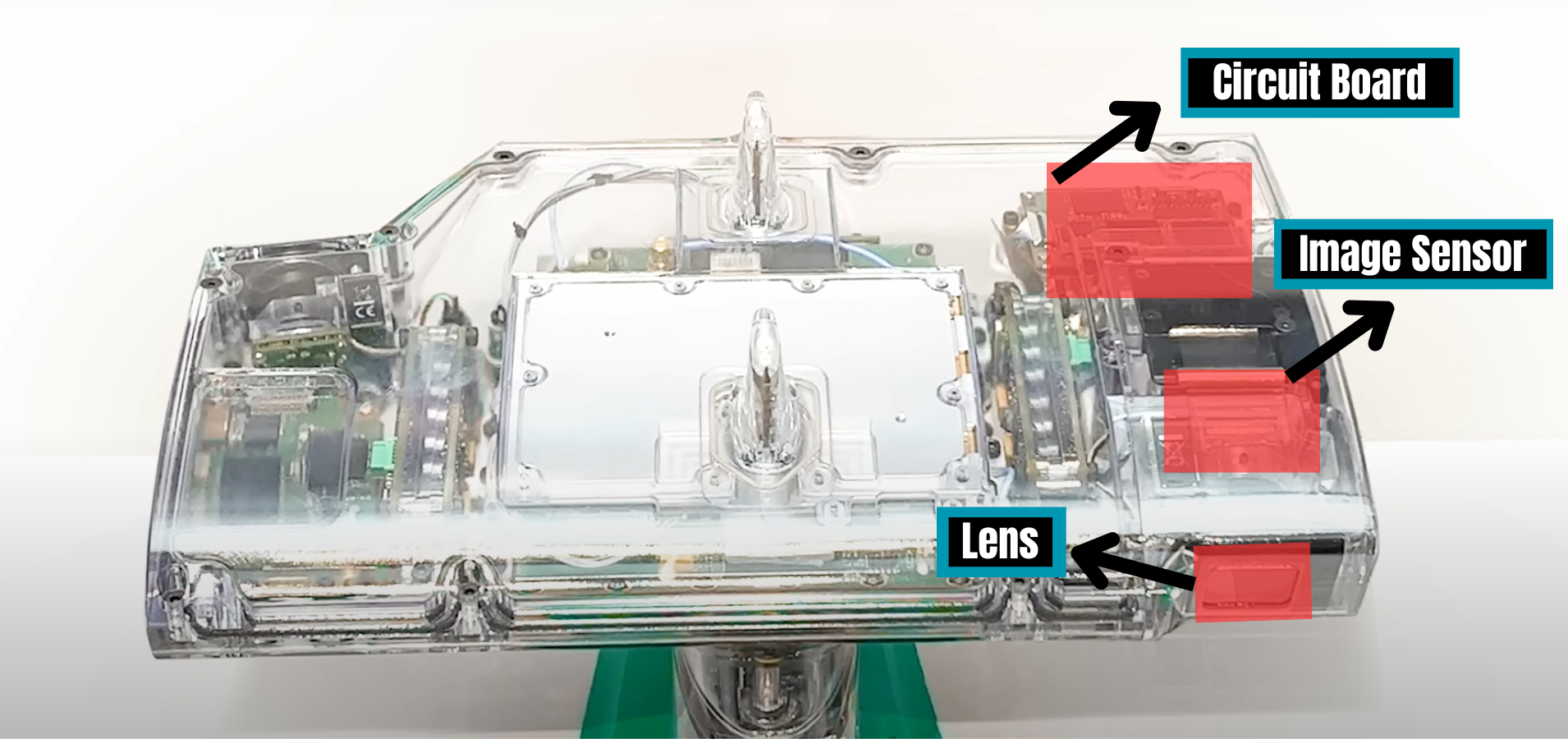
This is the camera that was actually used to show off Lando’s pedal work just that of a small pinhole lens with a box containing image sensor with three mini LED’s attached to it, which in total weighs only 62 grams. It is mounted behind the pedal, which can be accessed by from the pedal covers.
Additional Considerations
- The number of onboard cameras can vary slightly depending on the team and specific race requirements.
- The placement of these cameras is strictly regulated by the FIA (Fédération Internationale de l’Automobile) to ensure safety and a level playing field.
- The quality of onboard footage has improved significantly over the years, with modern cameras capturing high-definition video that allows viewers to see the intricate details of the cockpit and the track environment. So, while there might not be a vast array of onboard camera types, the strategically placed ones we see offer a wealth of information and excitement for Formula One fans!
How this camera transfers the data-to-data center?
However, none of the image processing is done on the car. Though the signals are sent to a multi core cable and this is the same cable which is used by visor camera. This multi core cable is what holds all the video and audio signals being taken around the car
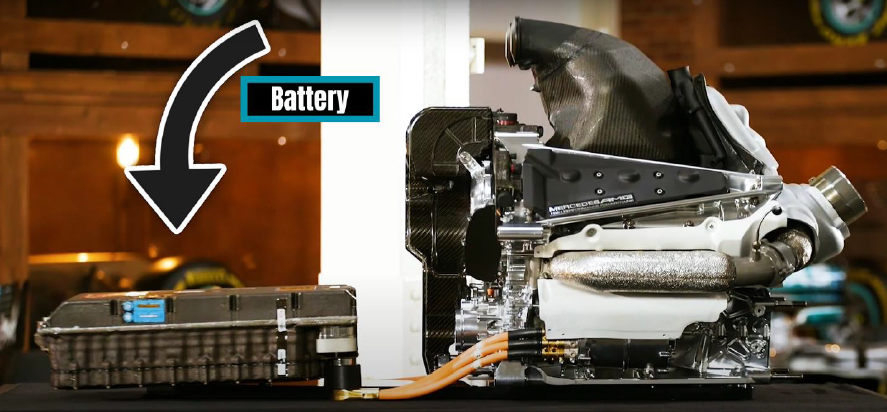
The power conditioner takes energy from the battery (Pulling 12 to 15 Volts) to generate the video feed. The multiple cable also goes to top where T-Camera sits and inside is the antenna
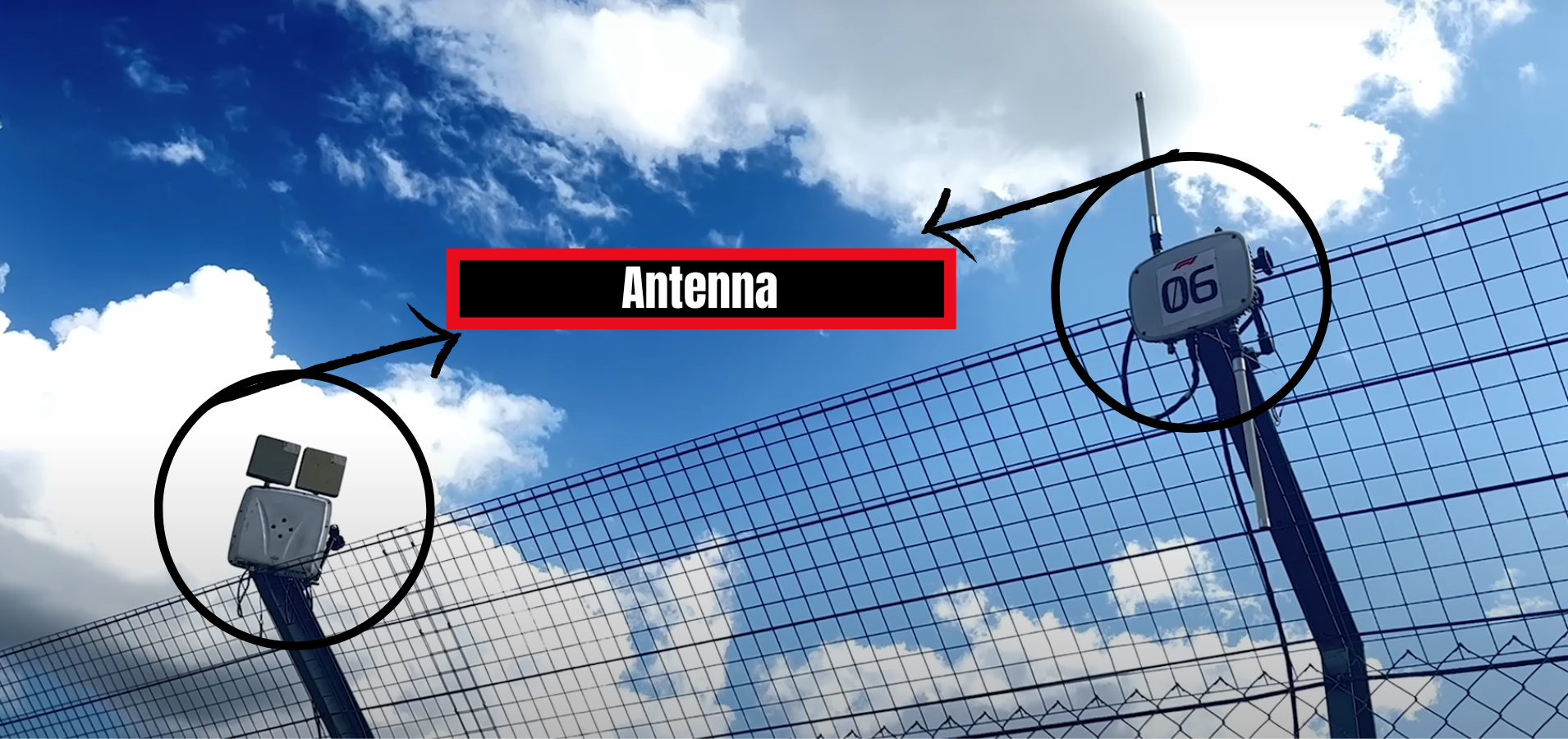
which sends out the live feed, using a 5 gigahertz system for data and a 10 gigahertz system for video.
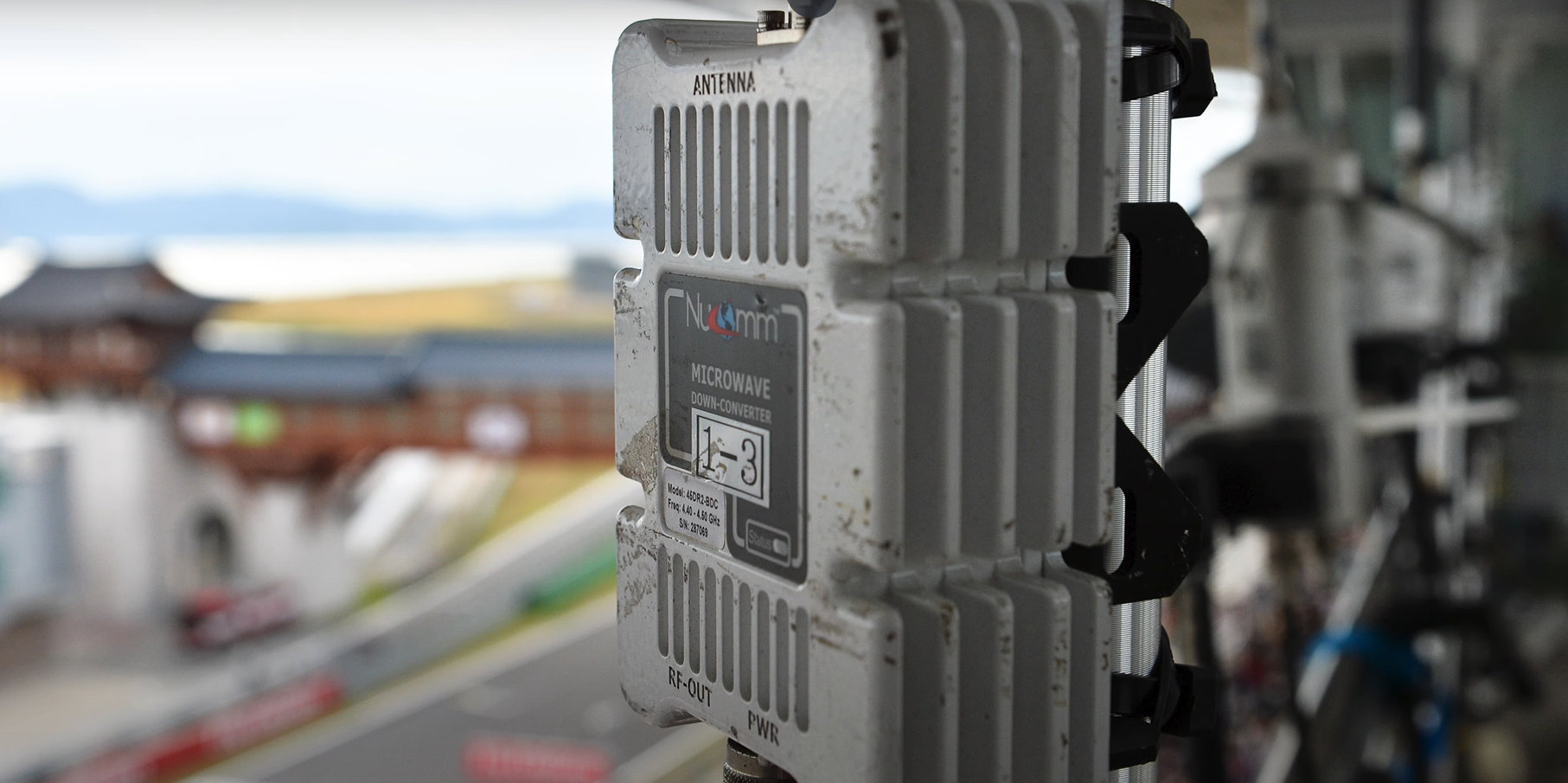
However, transponder have a short range which means F1 has to place a lots of antenna kits around the circuit so one antenna is always collecting signal from the car. Have you ever noticed during a live broadcast, the feed gets a bit stuttery or glitchy that’s when the transponder is finding the nearest antenna.
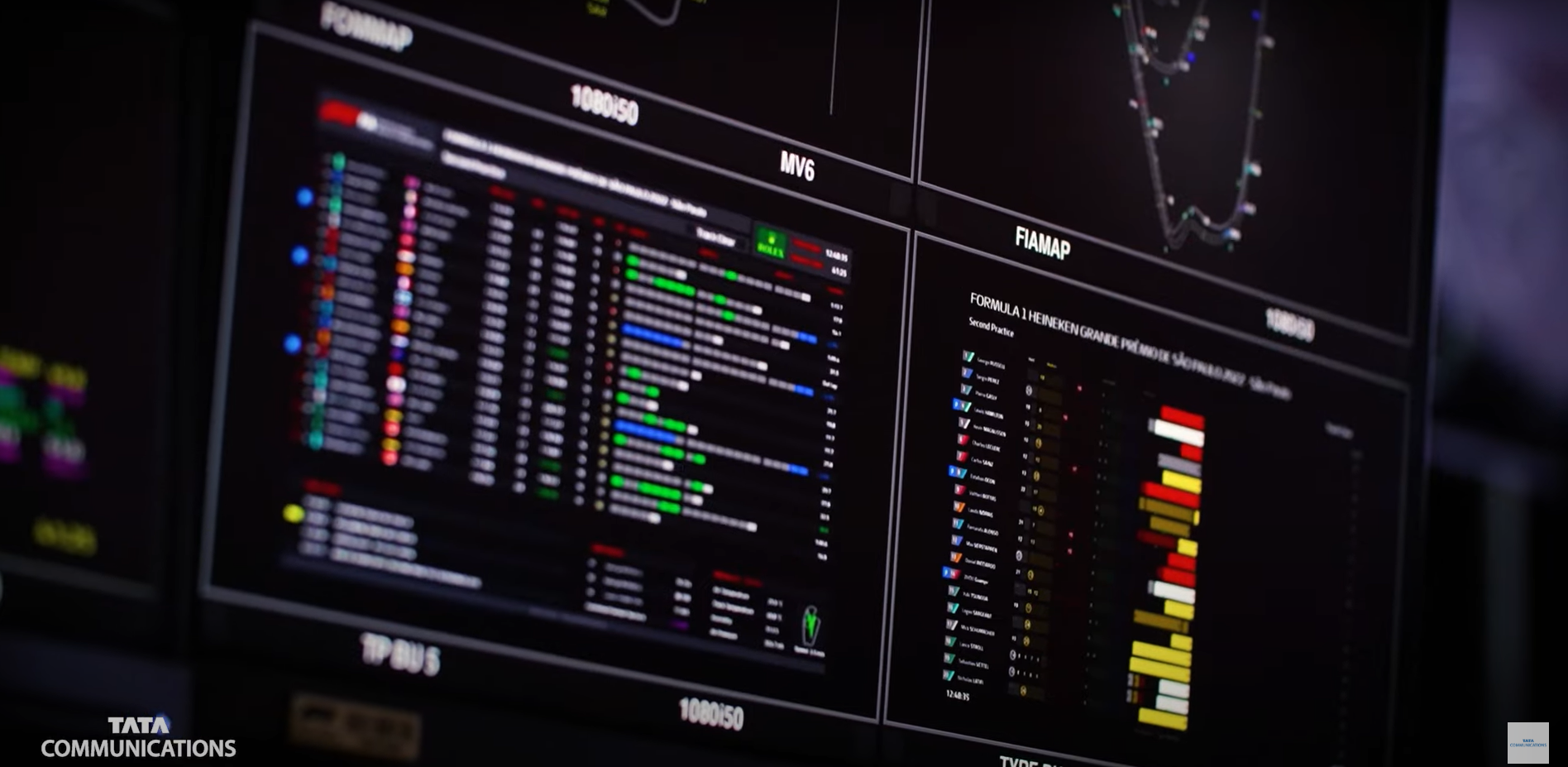
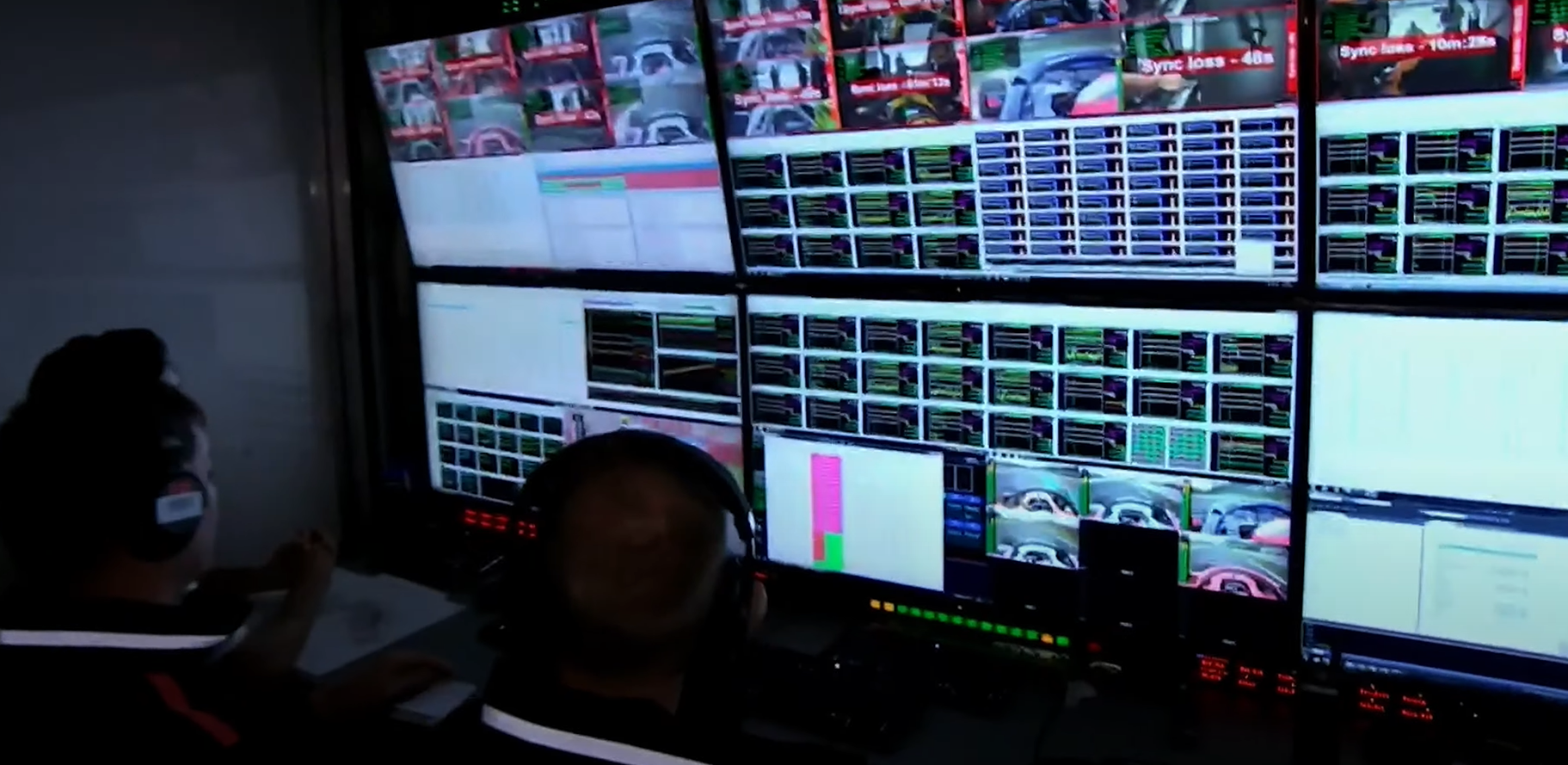
During the Street circuit race like Baku & Monaco, the condition gets harsh because you have a lot tall buildings and trees which intercept with the data transmission. Video Compound is the place where all audio and video are sync with the picture as the signal is being processed remotely. This gives them the access to adjust for iris or white balance or any adjustment in the angle.
In the current season all cars have five onboard cameras including the 360-degree camera. But currently there is a selection between two camera’s that could sent out the feed at once. Though there is an internal recording device that can store feed from all the five camera’s at once. All the recorded data get transferred after the race as it doesn’t get affected by the glitchy artifacts mentioned earlier
Powering the Show: From Battery to Broadcast
Miniaturized onboard cameras capture high-definition footage while enduring the immense G-forces experienced during a race. But where does the power come from? A crucial component called the power conditioner acts as the unsung hero.
It takes the car’s battery voltage (Pulling arounnd 12-15 volts) and transforms it into the energy needed to generate the crystal-clear video feed that brings the race to life.
The Car's AV Highway: The Multi-Core Cable
The video and audio signals from the cameras and microphones don’t travel alone. They journey together through a special multi-core cable. Think of it as the central nervous system for the car’s audiovisual information. This cable snakes its way up to the iconic T-Camera located at the top of the car. This versatile camera can even switch between forward and backward views, offering a variety of perspectives for viewers.
Beam me Up (Antenna)! Sending the Signal Wirelessly
Nestled within the T-Camera is a tiny antenna that acts like a broadcaster, blasting the video signal wirelessly using a two-pronged approach:
- Data at 5 GHz: Similar to your home Wi-Fi, F1 utilizes a dedicated frequency band to transmit data efficiently. This 5 GHz channel carries control information and other non-visual data essential for the system’s operation.
- Video at 10 GHz: The high-definition video itself requires much more bandwidth. That’s why F1 uses a separate 10 GHz channel for this crucial visual data stream.
The Challenge of Short Range and Signal Boosters
There’s a catch, though! These signals have a limited range, similar to a walkie-talkie. To ensure a smooth connection throughout the race, Formula One strategically places numerous antenna kits around the racetrack.
These act as signal boosters, always ready to pick up the feed from the car as it zooms by. Ever noticed a glitchy onboard view during a street race? That’s the signal struggling to find the nearest antenna, especially with tall buildings or trees in the way!
Video Compound: Where the Magic Happens
The captured signal eventually reaches a central location called the Video Compound.
Here’s where the real magic happens! The audio and video signals are meticulously synchronized, ensuring perfect harmony between what you see and hear. The technicians can also fine-tune various aspects of the video feed remotely, like adjusting the white balance or even the camera angle (within limits, of course)!
Five Cameras, But Not Always Five Feeds
Modern F1 cars boast a whopping five onboard cameras, including a cool 360-degree camera for a truly immersive experience. However, during live broadcasts, you typically see a selection between two specific camera feeds. But fear not, data lovers! An internal recording device captures footage from all five cameras simultaneously. This high-quality recording is then downloaded after the race, free from any glitchy artifacts that might have occurred during the live broadcast.
This intricate dance of technology behind the scenes allows viewers to experience the raw emotion and intensity of F1 racing from the driver’s perspective. From the power conditioner to the strategically placed antennas and the meticulous work at the Video Compound, it’s a testament to modern engineering that brings the racetrack directly to your living room.
The Engineering of Unfairness: A Technical Autopsy of the Formula 1 Turbo-Hybrid Era (2014–2025)
Formula 1 is often described as a sport, but at...
Read MoreWhat did Sergio Perez say about replacing Lewis Hamilton?
Formula 1 has a short memory. You are only as...
Read MoreStrategic Convergence: Valtteri Bottas, Cadillac, and the Ferrari Connection in the 2026 Formula 1 Era
The landscape of Formula 1 is poised for a seismic...
Read MoreChristian Horner Returns to Formula 1 — Why the Paddock Is Watching Closely
Christian Horner is back in the headlines and nearing a...
Read More


Hey there, You’ve done aan excellent job. I’ll definitely digg it and personally recommend to my friends.
I’m sure they will be benefited from this web site. https://www.waste-ndc.pro/community/profile/tressa79906983/
Hey there, You’ve done an excellent job. I’ll
definitely digg it and personally recommend to my friends.
I’m sure they will bee benefited from this web site. https://www.waste-ndc.pro/community/profile/tressa79906983/
Here to join conversations, exchange ideas, and learn something new as I go.
I’m interested in learning from different perspectives and contributing whenever I can. Always open to fresh thoughts and meeting like-minded people.
Here’s my site:AutoMisto24
https://automisto24.com.ua/
These are in fact fantastic ideas in on the topic of blogging.
You have touched some fastidious points here. Any way keep up wrinting.
Feell free to surf tto my web blog; https://www.syspilne.media/
Yet another thing I would like to convey is that as an alternative to trying to accommodate all your online degree tutorials on days that you finish off work (since the majority of people are exhausted when they come home), try to get most of your instructional classes on the weekends and only a few courses in weekdays, even if it means a little time off your saturdays. This pays off because on the week-ends, you will be extra rested in addition to concentrated in school work. Thx for the different ideas I have discovered from your website.
Here to dive into discussions, share thoughts, and learn something new as I go.
I enjoy hearing diverse viewpoints and contributing whenever I can. Happy to hear different experiences and meeting like-minded people.
Here’s my website:AutoMisto24
https://automisto24.com.ua/
It’s clear to me now that https://starcasino247.com/ingang/ digital casinos have really advanced in terms of interface and user experience. A few years ago, everything felt less refined. These days, the main interfaces open almost instantly, the themes are creative, and even small details like sound effects make a noticeable improvement. It feels more like an experience than just gambling.
When someone writes an piece of writing he/she retains the image of a user in his/her mind that how a user
can understand it. So that’s why this paragraph is great.
Thanks! https://Hellspinincanada.wordpress.com/