Confused by F1 in 2026? This beginner-friendly guide explains key Formula 1 terminologies in simple words to help you enjoy the new era.
If you’ve recently started watching Formula 1—or if you’ve been a fan for years but feel dizzy looking at the new 2026 rules—take a deep breath. You are not alone.
Formula 1 loves jargon. Engineers speak a language of acronyms, codes, and physics that can make a Sunday race feel like a university lecture. But here is the good news: 2026 is a “hard reset” for the sport. The cars are changing, the engines are changing, and even the vocabulary is getting an update.
This guide is your translation book. We’ve stripped away the engineering degree requirements to explain the essential terms you will hear commentators shout during the 2026 season.
The Engine (Power Unit) Terminologies
The heart of the car is getting a massive transplant in 2026. Here is what you need to know.
Power Unit (PU)
This is just a fancy name for the “engine.” In your road car, you have an engine. In F1, they have a Power Unit because it’s a hybrid system combining a traditional fuel engine with a massive battery system.
ICE (Internal Combustion Engine)
The loud part. This is the traditional engine that burns fuel to create power. In 2026, the ICE produces about 50% of the total power (approx. 400 kW or 535 bhp).
Analogy: Think of the ICE as the “muscles” of the car—strong and reliable.
MGU-K (Motor Generator Unit – Kinetic)
The electric part. This is a powerful electric motor connected to the wheels. It does two things:
Harvests energy: When the driver brakes, the MGU-K acts like a generator, soaking up energy and sending it to the battery.
Deploys energy: When the driver accelerates, it spins the wheels with instant electric torque.
2026 Update: The MGU-K is now massive. It provides almost as much power as the engine itself (350 kW or 470 bhp).
50/50 Split
You’ll hear this a lot. It means the car’s total power is generated equally by the fuel engine (50%) and the electric motor (50%). In the old days, the fuel engine did most of the work. Now, they are equal partners.
Sustainable Fuel
The liquid in the tank. For 2026, F1 cars run on 100% sustainable fuel.
Myth Buster: It’s not electric “fuel.” It’s liquid fuel made from captured carbon, municipal waste, or biomass. It burns just like petrol but doesn’t add new carbon dioxide to the atmosphere.
Analogy: It’s like recycling paper. You aren’t cutting down new trees; you’re reusing what’s already there.
The New 2026 "Modes" (Aero & Overtaking)
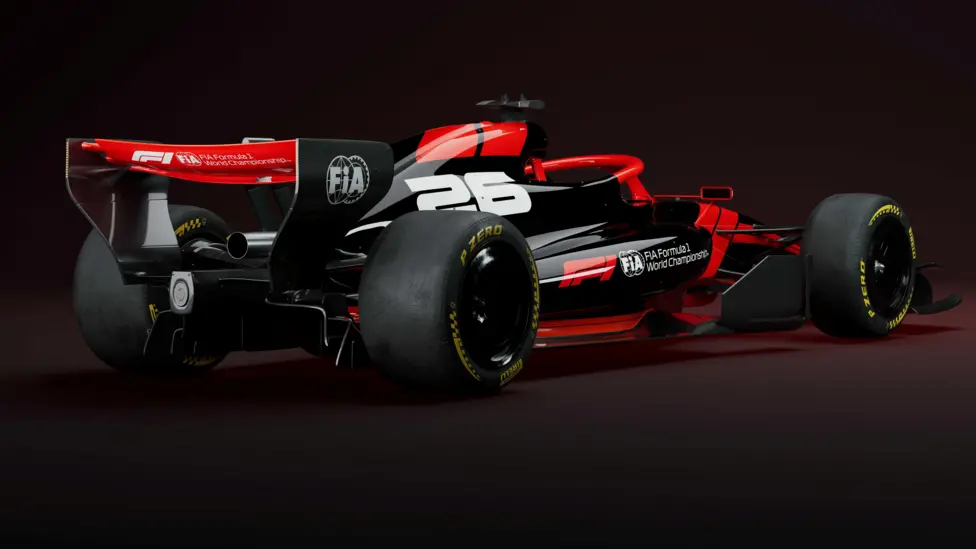
The biggest visual change in 2026 is “Active Aerodynamics.” The cars will literally shapeshift while driving.
Active Aerodynamics
The car has moving wings. The front and rear wings can change their angle while the car is moving to suit the track.
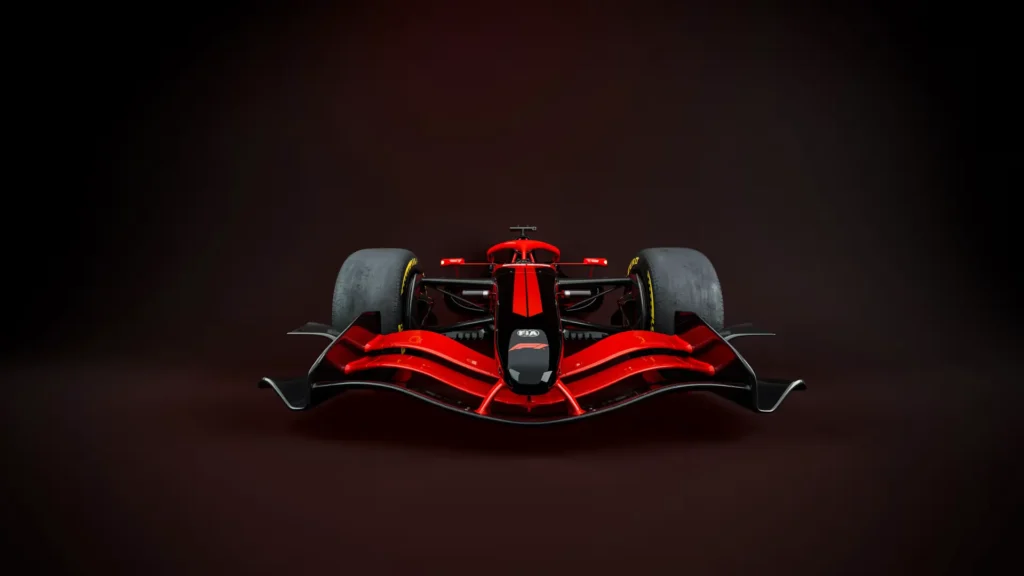
Straight Mode (formerly X-Mode)
What it is: The “Low Drag” setting.
When it happens: On straights.
What happens: The driver presses a button (or it happens automatically), and the flaps on the front and rear wings open up or flatten out.
Why: To slice through the air with less resistance, making the car go faster in a straight line.
Corner Mode (formerly Z-Mode)
What it is: The “High Downforce” setting.
When it happens: approaching a corner (braking zone).
What happens: The wings snap back into a steep angle.
Why: To act like an air brake and push the car into the tarmac, giving the driver grip to turn the corner fast.
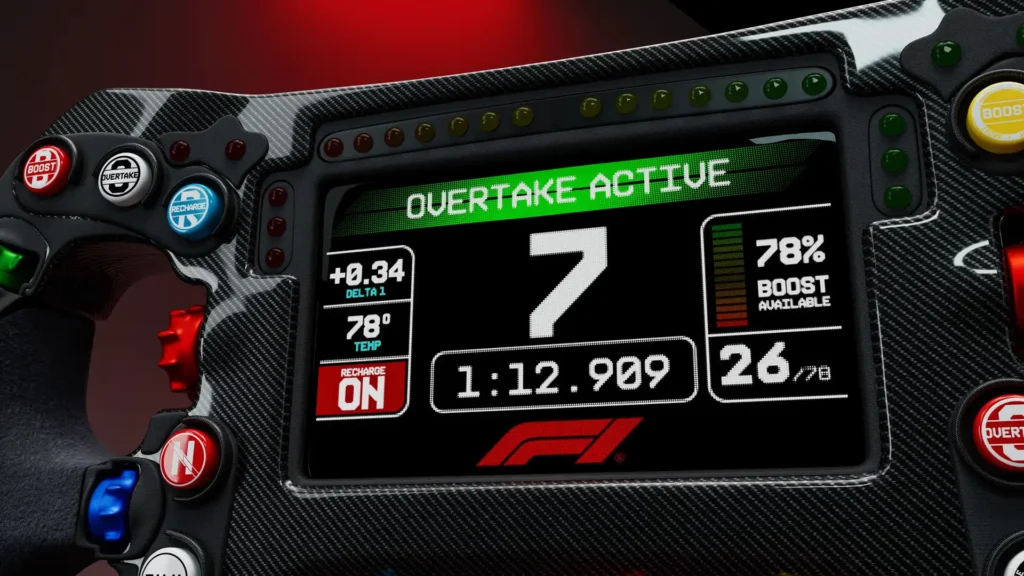
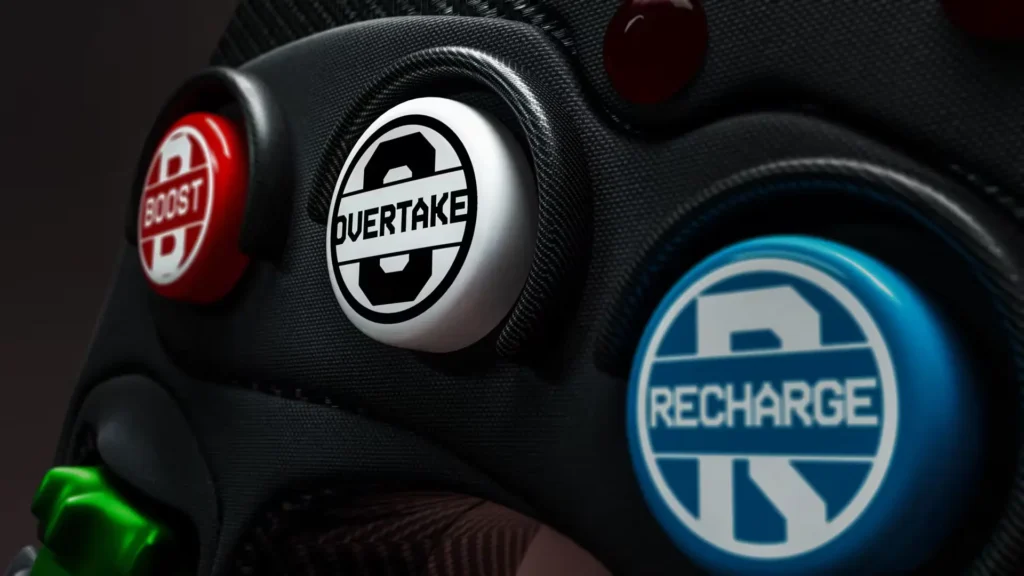
Overtake Mode (The “New DRS”)
This replaces the old DRS (Drag Reduction System).
The Rule: If you are within 1 second of the car ahead.
The Effect: You get a special boost of electrical power that lasts longer at high speeds (up to 337 kph).
Analogy: Think of it like a “Super Star” in Mario Kart. You have to be close to the rival to activate it, but once you do, you get a speed advantage to help you pass.
Boost Mode
This is the standard “full power” button available to all drivers regardless of gap. It gives maximum electrical deployment (350kW) for attacking or defending, but it drains the battery quickly.
Race Weekend Jargon (The Basics)
These terms apply to how the race is run, penalties, and rules.
Parc Fermé (Park Fur-may)
French for “Closed Park.” It’s a secure area where cars are parked after qualifying and the race. Once a car is in Parc Fermé, mechanics cannot touch it (mostly). They can’t change the setup or add new parts.
Why it matters: If a team gets the setup wrong on Friday, they are stuck with it for the whole weekend.
Delta Time
A fancy word for “difference in time.”
Positive Delta: You are driving slower than the reference time (good during a Safety Car).
Negative Delta: You are driving faster than the reference time (good during Qualifying).
Undercut vs. Overcut (Strategy)
Undercut: You pit before your rival. You get fresh tyres, drive a super-fast lap, and when your rival pits a lap later, you’ve passed them. (The most common strategy).
Overcut: You pit after your rival. You stay out, hoping your rival gets stuck in traffic or their new tyres take too long to warm up.
Graining vs. Degradation
Degradation (Deg): Normal wear and tear. The tyre rubber slowly wears down like an eraser, and grip fades smoothly.
Graining: The tyre surface gets too hot and tears into tiny balls of rubber that stick to the surface (like scrubbing dead skin). It makes the tyre slippery and bumpy.
Team & Driver Hierarchy
Constructor
The team that builds the car (e.g., Ferrari, McLaren). In F1, you can’t just buy a car from someone else; you must design and build the chassis yourself.
Works Team vs. Customer Team
Works Team: A team that makes its own engine (e.g., Ferrari, Mercedes, Alpine, Audi). Everything is designed under one roof.
Customer Team: A team that buys an engine from a manufacturer (e.g., Williams buys Mercedes engines). They fit the engine into their own car design.
Team Orders
When the boss tells a driver to do something they might not want to do.
“Let Lewis past” or “Hold position”
This is legal, but fans (and drivers) often hate it.
Interactive Section: Test Your Knowledge!
Quick Quiz: Are you ready for 2026?
1. What happens when a driver activates "Straight Mode"?
A) The engine gets louder.
B) The wings flatten to reduce drag.
C) The car brakes automatically.
B) The wings flatten to reduce drag.
2. To use "Overtake Mode" how close must you be to the car ahead?
A) Within 2 seconds.
B) Within 1 second.
C) Touching their rear bumper.
B) Within 1 second.
3. If a commentator says a driver has "Graining," what does it mean?
A) The tyre surface is peeling and bumpy.
B) The driver is hungry.
C) The fuel tank is empty.
A) The tyre surface is peeling and bumpy.
| Myth | Reality |
| “F1 cars are electric now.” | False. They are hybrids. They still have a loud internal combustion engine, but the electric motor is just as powerful. |
| “Sustainable fuel means slow cars.” | False. The new fuel is high-performance. The cars will still be incredibly fast, reaching speeds over 300 kph. |
| “Active Aero is just DRS.” | False. DRS only opened the rear wing. Active Aero changes both front and rear wings and is used on every single lap, not just for overtaking. |
If you hear this on TV, it means...
“He’s stuck in the dirty air.”
Translation: The invisible turbulent wind coming off the car in front is messing up his aerodynamics. It makes his car slide around and overheat his tyres.
“They are boxing for the undercut.”
Translation: The driver is coming into the pits early to try and jump ahead of the car in front.
“He clipped the white line; that’s a track limits strike.”
Translation: All four wheels of the car went outside the white lines defining the track. Do it 3 times = Warning. Do it 4 times = Penalty.
Why This Matters
F1 isn’t just cars going in circles; it’s a high-speed chess match. Understanding these terms changes how you watch. Instead of just seeing a car pass another, you’ll see the “Overtake Mode” activation. Instead of wondering why a car slows down in corners, you’ll understand the “Corner Mode” grip.
You don’t need to be an engineer to love F1, but speaking the language makes the race a whole lot more exciting.
Ready for the 2026 season? Bookmark this page and keep it open during the next Grand Prix!