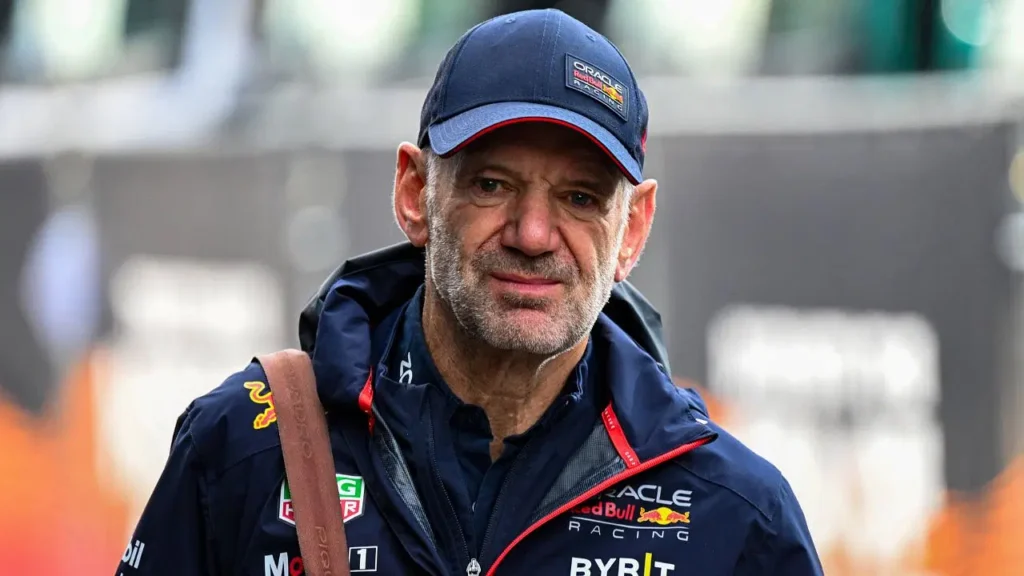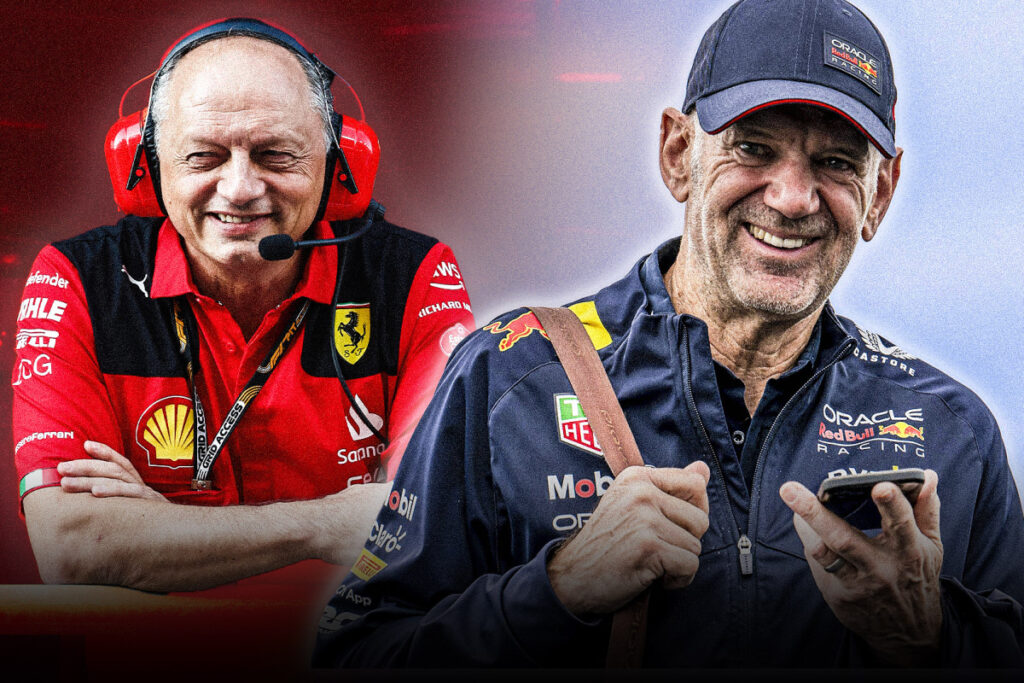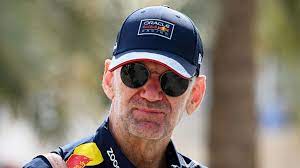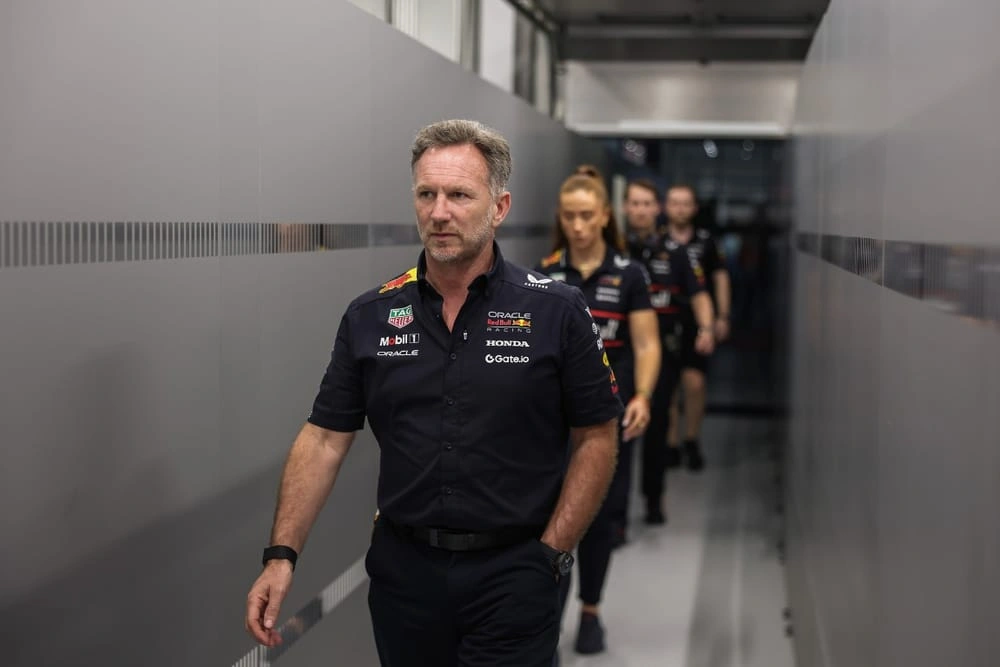
Christian Horner is back in the headlines and nearing a sensational return to Formula 1. But there is a twist: he isn’t going back to Red Bull. Here is what his potential move to Alpine means for the sport, his former team, and Max Verstappen.
Breaking News: The Boss is Back (With a Twist)
Six months after his dramatic exit from Red Bull Racing, Christian Horner is on the verge of a Formula 1 comeback.
Multiple reports confirm that the 52-year-old is in advanced talks to join Alpine, the French team that finished bottom of the standings in 2025. But this isn’t just a standard hiring. In a move that would fundamentally change his status in the paddock, Horner is reportedly negotiating to buy a significant ownership stake in the team—potentially the 24% share currently held by Otro Capital (whose investors include Anthony Joshua and Rory McIlroy).
If the deal goes through, Horner won’t just be a team principal; he will be a team owner, granting him the absolute control he arguably lost during the power struggles at Red Bull.
“One of Formula 1’s most powerful figures is back — and his return could reshape the paddock.”
Who Is Christian Horner? (Simple Explainer)
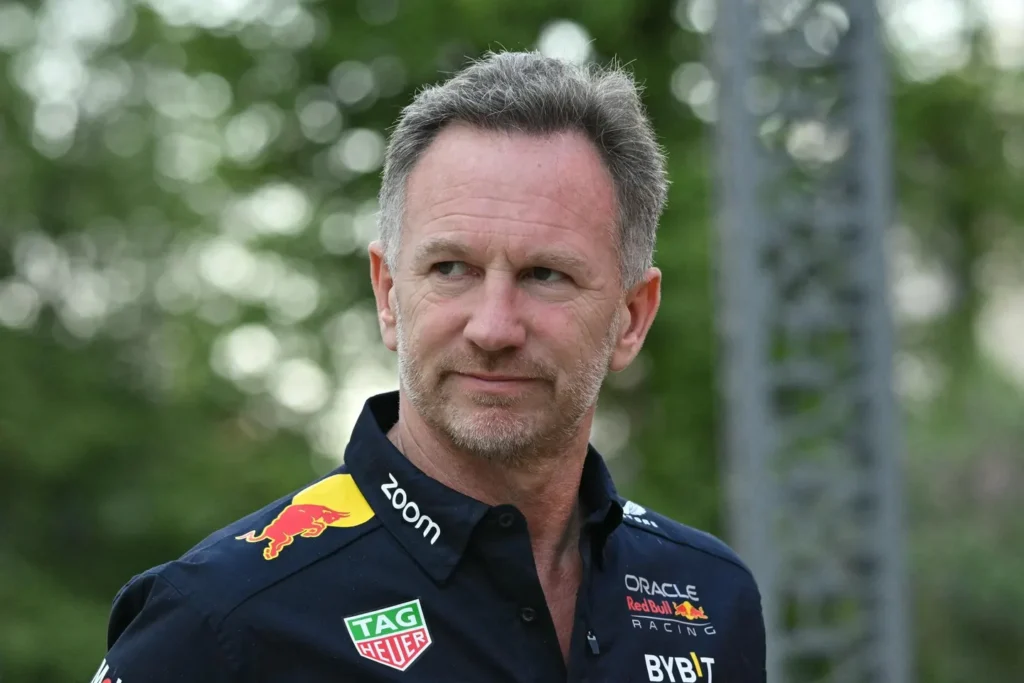
For new fans or those catching up, Christian Horner is a titan of modern Formula 1.
The Architect of Red Bull: He led Red Bull Racing for 20 years (2005–2025), transforming it from a “party team” into a ruthlessly efficient winning machine.
The Winner: Under his leadership, the team won 7 Drivers’ Championships (with Sebastian Vettel and Max Verstappen) and 6 Constructors’ Titles.
The Personality: Known for his sharp tongue, political maneuvering, and cameo role as the “protagonist” of Drive to Survive, Horner is arguably the most recognizable team boss in F1 history alongside Toto Wolff.
He isn’t just a manager; he is a figurehead who knows exactly how to pull the levers of power in Formula 1.
Why Did He Leave — and Why Is He Back Now?
Horner’s departure in July 2025 was the climax of a long-running internal “civil war” at Red Bull.
The Power Struggle: Following the death of Red Bull founder Dietrich Mateschitz, a rift formed between the Austrian side of the company (backed by advisor Helmut Marko and the Verstappen camp) and the Thai majority owners (who backed Horner).
The Exit: despite being cleared of misconduct allegations in 2024, the tension became unsustainable. Amid a performance dip and continued friction with the Verstappen family, Horner was dismissed in mid-2025, replaced by Laurent Mekies.
Why return now? Horner is a racer. Sitting on the sidelines while Red Bull struggles and the sport enters a new era (2026 regulations) likely didn’t sit well. Alpine presents a “fixer-upper” opportunity—a factory team with resources but zero direction. It is the perfect challenge for a man looking to prove that he was the secret to Red Bull’s success all along.
What Role Will Horner Play This Time?
This is the biggest change. At Red Bull, Horner was a highly paid employee. At Alpine, he aims to be an owner.
Total Control: By buying a stake (reportedly ~24%), Horner would protect himself from the kind of boardroom politics that ousted him from Red Bull. He would have “skin in the game.”
The “Bernie” Model: This move mirrors the old-school team bosses like Bernie Ecclestone or Frank Williams, who owned what they ran.
Restructuring Power: He would likely have carte blanche to fire underperforming engineers, hire his own lieutenants, and reshape the culture of the Enstone-based team, which has suffered from a revolving door of management in recent years.
Impact on Red Bull: A New Headache?
You might ask: If he’s going to Alpine, why does this matter for Red Bull?
The answer is simple: Brain Drain and Psychological Warfare.
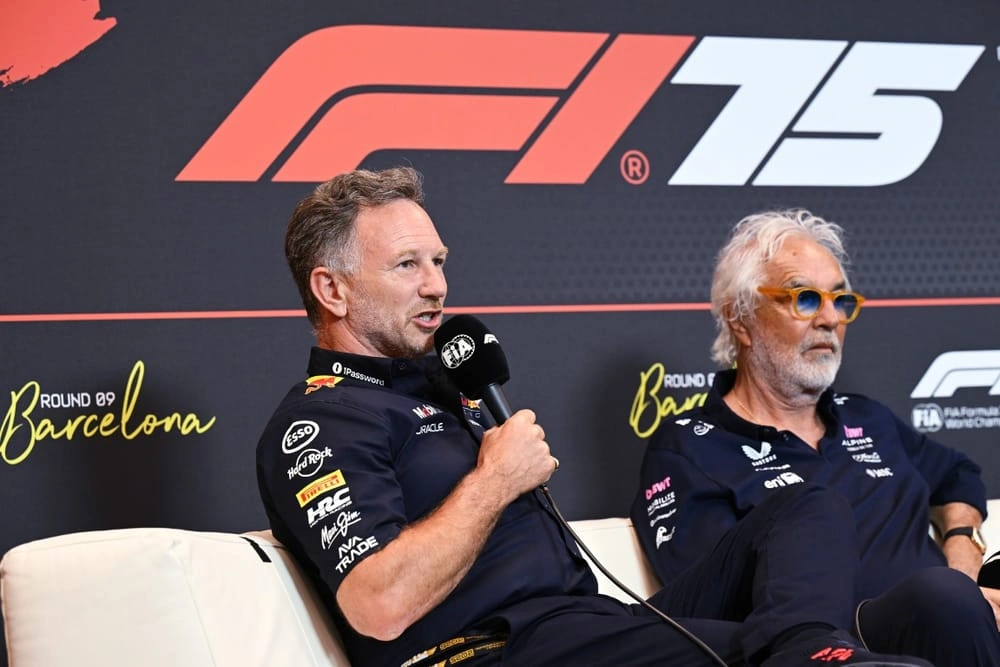
Does this strengthen Red Bull’s leadership? No. In fact, it highlights their vulnerability. Since Horner left, Red Bull has struggled (losing the 2025 title). His return to a rival garage serves as a constant reminder of the leadership void he left behind.
The “Poaching” Fear: Horner knows the contracts, salaries, and phone numbers of every key engineer at Red Bull. There is a genuine fear that he could lure loyal staff away from Milton Keynes to join him at Alpine, further destabilizing his old team.
Political Rivalry: Horner knows Red Bull’s secrets—technical concepts, budget cap strategies, and operational weaknesses. Having him in a rival briefing room is Red Bull’s worst nightmare.
Analogy: Imagine a championship-winning football coach being fired, only to buy the struggling rival club next door and start calling his old players to join him.
What This Means for Max Verstappen
The relationship between Horner and Max Verstappen was complex but incredibly successful.
The Friction: By the end of 2024/2025, the relationship between Horner and Max’s father, Jos Verstappen, was broken. Max’s camp likely views Horner’s exit as a necessary “cleansing.”
The Future: However, if Red Bull continues to slide in performance without Horner’s steady hand, Max might look at Horner’s project at Alpine with curiosity. While a move to Alpine seems impossible now (given their last-place finish), if Horner turns the ship around by 2026/2027, he creates another attractive option on the grid.
The Verdict: For now, Horner’s return adds pressure on Red Bull to prove they can win without him. If they fail, Max’s patience may run out.
Reaction Across the F1 Paddock
Rival Teams: Mercedes and McLaren will likely enjoy seeing Red Bull squirm, but they will also be wary. A focused, well-funded Alpine led by Horner is a far more dangerous competitor than the chaotic Alpine of 2024/2025.
The Media: The narrative of “The Revenge of Horner” is gold dust. Expect cameras to follow him everywhere.
The Fans: Social media is divided. Some see this as a glorious comeback; others worry about the drama returning.
What fans are asking right now:
“Can he really fix Alpine?” (It’s a huge task; they finished last in 2025).
“Will he try to sign Adrian Newey?” (Unlikely, as Newey is at Aston Martin, but never say never).
“Is he using his own money?” (Likely a mix of personal wealth and backing from a consortium).
What Does This Change?
Alpine: Gains an elite, championship-winning leader.
Red Bull: Faces a new rival who knows their playbook inside out.
Toto Wolff: His old sparring partner is back—expect the rivalry to reignite.
Bigger Picture: Why This Matters for Formula 1
Christian Horner’s return isn’t just about one man getting a job. It represents the shifting power dynamics of the sport.
For the last decade, Team Principals were mostly employees. Horner trying to become an Owner-Principal signals a shift back to the days when individuals, not just corporations, held the power. If he succeeds, he validates the idea that strong, singular leadership is worth more than corporate committees.
Conclusion
Christian Horner is returning to Formula 1 not to participate, but to take over. By targeting a stake in Alpine, he is betting on himself to replicate the miracle he performed at Red Bull.
For Red Bull, the message is clear: You moved on, but the past is coming back to race you.
“Christian Horner’s return isn’t just a comeback — it’s a reminder that leadership still shapes Formula 1 as much as speed.”