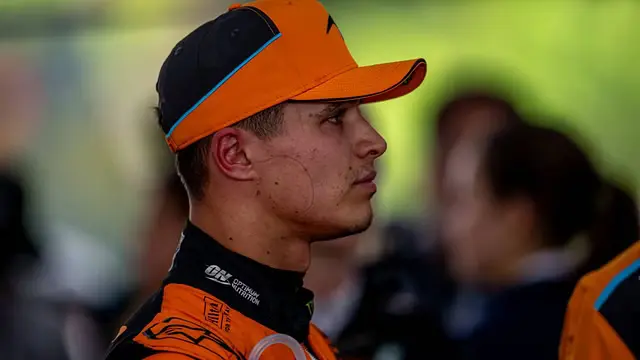
How a French Sports-Car Dream Became a Formula 1 Contender
Before Alpine became a billion-dollar Formula 1 operation, it was just one man’s obsession with lightness. Picture a narrow mountain road in the late 1950s — snow piled on the edges, wind screaming through the Alps, and a tiny blue machine dancing between the cliffs as if weightless. This was the Alpine A110 “Berlinette,” Jean Rédélé’s creation, born not from corporate ambition but from a garage in Dieppe and a dream to build cars light enough to outwit giants. In 1973, that dream stunned the world when Alpine conquered the inaugural World Rally Championship, proving that agility and spirit could defeat manufacturers with ten times the power. That was the first spark — the beginning of a philosophy built on doing more with less.

Then came the long sleep. As the decades rolled on, the Alpine name faded into dusty nostalgia while its parent company, Renault, chased glory on the biggest stage of all. In the mid-2000s, at Enstone and Viry, Renault delivered back-to-back Formula 1 world championships with Fernando Alonso. The French tricolour flew high, but Alpine remained silent — a forgotten relic of racing’s romantic past, waiting for someone to revive it.
That someone arrived in 2021. Luca de Meo, Renault’s bold CEO, launched the “Renaulution,” deciding that the yellow-and-black Renault F1 identity had run its course. He wanted a team that stood not just for performance, but for French emotion, heritage, and national pride. And so, with a stroke of corporate rebellion, he resurrected Alpine — repainting the F1 team in blue, white, and red, and giving France a “national team” to believe in again. But Alpine was never meant to be a simple rebrand. It was a resurrection of a forgotten spirit.
Behind this revival lay a unique dual-soul structure: the pragmatic engineering powerhouse at Enstone in the UK — the same facility that once powered Benetton and Lotus — and the emotional, historic engine heart at Viry-Châtillon in France. A team split by the English Channel yet united by obsession, ambition, and the inherited will of every machine that once climbed those Alpine mountain roads. It was beautiful. It was complicated. And it set the stage for both the glory and the tragedy that would follow.

So when the first Alpine F1 car, the A521, rolled onto the grid in 2021, the moment felt heavier than just a new livery reveal. The blue paint carried decades of expectation. It was the meeting point between a romantic past and the brutal demands of modern Formula 1. Alpine was back — but the real question lingered in the exhaust haze: now that the name had returned, could it survive?
From Toleman to Benetton: The Ancestry of a Fighter
The Surprising Lineage Behind Today’s Alpine F1 Team
It started in the rain. Monaco, 1984—water pouring in sheets, the sky grey and heavy, and a clunky white-and-blue Toleman TG184 sliding through the spray with impossible grace. Inside sat a Brazilian rookie named Ayrton Senna, wrestling a car that had no business hunting giants, yet closing in on Alain Prost’s dominant McLaren lap by lap. Before they were world champions, before they wore blue, pink, or yellow, the men and machines of Enstone were simply Toleman—a stubborn, underfunded British squad whose greatest weapon was belief. That afternoon in the rain forged their identity: underdogs who attack the impossible. A spirit that would later echo through Gasly’s wet podiums and Ocon’s slippery triumphs decades later.
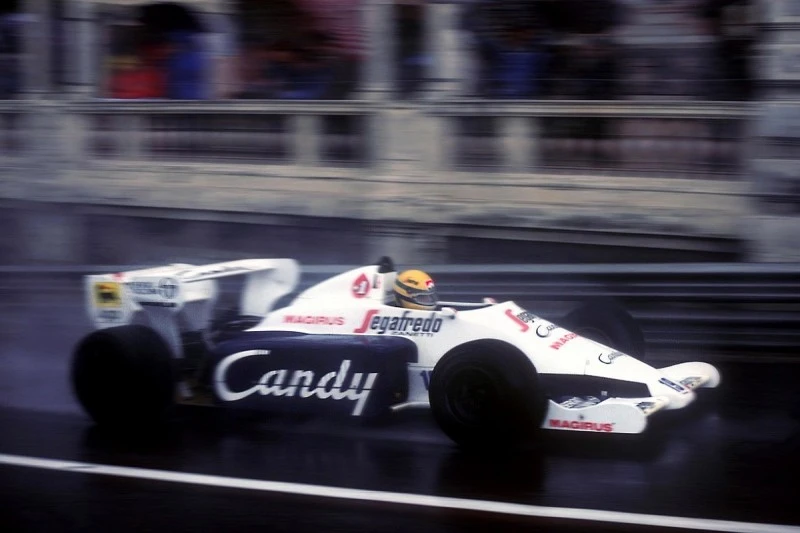
From that storm came evolution. In 1986, the team transformed into Benetton, the rebellious fashion brand that decided Formula 1 needed color, chaos, and controversy. Gone were the humble liveries; in came neon greens, blues, reds, and the unmistakable swagger of Flavio Briatore, the salesman-turned-team boss who brought charisma and ambition in equal measure. This era marked the team’s big move—literally—from a small shed in Witney to the now-iconic Enstone base in 1992. Built on an old quarry, Enstone became their holy land: a technical temple where ideas, people, and champions would be forged for generations.
With Benetton came a young Michael Schumacher, a once-in-a-generation talent whose relentless precision changed the sport forever. The Enstone factory delivered him the 1994 and 1995 world championships, proving the underdogs had become predators. No longer the scruffy squad with hand-me-down parts, they were title-winning engineers capable of outsmarting and outrunning the biggest names in motorsport.
The next transformation was discipline. When Renault took control in 2002, the team became a sharpened, modern powerhouse—innovative, calculated, and quietly lethal. Fernando Alonso arrived, the strategic brilliance of the mass-damper system appeared, and the Ferrari empire was shattered. The 2005 and 2006 championships cemented Enstone as something more than a team. It became a lineage—a living organism that evolved with each new identity but never lost its core DNA.
And that is the essence of the Enstone spirit today. Many of the men and women building Alpine’s A524 once helped Senna fight through rain, Schumacher conquer the world, and Alonso dethrone Ferrari. This continuity—this unbroken institutional memory—is the soul Alpine is fighting to protect. They’ve survived financial ruin, legal scandals, manufacturer exits, and enough political chaos to sink a lesser team. But Enstone? Enstone never dies.
They changed the sign above the door from Toleman to Benetton, to Renault, to Lotus, and finally to Alpine—but the ghosts inside don’t read the nameplates. They only know how to fight.
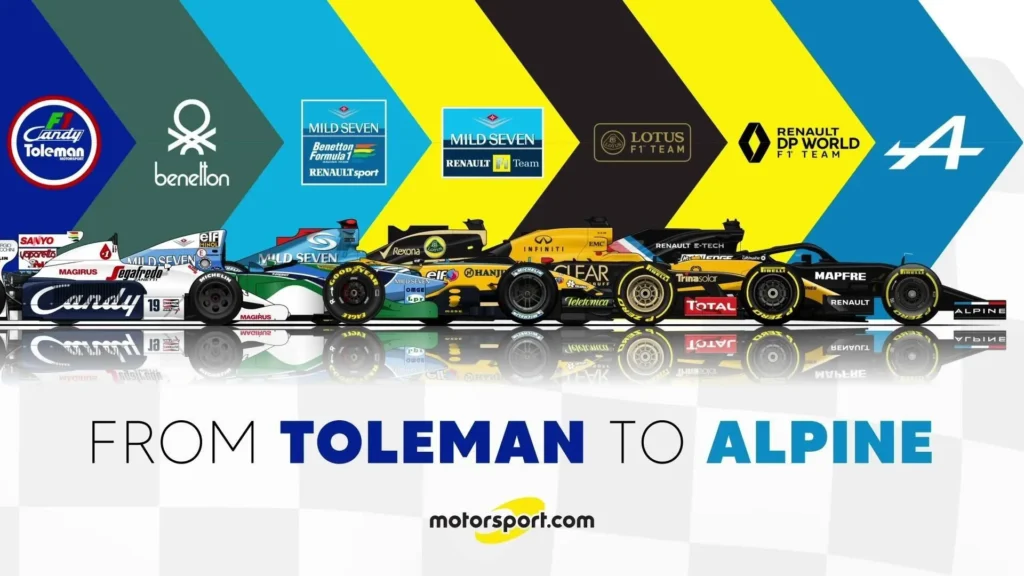
Renault’s Golden Age — When a Young Alonso Lit Up the World
The Two Years That Rewrote Formula 1 History
F1 history is measured in eras, but it is defined by the moments those eras end. At Imola in 2005, a young man from Oviedo looked into his mirrors and saw something no driver ever wanted to see: a red Ferrari growing larger with every lap. Michael Schumacher—the Michael Schumacher—was hunting him down. For 12 relentless laps, the undisputed king of Formula 1 threw everything at the blue-and-yellow Renault ahead. The world waited for the rookie to crack. He didn’t. Fernando Alonso held the line, slammed the door shut at every corner, and in doing so announced the arrival of a new era. This was the moment the Golden Age began—the moment the crown began to slip.

Renault’s dominance wasn’t just speed; it was synchronicity. Enstone built the weapon, Viry gave it a soul. Together, they created the R25 and R26, two of the most beautifully balanced F1 machines ever made. The R25’s V10—crafted in Viry-Châtillon—wasn’t just powerful; it sang. To this day, many still say it was the greatest sound F1 ever produced. But the real secret wasn’t the engine. It was something far simpler, far more devastating: a nine-kilogram weight buried in the nose of the car.

The mass damper—or as the engineers called it, the “third spring”—became Enstone’s forbidden magic. When every other team bounced and skated over curbs, the Renault glided. The device stabilized the front end, kept tire temperatures perfect, and allowed Alonso to attack corners with supernatural confidence. It was a mechanic’s trick, elegant and almost too intelligent, and it unleashed Renault’s true potential. So powerful was this invention that in mid-2006, the FIA scrambled to ban it, a decision that reeked of politics and protected interests. Yet even without their secret weapon, Renault did not break.
Their strength wasn’t just in technology; it was in execution. Renault had something no one else had mastered: the launch. When the five red lights went out, the blue-and-yellow rockets exploded off the line with terrifying accuracy. Alonso could start P3 and be leading by the first corner. Every race felt like a controlled ambush—clean, calculated, and brutal.
The results were undeniable. In 2005, Alonso shattered Ferrari’s five-year reign and became the youngest world champion in history. France, Michelin, Viry, Enstone—everyone tasted the victory. The following year was the dogfight. Ferrari struck back, politics kept tightening around Renault, the mass damper was banned, and every race became a duel for survival. Then came Suzuka 2006—the symbolic revenge. Schumacher’s Ferrari engine detonated, smoking and helpless. Alonso flew past, the Viry-built V8 screaming with pride, and sealed his second title. The king had been dethroned. Twice.

These two years were more than championships; they were a national story, a collective act of defiance, a masterclass in engineering under pressure. They stand as the peak of Enstone and Viry’s shared power—the ultimate limit break where everything aligned: driver, car, engine, tires, philosophy.
But peaks rarely last. Alonso left for McLaren. The bright blue and yellow faded. The world didn’t know it, but that sunset drive with his second trophy was the final page of Renault’s absolute dominance. The Golden Age had been glorious, but its end marked the beginning of a new struggle—one that would reshape the team again and again on its path to becoming Alpine.
The Lotus Era: Elegance Under Pressure
Black, Gold, and Broke: The Beautiful Tragedy of the Lotus Years v
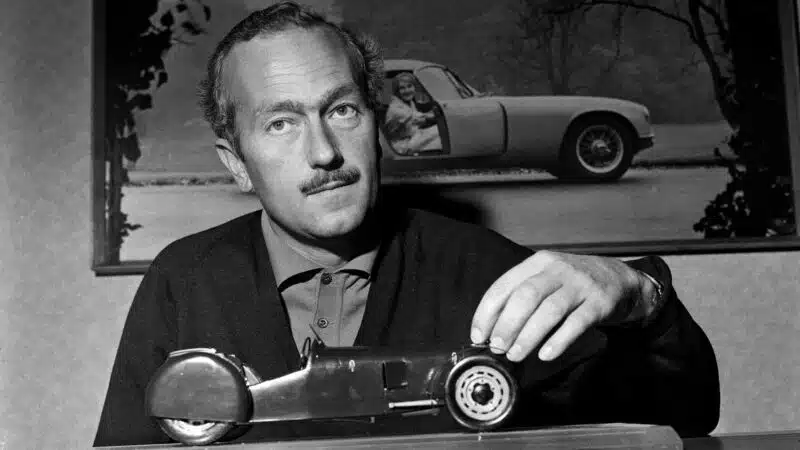
It wasn’t the “real” Lotus founded by Colin Chapman. It wasn’t even a factory team anymore. It was Enstone wearing a costume—black and gold war paint borrowed from history. But when that shimmering E20 crossed the Abu Dhabi finish line in 2012 and the radio crackled with “Leave me alone, I know what I’m doing”, nobody cared about technicalities. In that twilight desert, a ghost brand, a broken team, and a returning legend had just created one of the coolest moments in modern Formula 1.
This was the Ronin arc of Enstone’s story: wandering warriors without a master. After Renault sold the team to Genii Capital, Enstone became a mercenary outfit—fighting the richest giants in the sport armed with talent, creativity, and duct tape. And their swordsman was perfect: Kimi Räikkönen, a world champion who had spent two years rallying in the wilderness, returned to F1 with no interest in politics or PR. He just wanted a fast car and silence. He was the ultimate anti-hero—cold, blunt, devastatingly quick. Alongside him was Romain Grosjean, the gifted but volatile wildcard, capable of podium heroics one week and chaos the next. And somewhere behind them, Eric Boullier juggled budgets, contracts, and owners who ran out of money faster than the car ran out of fuel.
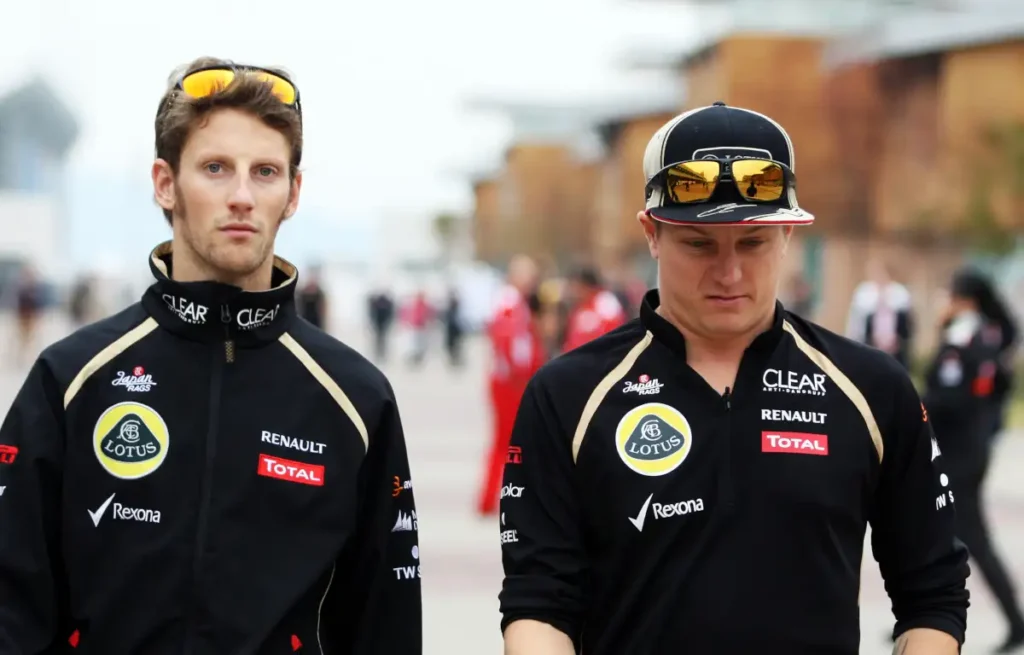
The Lotus rebrand in 2012 confused historians but captivated fans. The livery alone rewrote the team’s public image—sleek black and gold, dripping with old-school swagger. But beneath that glamour lay brutal reality: while Red Bull and Ferrari threw $350–400 million at championships, Lotus scraped by with barely half. They couldn’t outspend anyone, so they outsmarted them. The E20 and E21 weren’t wind-tunnel monsters, but they were tire whisperers—cars so kind on their rubber that they could steal victories through strategy and finesse. In a sport obsessed with aero supremacy, Enstone proved once again that their greatest weapon was ingenuity.
And they were fun. This era didn’t just produce wins—it produced culture. Lotus mastered the art of online personality years before it became standard. Their social media was sharp, chaotic, hilarious. They made ice creams for journalists, posted memes before memes were normal, and treated Kimi’s silence like a brand asset. Where everyone else tried to be corporate and polished, Lotus embraced the rockstar persona. They weren’t just a racing team; they were a vibe.
But behind the jokes and victories lay a slow, devastating collapse. By 2014–15, the money was gone. The staff went unpaid. Kimi left partly because his salary never arrived. The promised “Quantum Motorsports” investment never materialized. Bills stacked. Hospitality tents were locked because suppliers hadn’t been paid. And in one haunting moment, bailiffs literally stood at the Enstone gates, ready to seize assets from a team that once beat Ferrari and Red Bull on raw engineering brilliance.
The champagne had dried up, and the “cool factor” couldn’t keep the lights on. By the end of 2015, the black-and-gold dream was bankrupt. The warriors had no master, no money, and no future. Enstone—this legendary temple of ingenuity—sat in the dark, waiting for an old friend to pick up the phone and save them.
Next comes the return of that old friend. And with it, the rebirth that will eventually lead to Alpine.
The Rebirth: Renault Returns, but Reality Bites
The Five-Year Plan That Took a Decade
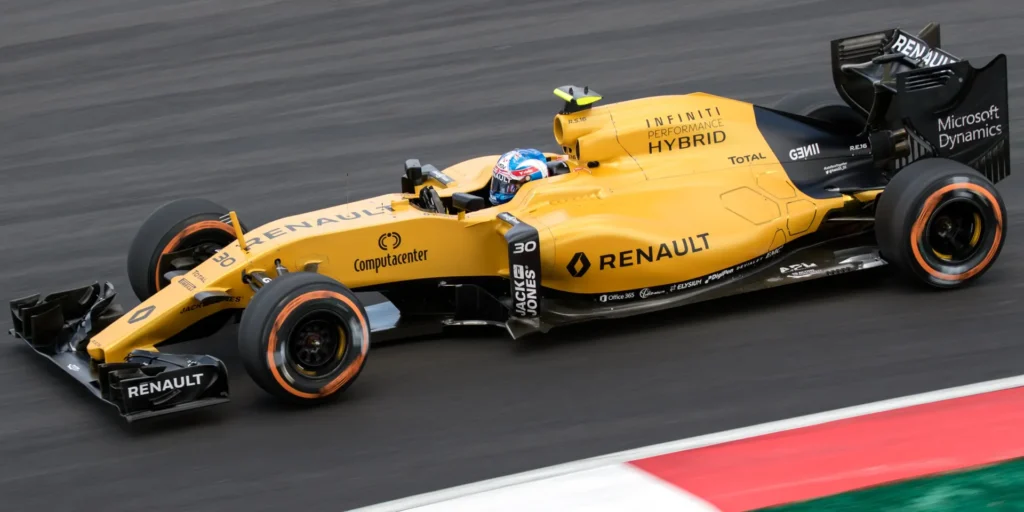
They returned with a splash of matte yellow paint and a promise of glory. Melbourne, 2016—the RS16 looked sensational under the Australian sun, a bold declaration that Renault, the former giant, had come back to reclaim its throne. But when the lights went out, the illusion shattered instantly. The car sank backward, swallowed by the midfield chaos. It wasn’t hunting Ferrari or Mercedes; it was fighting to stay ahead of backmarkers. In the garage, surrounded by corporate executives and hopeful engineers, a harsh truth settled like dust: trophy cabinets don’t make your current car go faster.
Renault’s comeback was supposed to be the triumphant return of a king. What they got instead was a gritty, grinding reboot. The team they bought back from Lotus had been so financially starved that the 2016 chassis was literally a Frankenstein project—originally designed for a Mercedes engine, then hastily hacked apart to fit Renault’s own power unit at the last minute. It was survival engineering, not championship engineering. And the man left to hold this chaos together was Cyril Abiteboul, the emotional, sharp-tongued team boss constantly juggling corporate expectations, boardroom politics, and his very public rivalry with Red Bull’s Christian Horner.
It took time for the rebuild to begin. Slowly, quietly, relentlessly. In came Nico Hülkenberg, the unsung architect of Renault’s revival. He didn’t score podiums, but he laid the foundations—dragging the yellow cars from mediocrity to consistency between 2017 and 2019. Under his steady hand, Renault climbed to 4th in the championship in 2018, earning the unofficial title of “Best of the Rest.” It looked like the five-year plan was finally working. The giant was waking up.

Then Renault made its biggest gamble: Daniel Ricciardo. In 2019, the Honey Badger shocked the paddock by leaving a race-winning Red Bull team to lead Renault’s future. His smile brought hope; his right foot brought pace; his presence brought belief. And in 2020, at the Nürburgring, that belief finally crystallized. Ricciardo crossed the line in P3—Renault’s first podium since 2011. The garage erupted. Cyril screamed. Mechanics cried. The curse was broken.
And then came the tattoo. A silly bet, a deeply human moment. Ricciardo’s podium meant Cyril had to get inked—an emblem of a team rediscovering not just performance, but personality. After years of corporate stiffness, Renault finally felt alive again. They had soul.

But just as the momentum began building, a new figure entered the stage: Luca de Meo, Renault Group’s ambitious new CEO. He looked at the F1 project not as a romantic legacy, but as a business tool. In his strategic view, “Renault” was destined for sensible electric cars. The F1 team, with its noise and power and prestige, needed a more emotional badge—one that could sell sports cars.
The order came down with surgical clarity:
Kill the yellow. Paint it blue. Rebrand everything as Alpine.
Suddenly, the identity Renault had spent five years rebuilding was gone again. Abiteboul wouldn’t get to enjoy the house he built. Ricciardo was leaving for McLaren. And the corporate reshuffle consumed the team before it could savor its long-awaited renaissance.
Cyril got his tattoo, and Daniel got his trophy. But as the 2020 season faded out, the yellow paint was stripped away one last time. The Renault name—the reborn giant—was dead again. What remained was the shell of a team about to inherit a new identity, a new flag, and a new destiny.
Next stop: the birth of Alpine.
Becoming Alpine: A New Name, A New Identity, A Heavy Expectation
Bleu de France, Pink Money, and the Battle for the Soul of a Team
It was supposed to be a rebirth. A new flag, a new era, a new identity. At the Hungaroring in 2021—amid the chaos of a Mercedes bowling strike and a Red Bull limping away—something miraculous emerged from the smoke. Leading the Grand Prix was not a champion or a juggernaut team, but Esteban Ocon, in a gleaming blue Alpine A521 that seemed to materialize out of thin air. When the French national anthem played over the Hungarian podium, the rebrand felt like genius. Alpine wasn’t just a sticker slapped on a Renault; it was a race winner. The dream of a French “Ferrari” suddenly felt real. But like all dreams born in fireworks, the honeymoon glow faded quickly.
Because Alpine wasn’t simply a race team anymore—it carried the weight of a nation. Luca de Meo had envisioned a French national superteam draped in Tricolore pride. But motorsport does not run on patriotism alone. The financial world intervened, and with it came a tidal wave of pink. BWT, the water technology giant, injected millions into Alpine, but demanded their unmistakable pastel branding. Overnight, Bleu de France became Blue-and-Pink—a national identity tangled in corporate compromise. What was meant to be a symbol of French resurgence now looked like a marketing battleground.
And to make matters even more volatile, Alpine paired two drivers whose rivalry was older than their careers. Esteban Ocon and Pierre Gasly, childhood friends turned bitter enemies from Normandy, were forced to share a garage under the banner of “Equipe de France.” The animanga parallel was obvious: a rivalry arc waiting to explode. Two talents, one team, one narrow garage dividing them. Marketing loved it. Reality did not. The tension was palpable from day one.

Steering this unstable ship was Laurent Rossi, the outspoken Alpine CEO who demanded results with the bluntness of a drill sergeant. He publicly called the team “amateur,” criticized his own staff on television, and set the tone for a culture of pressure rather than patience. Meanwhile, Hollywood entered the paddock—Ryan Reynolds, Rob McElhenney, and the Otro Capital group buying a 24% stake in the team. Alpine suddenly had celebrity investors, global PR power, and a valuation nearing $900 million. They had money, fame, and momentum—but none of these made the car faster.
Because beneath the show, the cracks widened.
The warning signs came early. “El Plan”—the mythical fan-powered hype around Fernando Alonso’s long-term project with Alpine—collapsed in 2022. Alonso, tired of empty promises and slow progress, abandoned the project and defected to Aston Martin. This wasn’t just a driver leaving; it was a legend declaring the project unworthy.
Then came the disaster that defined Alpine’s internal chaos: The Piastri Piasco. The team proudly announced Oscar Piastri as their 2023 driver—only for the young star to publicly deny it within an hour. The contract paperwork, crucial for securing their prodigy, had never actually been signed. McLaren swooped in. Alpine lost its future. The world laughed. It was an organizational humiliation on a global stage.
Still, Alpine pressed ahead with the all-French lineup: Gasly joining Ocon for 2023. The posters said “Pride of France.” Reality delivered collisions—most infamously in Melbourne 2023, when the two Normans wiped each other out, leaving the garage in silence.

And just when it seemed the chaos couldn’t escalate, Spa 2023 became their Red Wedding. Team Principal Otmar Szafnauer and 34-year Enstone veteran Alan Permane were fired mid-weekend. The heads that had steadied the ship for decades were gone in an instant. Alpine didn’t look like a national superteam; it looked like a civil war.
Yet through all this disorder, the brand remained valuable. The Hollywood investment brought €200 million into the team and raised Alpine’s valuation close to $1 billion. Alpine became a lifestyle brand, a cultural icon, a marketing powerhouse. Everyone wanted a piece of them—except the stopwatch.
By late 2024 and early 2025, a painful realization began to set in:
Viry’s French engine was too weak.
It wasn’t a lack of spirit. It wasn’t a lack of effort. It was physics, horsepower, efficiency—the brutal truths of modern Formula 1. Alpine’s national heart was dragging down the national dream.
So the executives in Paris made the hardest decision in their history.
If Alpine was to survive, if it was to win, if it was to fulfill the promise of the Tricolore—
the French team would have to stop using a French engine.
They had the drivers, the money, the investors, the marketing, the anthem, the dream.
But the stopwatch didn’t care.
And now, Alpine stood at a crossroads between identity and survival.
The Present Turbulence — Inside the Confusion, Restructures, and Hard Questions of Today’s Alpine
Overweight Cars, Underpowered Politics, and the Purge of 2025
In Formula 1, silence is often louder than an engine. So when a short, oddly timed press release dropped into journalists’ inboxes after the 2025 Miami Grand Prix, the paddock froze. Oliver Oakes, the fresh young team principal hired to usher Alpine into its bright future, had resigned after only a handful of races. No quotes. No explanations. Just a digital shrug. It confirmed the paddock’s darkest suspicion: the chaos at Alpine wasn’t over—it was only beginning.
Because Alpine in 2025 is not a race team in transition; it is a race team in purge mode. To build the future, management chose to burn the present. Everything—from personnel to philosophy to national identity—became collateral damage in a ruthless restructuring led by a figure who has returned like a ghost from the past: Flavio Briatore. Officially an “advisor,” unofficially the man pulling every string. He is cutting costs, firing staff, ripping up departments, and dismantling the Alpine project piece by piece. For the first time since the Lotus bankruptcy days, Enstone feels like a battleground.

The first casualty was the rookie. Jack Doohan, Alpine’s hand-picked young star, was thrown into the deep end with the undercooked, overweight A525. He was told to learn, to grow, to be patient. But patience is extinct in modern F1. After just six races, he was fired—discarded like a spare part. It was a brutal message to the paddock: Alpine had no time for development arcs. Survival mode demanded sacrifices.
The technical situation was even worse. The A525 is a car trapped in limbo: too heavy, too draggy, and cursed with a binary operating window. It can fire one decent lap on Saturday but disintegrates on Sunday. It overheats its tires because it lacks downforce; it lacks downforce because the team intentionally stopped developing it, shifting every resource toward 2026. Alpine openly admitted they were abandoning the present to save the future. The result? A car stuck at the back—proof that the fastest thing in Enstone was the rate at which morale was collapsing.
Meanwhile, the heart of the team—Viry-Châtillon, the French engine factory—exploded in rebellion. At Monza, the stands were filled with Viry employees holding banners protesting the shutdown of their own headquarters. It was a surreal scene: the “French national team” being booed by the French themselves. Their engine, once a source of national pride, had become an anchor dragging Alpine down the order. The decision had been made: the Viry engine would die. Pride had lost to pragmatism.

Into this storm parachuted Franco Colapinto, the fiery Argentine promoted to replace Doohan. Fast but erratic, he brought money, momentum, and chaos—crashing in practice sessions, clashing with Gasly in briefings, and forcing the mechanics into overtime. Meanwhile, Pierre Gasly—now the last remaining pillar of stability—dragged the car to improbable results, including a miraculous P6 in the wet at Silverstone, driving the wheels off what many called “a tractor in blue paint.” If Alpine retained any dignity in 2025, it belonged to Gasly’s right foot.
And then came the final surrender. After decades of insisting on French engineering purity, Alpine confirmed the unthinkable: from 2026, they would run a Mercedes engine. A German heart inside a French body. The end of the “national team” illusion. The end of the works-team identity. A bitter, symbolic death of Viry’s legacy.
By the end of 2025, Alpine had become a skeleton of its former self—leaner, harsher, stranger. The pink BWT paint was chipped, the Tricolore identity fading. They had fired their rookie, lost their team principal, shut down their engine program, and let their heritage bleed out across two continents.
What remained was a chassis factory, a sponsor, a star driver, a Hollywood ownership group—and a bet on the 2026 regulations so massive it could either resurrect the team or erase it completely.
As the garage doors shut on the 2025 season, Alpine stands stripped to bare metal. No engine. No stability. No guarantees.
Now, we wait to see whether this ship—rebuilt, rebranded, and ruthlessly gutted—will float… or finally sink.
Gasly & Ocon: A French Duo Under the Microscope
Normandy’s Cold War: The Rivalry That Shaped — and Shattered — Alpine
The carbon fiber crunch at Portier wasn’t just a racing incident. It was the inevitable detonation of a pressure cooker that had been sealed shut for fifteen years. Monaco, 2024—Lap 1. Two Alpine cars ran side-by-side toward the tight right-hander, blue paint glinting under the Riviera sun. There was no space. Esteban Ocon lunged. Pierre Gasly had nowhere to go. Contact. The car lifted, slammed back to earth, and the silence in the Alpine garage said everything:
This was the end.
This was not a rivalry born in Formula 1. It was born in Normandy, 2005—two boys whose families shared dinners, road trips, and karting dreams. Gasly and Ocon were once inseparable, two prodigies rising from the same tiny region of France. But ambition is a ruthless sculptor. A contentious karting race—often referred to in hushed tones as the “World Cup Incident”—fractured the friendship for good. The parents stopped speaking. The boys stopped training together. The roots of the feud ran deeper than any engineer at Enstone could imagine.
So when Alpine announced an all-French lineup in 2023, it was marketed as a patriotic fairytale. “Equipe de France,” the posters said. In reality, it was an experiment in containment. At the launch, they shook hands, smiled, and promised professionalism. And for a while, it worked. They even shared high points—Gasly’s Zandvoort podium, Ocon’s Monaco podium, moments where it felt like the Normandy boys had finally grown past their rivalry.

But the cracks appeared early. Melbourne 2023, after a restart chaos, the two Alpines collided and wiped each other out. The team called it “bad luck.” But both drivers left Australia knowing the truth: the trust was gone.
Behind the scenes, Alpine implemented a “Non-Aggression Pact.” Don’t fight each other. Don’t risk the car. Don’t reignite the war. But Formula 1 drivers are not diplomats, and Ocon and Gasly are not wired to yield—especially not to each other. Every overtake became a statement. Every corner became a negotiation. Every radio message carried history.

Then came Monaco 2024, the divorce point. The crash at Portier wasn’t just a mistake; it was the final confirmation that the rivalry was unmanageable. Team Principal Bruno Famin, usually calm, erupted publicly:
“There will be consequences.”
And everyone knew what that meant. Ocon’s exit was sealed within hours.
Ocon—the street fighter, the uncompromising defender, the man who drove like every lap was a championship decider—left Alpine battered but unbroken. Gasly—the emotional leader, the driver adored by Enstone’s mechanics, the man who felt Ocon’s aggression as a personal betrayal—stayed behind, elevated to the de facto “king of the castle.” But the team was exhausted. Two alpha wolves had torn each other apart inside a phone booth, and the engineers were left sweeping the shards of carbon fiber and camaraderie.
They said goodbye without a handshake.
Two Grand Prix winners. Two immense talents. Two boys from the same corner of France, destined to collide. The French Superteam dream was beautiful in theory, catastrophic in execution. Alpine learned the hardest rule of Formula 1:
You can have two fast drivers —
but you cannot have two drivers who both want to be the only hero.
The A524 & Its Struggle
The Heavyweight That Dragged Alpine Into the Abyss

F1 races are won on Sundays, but they are lost in the winter. And Alpine’s 2024 season was lost the moment the A524 failed its lateral crash test in December 2023. To pass the FIA’s safety checks, the engineers had to layer emergency sheets of carbon fiber across the chassis—thicker, heavier, clumsier. When the car rolled onto the scales in Bahrain for pre-season testing, the number punched the air out of the garage:
11 kilograms overweight.
In a sport where every 10 kg is worth roughly three-tenths per lap, the engineers knew instantly: the season was over before it even began.
This was supposed to be Alpine’s bold revolution. Technical director Matt Harman had swung for the fences, redesigning the rear suspension and chassis architecture from scratch. The goal was noble: widen the development window, break the “glass ceiling” of the 2023 car, and build a platform that could evolve into a race winner. But like a hero forging a new weapon only to discover it’s too heavy to lift, Alpine created its own cursed armor. The A524 wasn’t a sword—it was an anchor.
And the flaws weren’t subtle.
They were catastrophic.
The weight was the primary villain. So heavy was the chassis that Alpine made the most humiliating aesthetic decision in years:
strip off the paint. The once-proud French blue was reduced to exposed black carbon with a few pink BWT stickers clinging on. Fans called it “The Tractor.” Engineers called it “The Mistake.” The stopwatch called it “P18.”
Worse still, the heavy chassis exposed the other flaw Alpine tried desperately to hide:
the Renault engine deficit, estimated around 20 horsepower behind Ferrari and Mercedes. When the car was fat, the engine’s weakness became undeniable. The A524 didn’t just lose in straights—it never even fought.
And then there was the “binary window.” In high-speed corners, the A524 produced no downforce, sliding across the asphalt like a lost prototype. But in slow corners? The mechanical grip was strangely excellent. The result was a Frankenstein’s monster of performance: dreadful on Saturday, occasionally heroic in strange conditions, and fundamentally broken.
The Bahrain humiliation confirmed the disaster. Last row lockout. P17 and P18. For a factory team, this wasn’t a stumble—it was a collapse. Harman resigned soon after.
Alpine launched a desperate diet plan. A lighter chassis arrived in China by Round 5, shaving several kilograms. But without aerodynamic efficiency, weight loss was cosmetic surgery on a patient needing heart transplants. The car remained stubbornly inefficient, incapable of fighting for points unless the laws of physics temporarily changed.
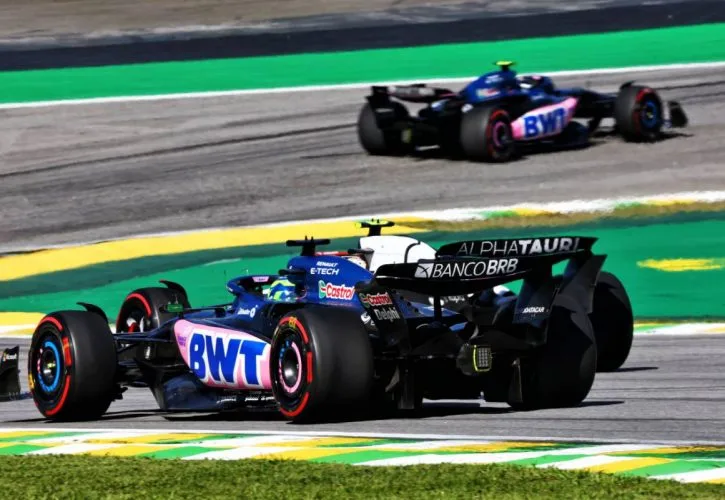
And at Brazil 2024, they did.
In torrential rain at Interlagos, the A524 suddenly woke up. Weight mattered less. Power mattered less. Downforce mattered less. And mechanical grip mattered most. Gasly and Ocon delivered a miracle: P2 and P3, a double podium that shocked the paddock. It was a brief, flickering reminder that somewhere inside the cursed armor, there was a good car trying to escape.
But Alpine didn’t chase redemption. They chose surrender. By mid-season, development on the A524 was effectively stopped. Resources were redirected to the 2025 and 2026 projects, and the 2024 chassis was left to limp through the remaining races—a wounded warrior abandoned on the battlefield.
The A524 will not be remembered fondly. It will be remembered as the car that broke Alpine’s spirit, exposed systemic weaknesses, and forced the leadership purge that brought Briatore back into power. It was the physical manifestation of every wrong turn the team had taken.
A painful lesson in physics and ambition:
you cannot out-drive a heavy car.
And Alpine had to stare into the mirror and ask themselves a brutal question—
were they still a serious racing team, or were they becoming a relic of their own past?
The Big Reset: Alpine’s Gamble for 2026
German Heart, French Soul, and Flavio’s Final Roll of the Dice
It happened in silence. No fireworks, no press conference, no patriotic speeches. Just a quiet boardroom in Paris, late 2024, where a single pen hovered over a contract that would change the identity of Alpine forever. When the ink dried, the Viry F1 engine program—the heart of France’s racing identity—was dead. For the first time in the modern era, a factory team had voluntarily chosen to become a customer.
It was the decision that would make Enzo Ferrari roll in his grave.
The message from the top was brutally clear:
We are done trying to be clever. We just want to be fast.
This wasn’t a rebrand, or a restructure, or a leadership shuffle. This was an amputation. Alpine had spent years insisting on building its own engines, clinging to the romantic ideal of a full French works team. But romance doesn’t win races. And after a decade of being bullied on the straights, Alpine made the coldest, most pragmatic decision in its history: trade national pride for raw speed.
Starting in 2026, Alpine will run Mercedes engines and gearboxes—the same hardware that powers McLaren and Williams. No more 20–30 horsepower deficit. No more excuses. No more hiding behind heritage. The cyborg upgrade was complete: a German heart inside a French chassis, stitched together by the most controversial tailor in Formula 1.

Because make no mistake:
Flavio Briatore orchestrated this.
The man who once led Enstone to titles returned to tear down everything that held the team back. He didn’t care about nostalgia. He didn’t care about Viry’s history. He cared only about the stopwatch. And the stopwatch had been brutal to Alpine.
As Viry’s F1 operations were shut down, its engineers were reassigned to the futuristic “Hypertech Alpine” division—working on solid-state batteries, supercars, and technologies far removed from the roar of Formula 1. It was the end of an era. The place that birthed the screaming V10s of the 90s and the championship-winning V8s of the 2000s would never build another F1 engine again. The ghosts of Alonso, Schumacher, and Senna now had no home to return to.
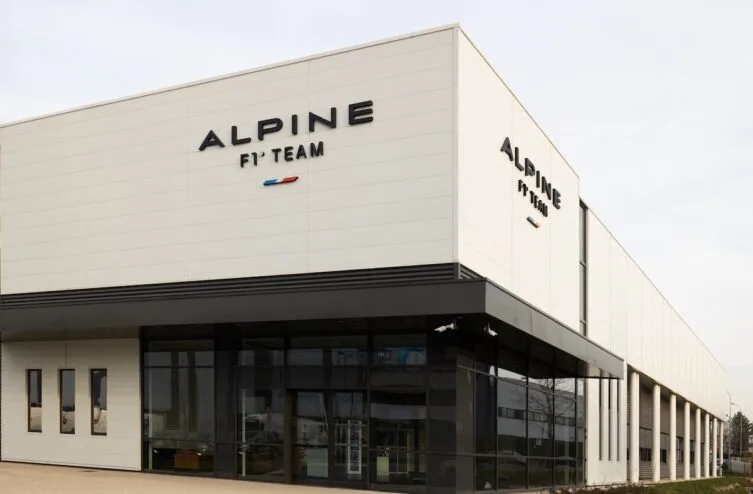
But while Alpine’s soul was being rewritten, its driver lineup was solidified. Pierre Gasly, the emotional north star of the team, would lead the charge into 2026. And alongside him: Franco Colapinto, fast, raw, unpredictable—a marketable young talent with the aggression Briatore loves. Experience meets chaos. Stability meets fire. They will be the first to drive a Mercedes-powered Alpine.
Why make this dramatic shift now? Because the 2026 regulations represent a full reset of Formula 1. Active aerodynamics, 50% electric power, lighter cars, new strategies—everything changes. By ditching engine development, Alpine can throw its entire budget into chassis and aero innovation. It’s the McLaren model: outsourcing the power unit, mastering the bodywork.
But the gamble cuts both ways. As a customer team, Alpine loses control. If Mercedes builds a masterpiece, Alpine rises. If Mercedes stumbles, Alpine collapses with them. The dependency is total. The risk is existential.
And yet, Alpine had no choice. 2025 was the fire. 2026 must be the rebirth.
As the lights go out on the final race of this era, Alpine is a team without an engine of its own—but with a clarity of purpose it hasn’t had in years. No nostalgia. No vanity. No illusions. Just the race car. Just the stopwatch. Just the fight.
They have killed the past, amputated the weaknesses, and replaced their heart with machinery they hope can save them.
Now comes the test.
2026 or bust.
The skyscraper will either rise from the ashes—or collapse before the first brick is laid.
Searching for a Star: The Next Alpine Driver Era
Buying Speed, Breaking Traditions, and the Search for a Messiah
Every time Oscar Piastri climbs onto a podium in papaya orange, it feels like a dagger twisting in Enstone’s chest. It is the ghost that haunts every driver meeting, every academy review, every sleepless night in the Alpine boardroom. Losing a generational talent for free wasn’t just a mistake — it was a humiliation.
The lesson was brutal: contracts mean nothing if your car doesn’t inspire loyalty.
Now, under Flavio Briatore’s ruthless guidance, Alpine is determined never to suffer that embarrassment again.
Because Alpine once believed in the academy dream — nurture young talent, build them up slowly, reward loyalty with a seat. But the modern strategy has hardened. The “training arc” is dead. This is now a Tournament of Power. Friendships don’t win championships. Emotion doesn’t earn podiums. Alpine isn’t searching for a graduate anymore — they are hunting for a main character.
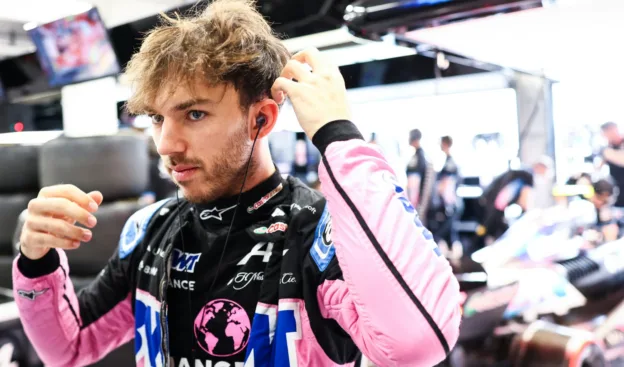
And so the driver lineup of the future reflects this new ideology.
Pierre Gasly remains the veteran anchor — the emotional leader, the technical compass, the man who carried Alpine through its darkest seasons. He is fast, reliable, adored by the mechanics, and capable of wrestling results out of chaos. But the question hangs over him like a storm cloud: Is he a captain… or a placeholder? Can he lead a title fight, or is he the bridge to someone who can?
Enter Franco Colapinto — the rock star. Aggressive. Erratic. Commercial dynamite. He brings the “Argentine Army,” one of the most passionate fanbases in motorsport, and a charisma that Alpine’s marketing division dreams about. He is fast enough to scare Gasly, wild enough to drain the spare parts budget, and bold enough to make Briatore grin.
Colapinto is not continuity — he is chaos, weaponized.
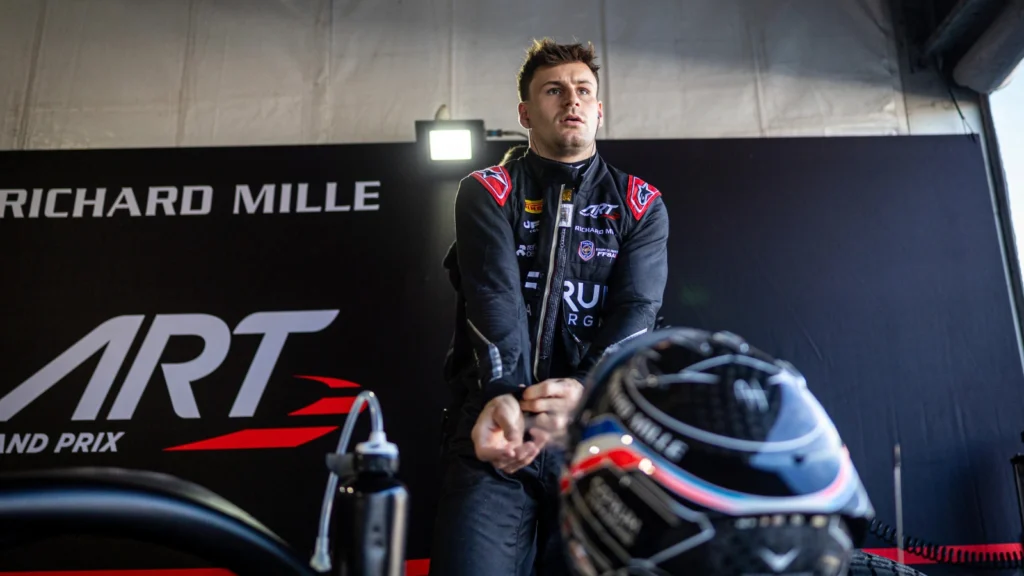
And then there are the Forgotten Sons: Victor Martins, Gabriele Minì, promising academy talents marooned in the lower categories. They represent the old Alpine philosophy — the slow path, the development arc, the hope of a homegrown hero. But after the Doohan firing, the message from the top is unmistakable: the pathway is broken. Under Briatore, potential does not outrank impact. If you’re not immediately brilliant, you’re expendable.
Because Briatore has always operated on instinct, not spreadsheets. He found Schumacher. He gambled on Alonso. He believes a single star driver can drag a mediocre car up the mountain. He wants a killer, not an apprentice.
This is why the 2026 market is so crucial. With Audi entering and Red Bull reshuffling, Alpine may not stop at Gasly and Colapinto. If chaos hits, could Carlos Sainz return? Could a frustrated George Russell become a target if Mercedes stumbles? Could Alpine steal a future champion the way McLaren stole Piastri? Nothing is off the table.
But underlying all of this is Alpine’s eternal flaw:
They have never chosen a Number 1.
For years, the team insisted on equality. Two drivers, same status, same rules. But equality breeds internal war. Champions are crowned, not negotiated. Red Bull chose Verstappen. Ferrari chose Schumacher. Alpine must eventually choose a King — and a Soldier.
Because in the new era, the car is no longer their identity. The engine is bought. The philosophy is rebuilt.
The only soul the team has left comes from the cockpit.
For too long, Alpine has been a team of two equal drivers fighting for scraps. Now, as they approach 2026, they need something else entirely:
a Messiah.
Whether that savior is Gasly rediscovered, Colapinto crowned, or a superstar yet to arrive —that remains the final unanswered question in Alpine’s future.
The Road Ahead: Hope, Doubt & the Eternal Spirit of Enstone
They Killed the Engine, Not the Dream
Silence is rare in Formula 1. But in December 2025, the corridors of Enstone are quieter than anyone can remember. The familiar hum of the Renault V6 — the heartbeat of this team since 1977 — is gone. Mechanics pack the last French engines into crates, sealing the lid on an era that carried Senna, Schumacher, Alonso. And then, with almost poetic timing, a delivery from Brixworth arrives. A Mercedes power unit. Sleek. Silver. Foreign.
A heart transplant.
In that quiet, one terrifyingly simple question hangs in the air:
Now that we have no excuses left… how fast can we run?
Because Alpine has burned everything. They fired their principal. They shut down Viry. They abandoned their identity as a works team. They changed drivers, colors, cultures. They hit rock bottom in 2025 — a season so painful that Flavio Briatore himself called it “torture.” But destruction was the point. The team chose to walk through fire so they could rise from the ash.
This is no longer a story about heritage.
It is a story about survival.
And yet, in the wreckage, something unexpected is returning: hope.
In the shadows of the factory, the lifers — the mechanics who were here for Schumacher’s titles, Alonso’s glory, Kimi’s rockstar years — still show up every day. They have outlived bosses, rebrands, owners, scandals, and corporate revolutions. They built the cars that terrified giants. They built the cars that shocked the world. They remain the soul of Enstone, unshakable and unwavering.
Briatore, the old general, marches through the workshops with a soldier’s gait. He has no time for nostalgia, but he respects the scars. “Every Sunday is torture,” he admitted to the press in 2025. But pain, he says, is the currency of future victory. And for all his chaos, the man rebuilt Enstone once before. He believes he can do it again.
Meanwhile, the ghost of Viry lingers. The French engine division may be gone, but its legacy — the V10s that screamed, the V8s that conquered — demands to be honored. The engineers who fought until the end for national pride deserve redemption through results. The only way to honor their sacrifice is to win.
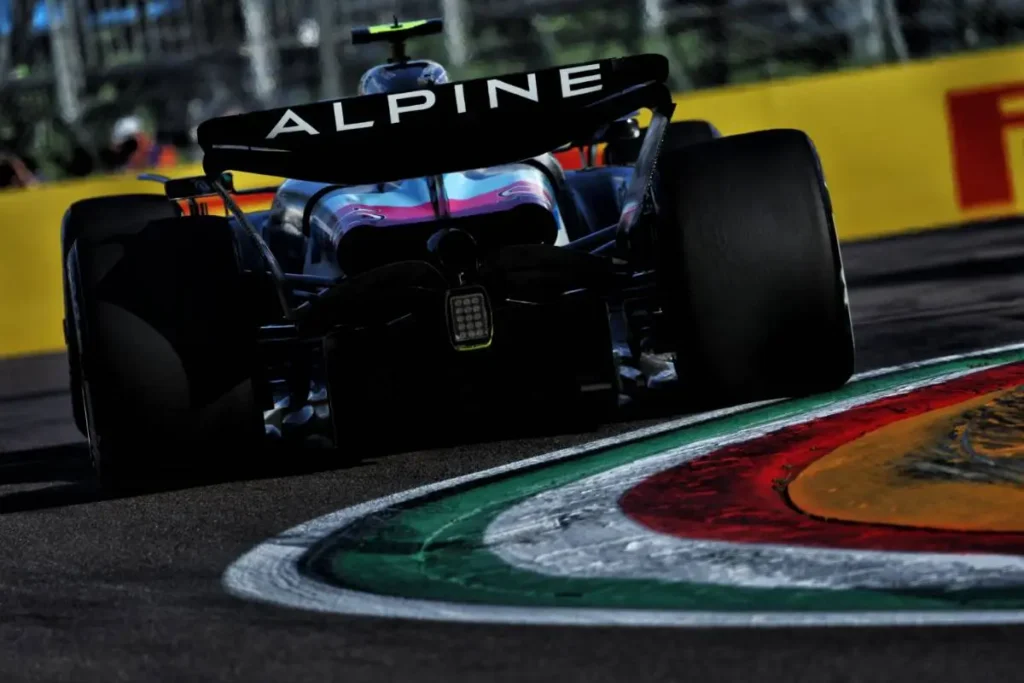
And now, Alpine has the weapon to try:
the Mercedes silver bullet.
For the first time in the hybrid era, Alpine will not begin a season on the back foot. No more 20-horsepower deficit. No more engine excuses. No more dragging an overweight chassis up the hill. They start 2026 with the best power unit on the grid.
The corporate “Renault” mask has faded, leaving behind something familiar — something old-school. A garagista spirit. A return to the Toleman-Benetton mentality: gritty, scrappy, unrefined, hungry. Enstone is no longer pretending to be a polished manufacturer team. They are becoming what they’ve always been at their best: pirates of the paddock.
But this path is dangerous. 2026 is a hard reset for everyone — Audi arrives, Red Bull and Ford reinvent themselves, Mercedes gambles on a new philosophy. Alpine is just one wolf in a pack of many. And no one knows which wolf comes out with blood on its teeth.
Still, this is why we watch them. Alpine is chaos made mechanical. When they soar, the sport feels alive. When they fail, it’s dramatic. When they fight, the paddock vibrates. Formula 1 needs a wildcard, a disruptor, a mad scientist in blue and pink and carbon — and that has always been Enstone.
The future begins in Melbourne 2026. The car may be blue. It may be pink. It may be silver. But none of that matters.
What matters is the cockpit — and the spirit behind it.
They have changed their name, their bosses, their drivers, and their heart.
But one thing remains untouched:
the eternal, unkillable spirit of Enstone.
The Blue Flame has flickered.
But it has not gone out.
And if history has taught us anything, it’s this:
Never turn your back on a team that has nothing left to lose.