F1 Tyres & Braking Explained: How Formula 1 Cars Generate Grip and Stop
Every aerodynamic surface, suspension link, and engine kilowatt on a Formula 1 car exists for a single purpose: to direct forces into four patches of rubber in contact with the

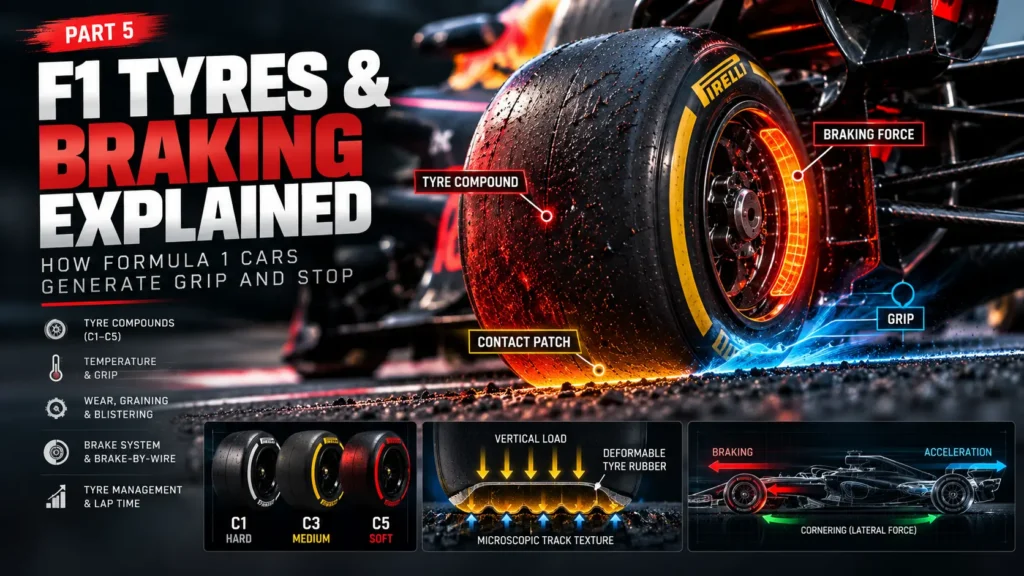
Every aerodynamic surface, suspension link, and engine kilowatt on a Formula 1 car exists for a single purpose: to direct forces into four patches of rubber in contact with the

In Part 3 of F1 Terminology Explained, we explored the mechanical platform. We examined how the suspension—wishbones, springs, dampers, and anti-roll bars—controls the car’s physical attitude as it pitches under

In Part 2 of our F1 Terminology Explained series, we explored vehicle dynamics—the invisible forces of load transfer, grip, slip angle, and balance that dictate how a Formula 1 car

1. Introduction — What Is Vehicle Dynamics? In Part 1 of the F1Mavericks terminology series, you learned the vocabulary of a Grand Prix weekend: the structure of qualifying, the roles

Formula 1 has its own language. Turn on a Grand Prix and you may hear commentators talking about an undercut, dirty air, parc fermé, tyre degradation, a lock-up or “box,